Lopour Beth A, Tasoglu Savas, Kirsch Heidi E, Sleigh James W, Szeri Andrew J
Department of Mechanical Engineering, University of California, Berkeley, CA 94720, USA.
J Comput Neurosci. 2011 Apr;30(2):471-87. doi: 10.1007/s10827-010-0272-1. Epub 2010 Sep 1.
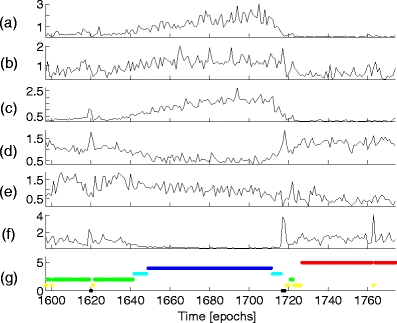
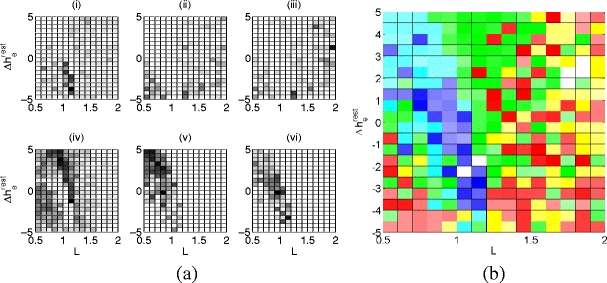
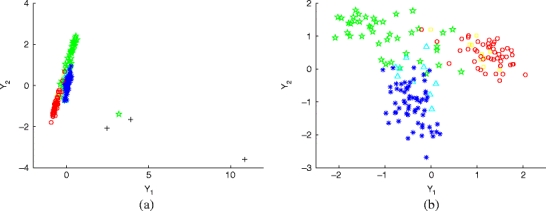
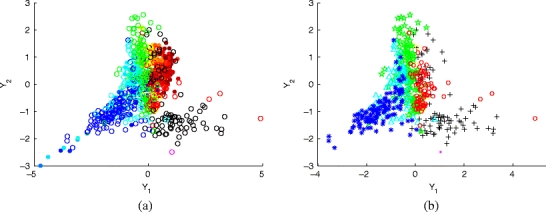
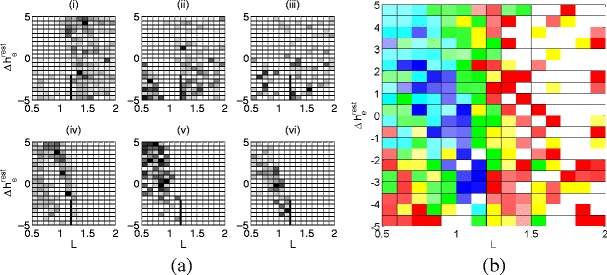
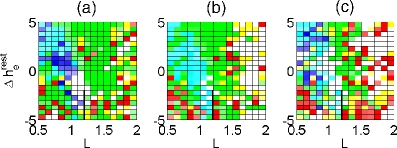
Here we show that a mathematical model of the human sleep cycle can be used to obtain a detailed description of electroencephalogram (EEG) sleep stages, and we discuss how this analysis may aid in the prediction and prevention of seizures during sleep. The association between EEG data and the cortical model is found via locally linear embedding (LLE), a method of dimensionality reduction. We first show that LLE can distinguish between traditional sleep stages when applied to EEG data. It reliably separates REM and non-REM sleep and maps the EEG data to a low-dimensional output space where the sleep state changes smoothly over time. We also incorporate the concept of strongly connected components and use this as a method of automatic outlier rejection for EEG data. Then, by using LLE on a hybrid data set containing both sleep EEG and signals generated from the mesoscale cortical model, we quantify the relationship between the data and the mathematical model. This enables us to take any sample of sleep EEG data and associate it with a position among the continuous range of sleep states provided by the model; we can thus infer a trajectory of states as the subject sleeps. Lastly, we show that this method gives consistent results for various subjects over a full night of sleep and can be done in real time.
在此我们表明,人类睡眠周期的数学模型可用于获取脑电图(EEG)睡眠阶段的详细描述,并讨论这种分析如何有助于预测和预防睡眠期间的癫痫发作。通过局部线性嵌入(LLE)这种降维方法,找到EEG数据与皮质模型之间的关联。我们首先表明,将LLE应用于EEG数据时,它可以区分传统的睡眠阶段。它能可靠地分离快速眼动(REM)睡眠和非快速眼动(non-REM)睡眠,并将EEG数据映射到一个低维输出空间,在该空间中睡眠状态随时间平稳变化。我们还纳入了强连通分量的概念,并将其用作EEG数据自动去除异常值的一种方法。然后,通过对包含睡眠EEG和中尺度皮质模型生成的信号的混合数据集使用LLE,我们量化了数据与数学模型之间的关系。这使我们能够获取任何睡眠EEG数据样本,并将其与模型提供的连续睡眠状态范围内的一个位置相关联;因此,我们可以推断出受试者睡眠时的状态轨迹。最后,我们表明,该方法在受试者整晚的睡眠中对不同受试者都能给出一致的结果,并且可以实时完成。