Department of Psychiatry and Behavioral Sciences, Nancy Pritzker Laboratory, Stanford University, Stanford, CA 94305-5485, USA.
J Dev Behav Pediatr. 2010 Sep;31(7):564-81. doi: 10.1097/DBP.0b013e3181ee3833.
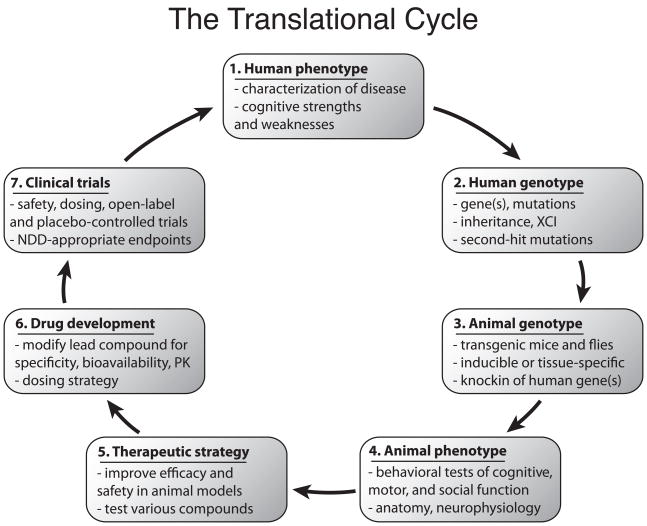
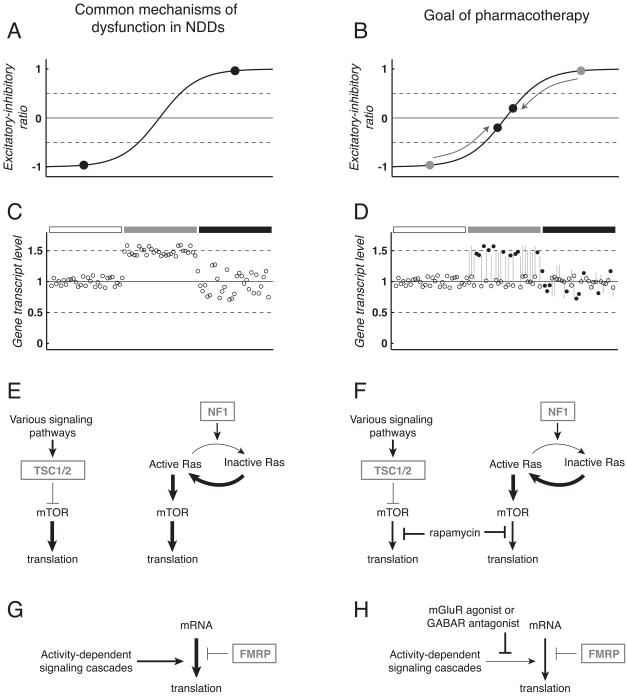
A growing and interdisciplinary translational neuroscience research effort for neurodevelopmental disorders (NDDs) is investigating the mechanisms of dysfunction and testing effective treatment strategies in animal models and, when possible, in the clinic. NDDs with a genetic basis have received particular attention. Transgenic animals that mimic genetic insults responsible for disease in man have provided insight about mechanisms of dysfunction, and, surprisingly, have shown that cognitive deficits can be addressed in adult animals. This review will present recent translational research based on animal models of genetic NDDs, as well as pharmacotherapeutic strategies under development to address deficits of brain function for Down syndrome, fragile X syndrome, Rett syndrome, neurofibromatosis-1, tuberous sclerosis, and autism. Although these disorders vary in underlying causes and clinical presentation, common pathways and mechanisms for dysfunction have been observed. These include abnormal gene dosage, imbalance among neurotransmitter systems, and deficits in the development, maintenance and plasticity of neuronal circuits. NDDs affect multiple brain systems and behaviors that may be amenable to drug therapies that target distinct deficits. A primary goal of translational research is to replace symptomatic and supportive drug therapies with pharmacotherapies based on a principled understanding of the causes of dysfunction. Based on this principle, several recently developed therapeutic strategies offer clear promise for clinical development in man.
神经发育障碍(NDD)的不断发展和跨学科转化神经科学研究工作正在研究功能障碍的机制,并在动物模型中测试有效的治疗策略,在可能的情况下,还在临床中测试。具有遗传基础的 NDD 受到了特别关注。模拟导致人类疾病的遗传损伤的转基因动物为功能障碍的机制提供了深入的了解,令人惊讶的是,它们表明认知缺陷可以在成年动物中得到解决。这篇综述将介绍基于遗传 NDD 动物模型的最新转化研究,以及正在开发的用于解决唐氏综合征、脆性 X 综合征、雷特综合征、神经纤维瘤病 1 型、结节性硬化症和自闭症的脑功能缺陷的药物治疗策略。尽管这些疾病在根本原因和临床表现上有所不同,但已经观察到功能障碍的共同途径和机制。这些包括异常基因剂量、神经递质系统之间的失衡,以及神经元回路的发育、维持和可塑性的缺陷。NDD 影响多个大脑系统和行为,这些可能适合针对不同缺陷的药物治疗。转化研究的主要目标是用基于对功能障碍原因的原则性理解的药物治疗来取代对症和支持性药物治疗。基于这一原则,几种最近开发的治疗策略为人类的临床发展提供了明确的前景。