The Picower Institute for Learning and Memory, Howard Hughes Medical Institute, Department of Brain and Cognitive Sciences, Massachusetts Institute of Technology, Cambridge, Massachusetts 02139, USA.
Annu Rev Med. 2011;62:411-29. doi: 10.1146/annurev-med-061109-134644.
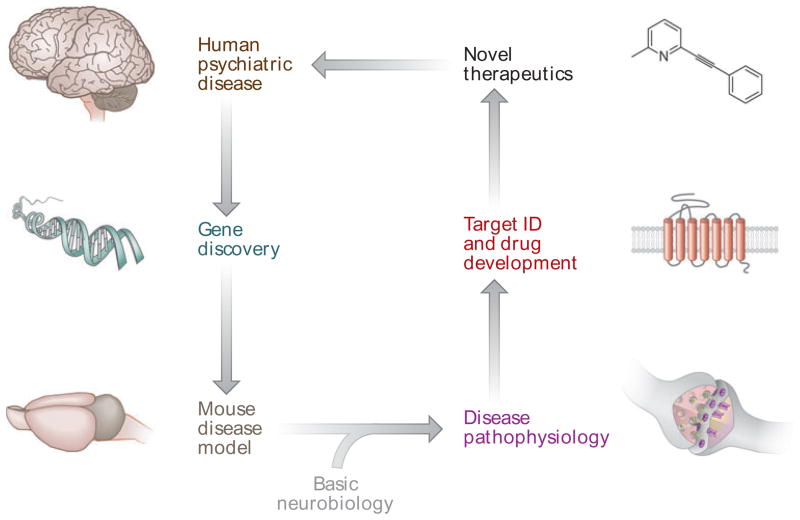
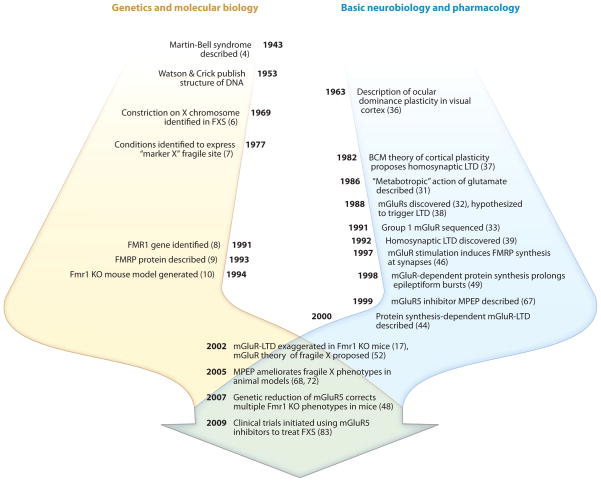
Fragile X syndrome (FXS) is the most common inherited form of mental retardation and a leading known cause of autism. It is caused by loss of expression of the fragile X mental retardation protein (FMRP), an RNA-binding protein that negatively regulates protein synthesis. In neurons, multiple lines of evidence suggest that protein synthesis at synapses is triggered by activation of group 1 metabotropic glutamate receptors (Gp1 mGluRs) and that many functional consequences of activating these receptors are altered in the absence of FMRP. These observations have led to the theory that exaggerated protein synthesis downstream of Gp1 mGluRs is a core pathogenic mechanism in FXS. This excess can be corrected by reducing signaling by Gp1 mGluRs, and numerous studies have shown that inhibition of mGluR5, in particular, can ameliorate multiple mutant phenotypes in animal models of FXS. Clinical trials based on this therapeutic strategy are currently under way. FXS is therefore poised to be the first neurobehavioral disorder in which corrective treatments have been developed from the bottom up: from gene identification to pathophysiology in animals to novel therapeutics in humans. The insights gained from FXS and other autism-related single-gene disorders may also assist in identifying molecular mechanisms and potential treatment approaches for idiopathic autism.
脆性 X 综合征 (FXS) 是最常见的遗传性智力障碍,也是自闭症的主要已知病因。它是由脆性 X 智力低下蛋白 (FMRP) 表达缺失引起的,FMRP 是一种 RNA 结合蛋白,可负向调节蛋白质合成。在神经元中,多条证据表明,突触处的蛋白质合成是由激活 1 型代谢型谷氨酸受体 (Gp1 mGluRs) 触发的,而在没有 FMRP 的情况下,这些受体的许多功能后果都会发生改变。这些观察结果导致了这样一种理论,即 Gp1 mGluRs 下游的蛋白质合成过度是 FXS 的核心致病机制。通过减少 Gp1 mGluRs 的信号传递,可以纠正这种过度,许多研究表明,特别是抑制 mGluR5,可以改善 FXS 动物模型中的多种突变表型。基于这一治疗策略的临床试验正在进行中。因此,FXS 有望成为第一个从基因鉴定到动物的病理生理学,再到人类新疗法的神经行为障碍得到纠正治疗的疾病。从 FXS 和其他与自闭症相关的单基因疾病中获得的见解也可能有助于确定特发性自闭症的分子机制和潜在治疗方法。