Department of Cell Biology, University of Massachusetts Medical School, Worcester, MA 01655, USA.
J Cell Biol. 2010 Sep 6;190(5):927-40. doi: 10.1083/jcb.201006105.
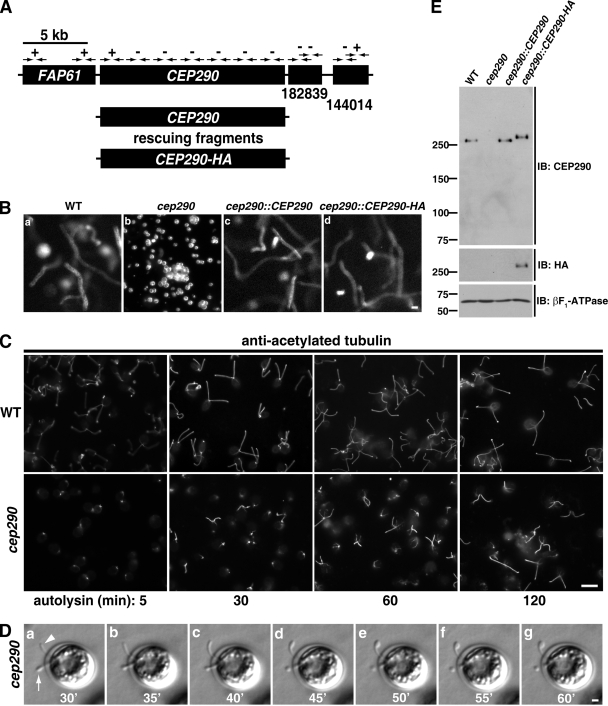
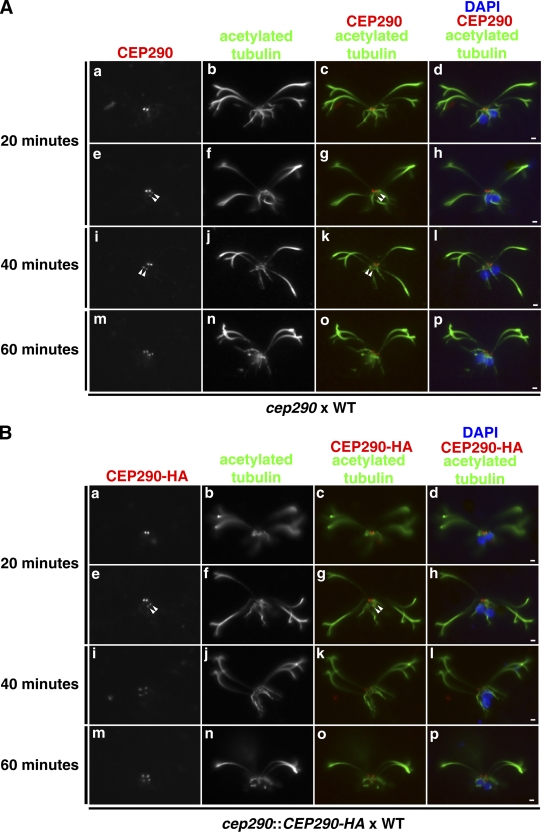
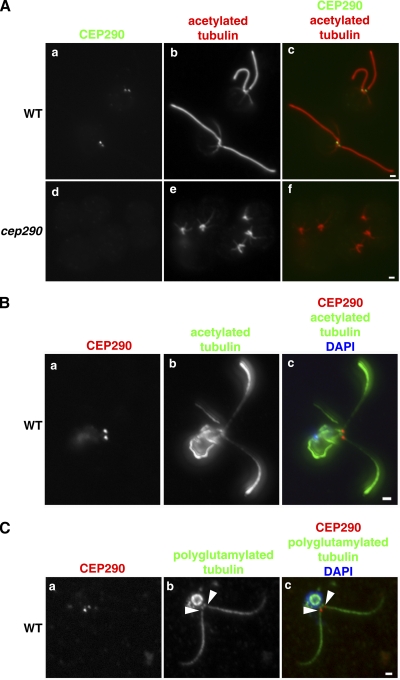
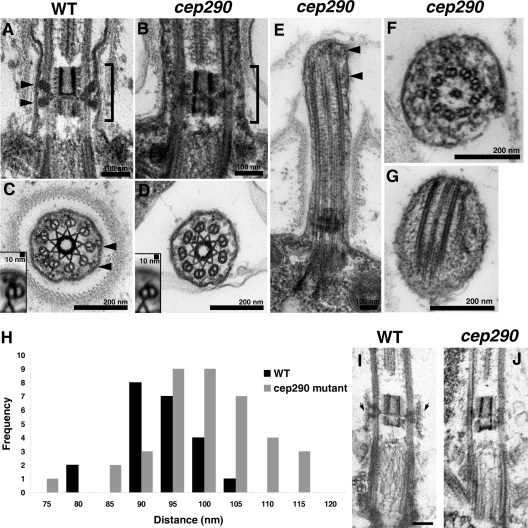
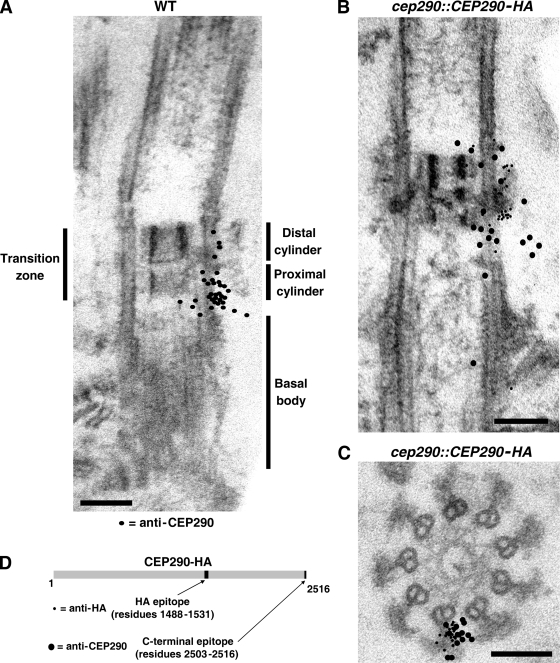
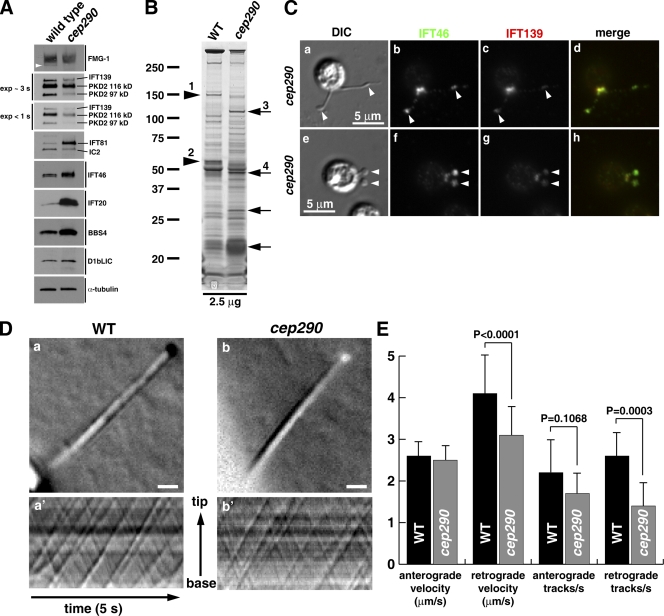
Mutations in human CEP290 cause cilia-related disorders that range in severity from isolated blindness to perinatal lethality. Here, we describe a Chlamydomonas reinhardtii mutant in which most of the CEP290 gene is deleted. Immunoelectron microscopy indicated that CEP290 is located in the flagellar transition zone in close association with the prominent microtubule-membrane links there. Ultrastructural analysis revealed defects in these microtubule-membrane connectors, resulting in loss of attachment of the flagellar membrane to the transition zone microtubules. Biochemical analysis of isolated flagella revealed that the mutant flagella have abnormal protein content, including abnormal levels of intraflagellar transport proteins and proteins associated with ciliopathies. Experiments with dikaryons showed that CEP290 at the transition zone is dynamic and undergoes rapid turnover. The results indicate that CEP290 is required to form microtubule-membrane linkers that tether the flagellar membrane to the transition zone microtubules, and is essential for controlling flagellar protein composition.
CEP290 基因突变会导致以孤立性失明到围产期致死等不同严重程度的纤毛相关疾病。在这里,我们描述了一种莱茵衣藻突变体,其中大部分 CEP290 基因缺失。免疫电子显微镜表明,CEP290 位于鞭毛过渡区,与该处突出的微管-膜连接密切相关。超微结构分析显示这些微管-膜连接体存在缺陷,导致鞭毛膜与过渡区微管的附着丧失。对分离的鞭毛进行的生化分析表明,突变体鞭毛的蛋白含量异常,包括内鞭毛运输蛋白和与纤毛病相关的蛋白水平异常。二倍体实验表明,过渡区的 CEP290 是动态的,并经历快速周转。结果表明,CEP290 对于形成将鞭毛膜固定到过渡区微管的微管-膜连接物是必需的,并且对于控制鞭毛蛋白组成是必需的。