Divisions of Interdisciplinary Medicine and Biotechnology, Hematology-Oncology and Nephrology, Beth Israel Deaconess Medical Center (BIDMC) and Harvard Medical School, Boston, Massachusetts, United States of America.
PLoS One. 2010 Sep 2;5(9):e12520. doi: 10.1371/journal.pone.0012520.
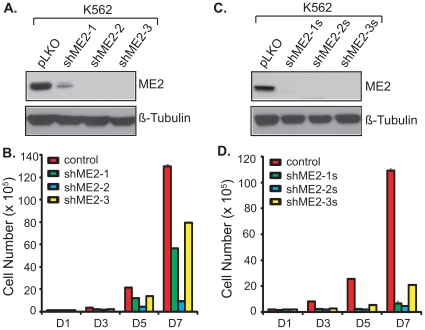
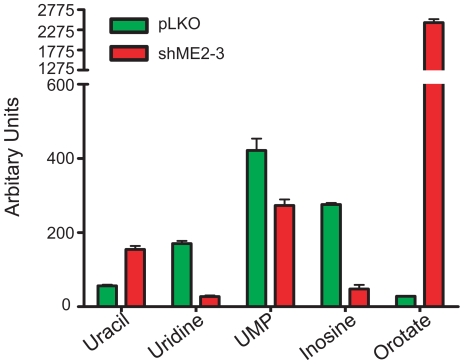
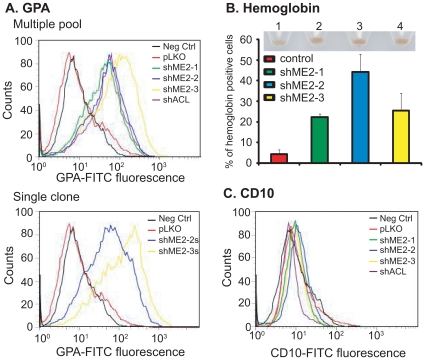
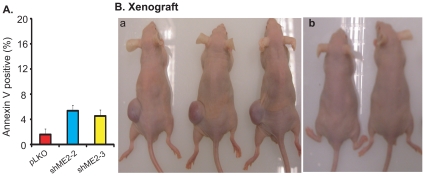
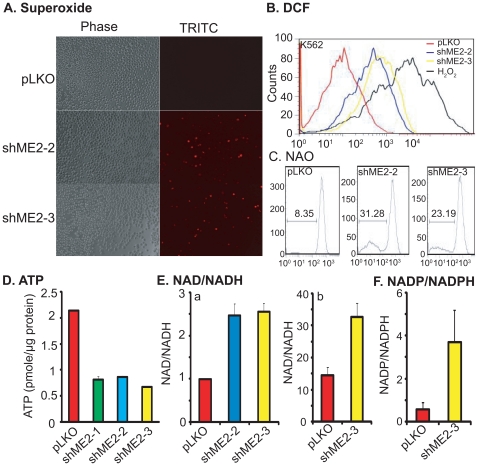
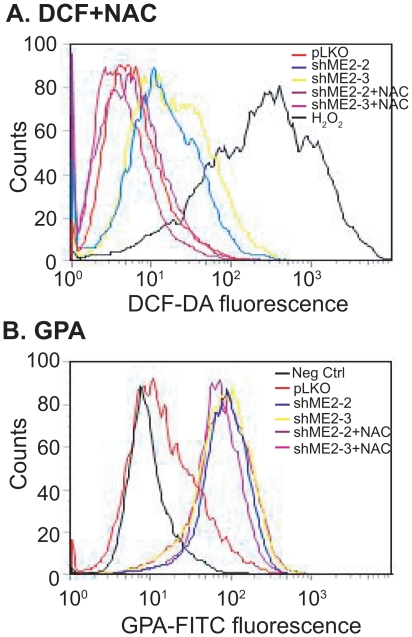
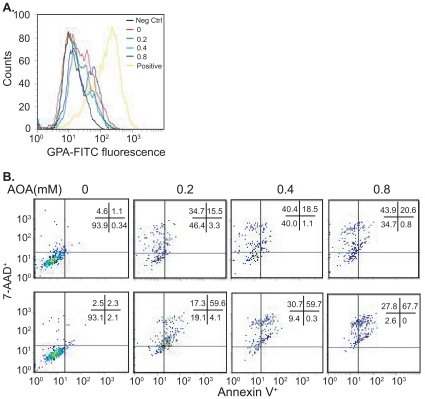
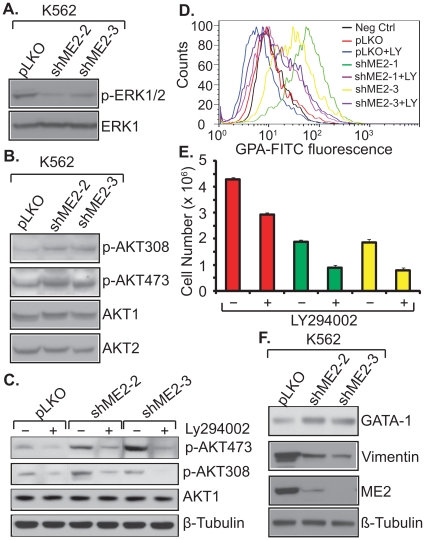
Malic enzyme 2 (ME2) is a mitochondrial enzyme that catalyzes the conversion of malate to pyruvate and CO2 and uses NAD as a cofactor. Higher expression of this enzyme correlates with the degree of cell de-differentiation. We found that ME2 is expressed in K562 erythroleukemia cells, in which a number of agents have been found to induce differentiation either along the erythroid or the myeloid lineage. We found that knockdown of ME2 led to diminished proliferation of tumor cells and increased apoptosis in vitro. These findings were accompanied by differentiation of K562 cells along the erythroid lineage, as confirmed by staining for glycophorin A and hemoglobin production. ME2 knockdown also totally abolished growth of K562 cells in nude mice. Increased ROS levels, likely reflecting increased mitochondrial production, and a decreased NADPH/NADP+ ratio were noted but use of a free radical scavenger to decrease inhibition of ROS levels did not reverse the differentiation or apoptotic phenotype, suggesting that ROS production is not causally involved in the resultant phenotype. As might be expected, depletion of ME2 induced an increase in the NAD+/NADH ratio and ATP levels fell significantly. Inhibition of the malate-aspartate shuttle was insufficient to induce K562 differentiation. We also examined several intracellular signaling pathways and expression of transcription factors and intermediate filament proteins whose expression is known to be modulated during erythroid differentiation in K562 cells. We found that silencing of ME2 leads to phospho-ERK1/2 inhibition, phospho-AKT activation, increased GATA-1 expression and diminished vimentin expression. Metabolomic analysis, conducted to gain insight into intermediary metabolic pathways that ME2 knockdown might affect, showed that ME2 depletion resulted in high orotate levels, suggesting potential impairment of pyrimidine metabolism. Collectively our data point to ME2 as a potentially novel metabolic target for leukemia therapy.
苹果酸酶 2(ME2)是一种线粒体酶,可催化苹果酸转化为丙酮酸和 CO2,并将 NAD 用作辅助因子。该酶的高表达与细胞去分化程度相关。我们发现 ME2 在 K562 红细胞白血病细胞中表达,已有多种试剂被发现可诱导其沿红细胞或髓系分化。我们发现 ME2 的敲低导致肿瘤细胞增殖减少,体外凋亡增加。这些发现伴随着 K562 细胞沿红细胞谱系的分化,这一点通过糖蛋白 A 染色和血红蛋白产生得到证实。ME2 的敲低也完全阻止了 K562 细胞在裸鼠中的生长。我们注意到 ROS 水平增加,可能反映线粒体产生增加,以及 NADPH/NADP+ 比值降低,但使用自由基清除剂来降低 ROS 水平的抑制作用并没有逆转分化或凋亡表型,这表明 ROS 的产生与所得表型没有因果关系。正如预期的那样,ME2 的耗竭诱导 NAD+/NADH 比值增加,并且 ATP 水平显著下降。抑制苹果酸-天冬氨酸穿梭不足以诱导 K562 分化。我们还检查了几种细胞内信号通路和转录因子以及中间丝蛋白的表达,已知它们在 K562 细胞的红细胞分化过程中受到调节。我们发现 ME2 的沉默导致磷酸化 ERK1/2 抑制、磷酸化 AKT 激活、GATA-1 表达增加和波形蛋白表达减少。为了深入了解 ME2 敲低可能影响的中间代谢途径,进行了代谢组学分析,结果显示 ME2 耗竭导致高乳清酸水平,表明嘧啶代谢可能受损。总之,我们的数据表明 ME2 可能是白血病治疗的一个新的潜在代谢靶点。