Department of Neurobiology, Harvard Medical School, Goldenson 243, 220 Longwood Avenue, Boston, MA 02115, USA.
Neuron. 2010 Sep 9;67(5):858-71. doi: 10.1016/j.neuron.2010.08.002.
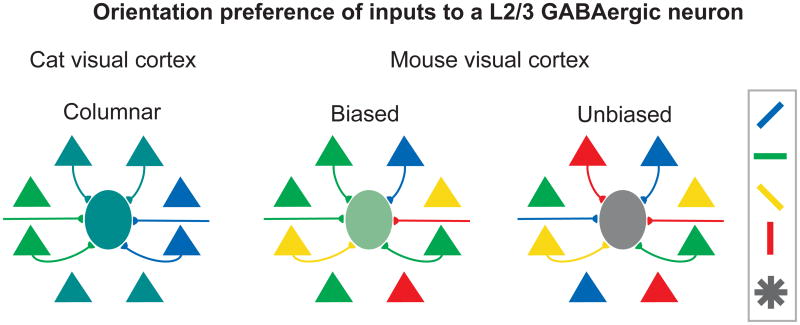
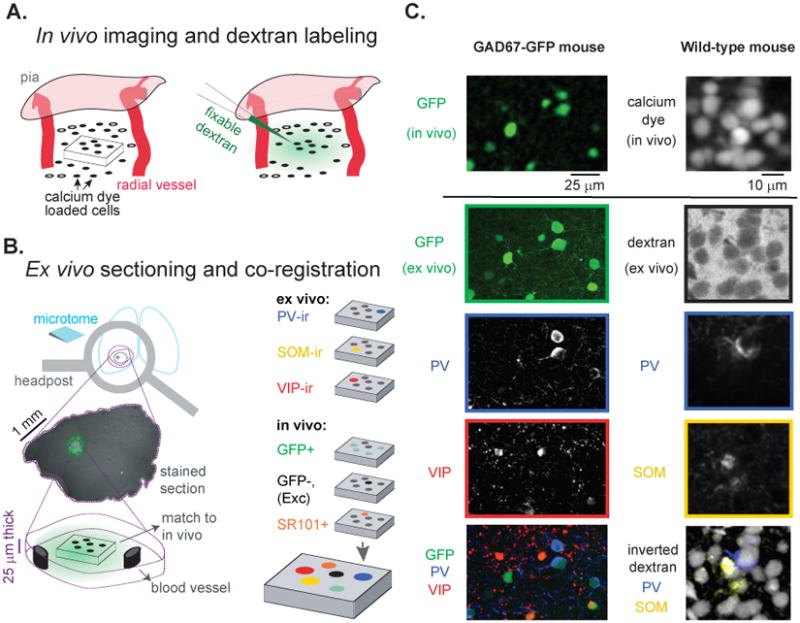
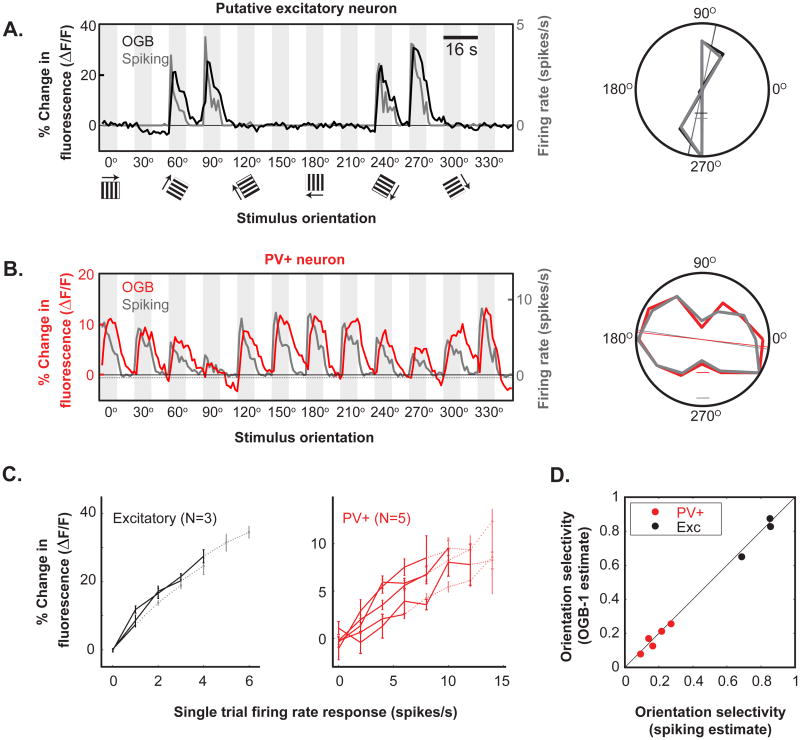
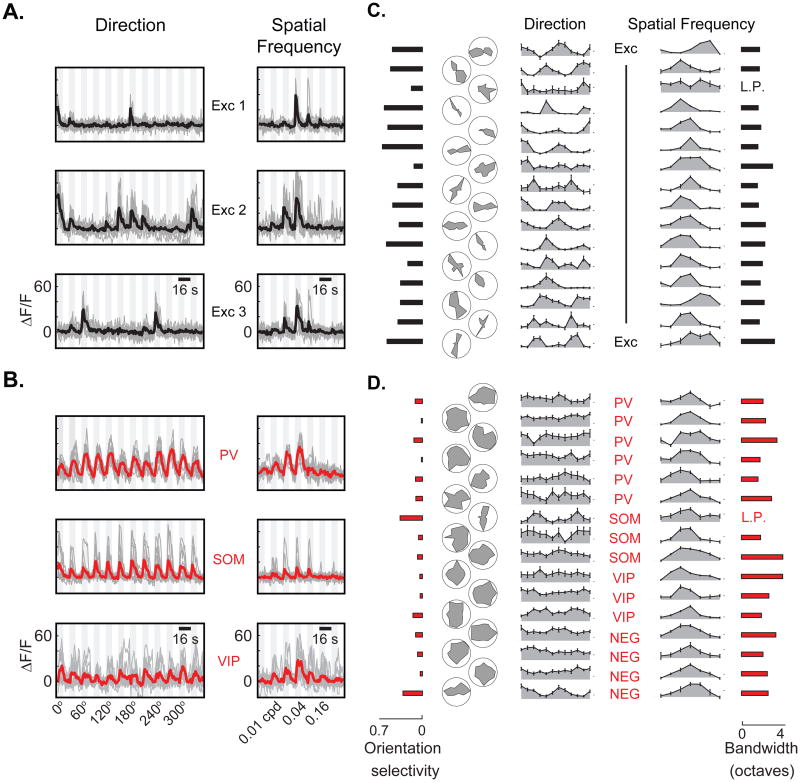
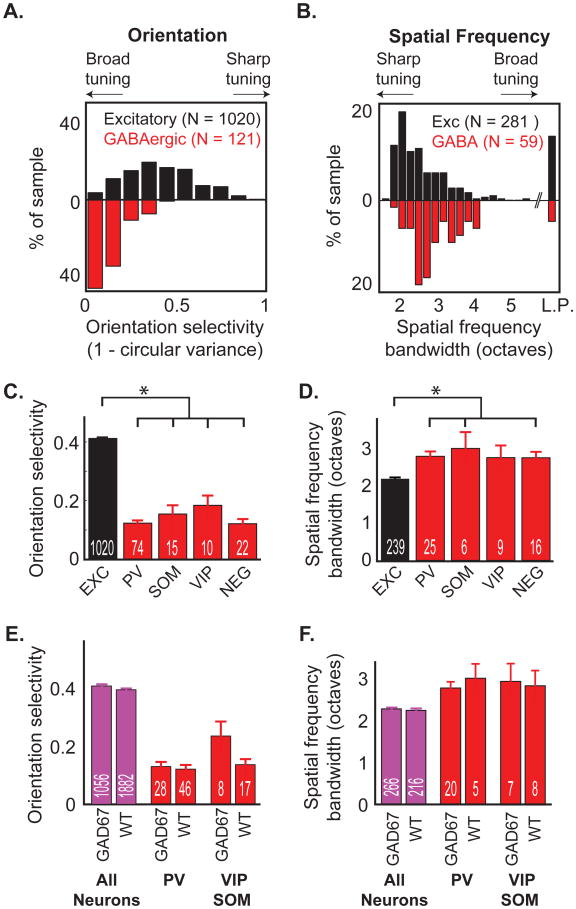
Different subtypes of GABAergic neurons in sensory cortex exhibit diverse morphology, histochemical markers, and patterns of connectivity. These subtypes likely play distinct roles in cortical function, but their in vivo response properties remain unclear. We used in vivo calcium imaging, combined with immunohistochemical and genetic labels, to record visual responses in excitatory neurons and up to three distinct subtypes of GABAergic neurons (immunoreactive for parvalbumin, somatostatin, or vasoactive intestinal peptide) in layer 2/3 of mouse visual cortex. Excitatory neurons had sharp response selectivity for stimulus orientation and spatial frequency, while all GABAergic subtypes had broader selectivity. Further, bias in the responses of GABAergic neurons toward particular orientations or spatial frequencies tended to reflect net biases of the surrounding neurons. These results suggest that the sensory responses of layer 2/3 GABAergic neurons reflect the pooled activity of the surrounding population--a principle that may generalize across species and sensory modalities.
感觉皮层中的不同 GABA 能神经元亚型具有不同的形态、组织化学标记和连接模式。这些亚型可能在皮层功能中发挥不同的作用,但它们的体内反应特性尚不清楚。我们使用体内钙成像技术,结合免疫组织化学和遗传标记,记录了小鼠视觉皮层 2/3 层中兴奋性神经元和多达三种不同 GABA 能神经元亚型(对 parvalbumin、somatostatin 或 vasoactive intestinal peptide 免疫反应阳性)的视觉反应。兴奋性神经元对刺激方向和空间频率具有锐利的反应选择性,而所有 GABA 能神经元亚型的选择性都较宽。此外,GABA 能神经元反应对特定方向或空间频率的偏向往往反映了周围神经元的净偏向。这些结果表明,2/3 层 GABA 能神经元的感觉反应反映了周围神经元群体的活动总和——这一原则可能在不同物种和感觉模式中具有普遍性。