• 文献检索
  • 文档翻译
  • 深度研究
  • 学术资讯
  • Suppr Zotero 插件Zotero 插件
  • 邀请有礼
  • 套餐&价格
  • 历史记录
应用&插件
Suppr Zotero 插件Zotero 插件浏览器插件Mac 客户端Windows 客户端微信小程序
定价
高级版会员购买积分包购买API积分包
服务
文献检索文档翻译深度研究API 文档MCP 服务
关于我们
关于 Suppr公司介绍联系我们用户协议隐私条款
关注我们

Suppr 超能文献

核心技术专利:CN118964589B侵权必究
粤ICP备2023148730 号-1Suppr @ 2026

文献检索

告别复杂PubMed语法,用中文像聊天一样搜索,搜遍4000万医学文献。AI智能推荐,让科研检索更轻松。

立即免费搜索

文件翻译

保留排版,准确专业,支持PDF/Word/PPT等文件格式,支持 12+语言互译。

免费翻译文档

深度研究

AI帮你快速写综述,25分钟生成高质量综述,智能提取关键信息,辅助科研写作。

立即免费体验

从细菌细胞中分离具有生物活性的纳米材料(包含体)。

Isolation of biologically active nanomaterial (inclusion bodies) from bacterial cells.

机构信息

Laboratory for Biosynthesis and Biotransformation, National Institute of Chemistry, Ljubljana, Slovenia.

出版信息

Microb Cell Fact. 2010 Sep 10;9:66. doi: 10.1186/1475-2859-9-66.

DOI:10.1186/1475-2859-9-66
PMID:20831775
原文链接:https://pmc.ncbi.nlm.nih.gov/articles/PMC2944166/
Abstract

BACKGROUND

In recent years bacterial inclusion bodies (IBs) were recognised as highly pure deposits of active proteins inside bacterial cells. Such active nanoparticles are very interesting for further downstream protein isolation, as well as for many other applications in nanomedicine, cosmetic, chemical and pharmaceutical industry.To prepare large quantities of a high quality product, the whole bioprocess has to be optimised. This includes not only the cultivation of the bacterial culture, but also the isolation step itself, which can be of critical importance for the production process.To determine the most appropriate method for the isolation of biologically active nanoparticles, three methods for bacterial cell disruption were analyzed.

RESULTS

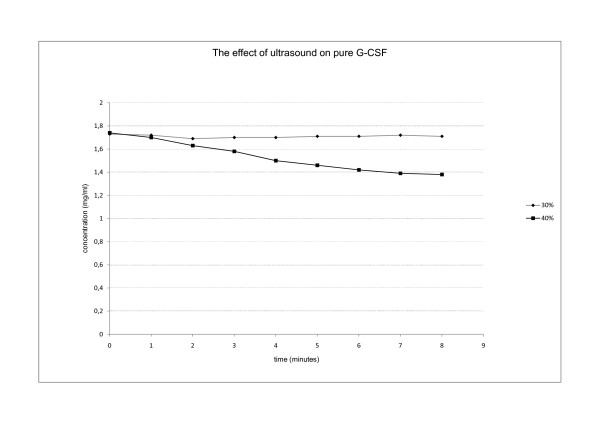
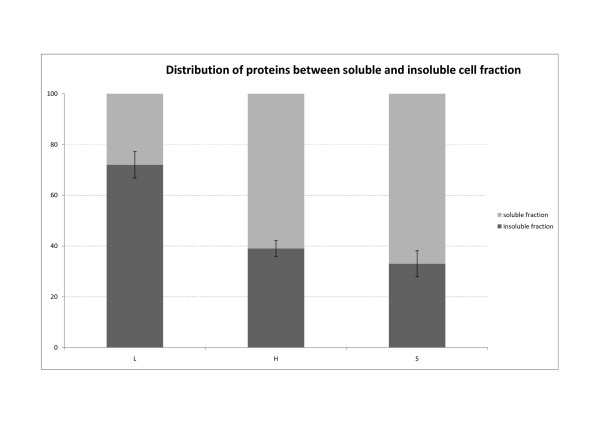
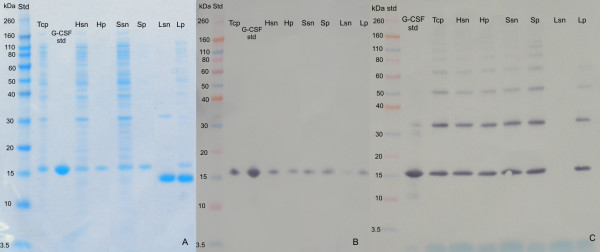
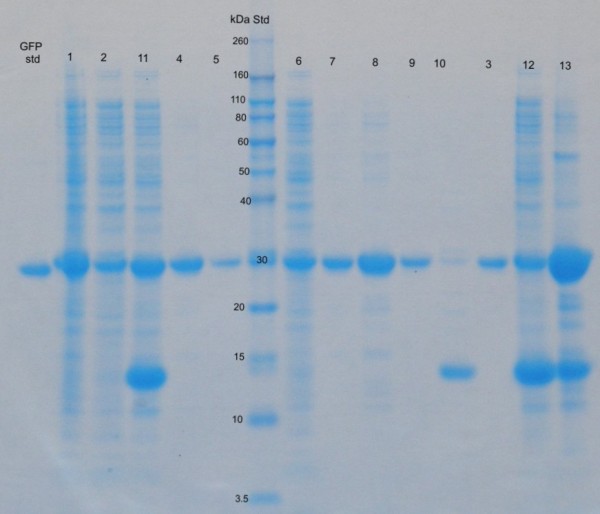
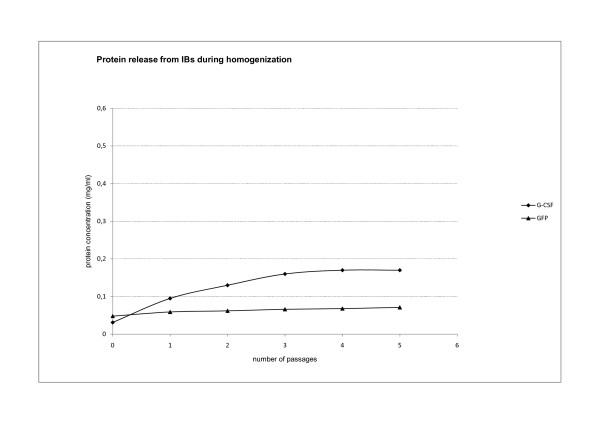
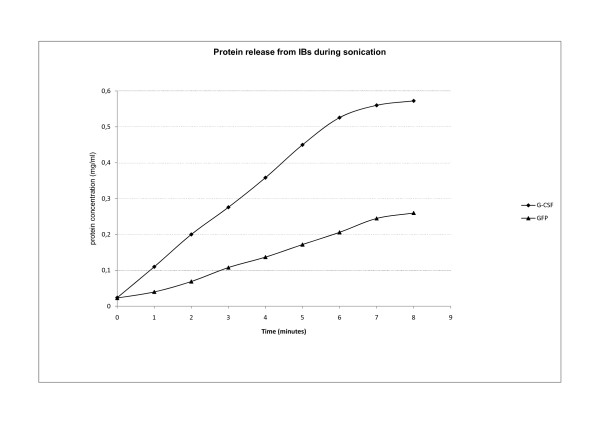
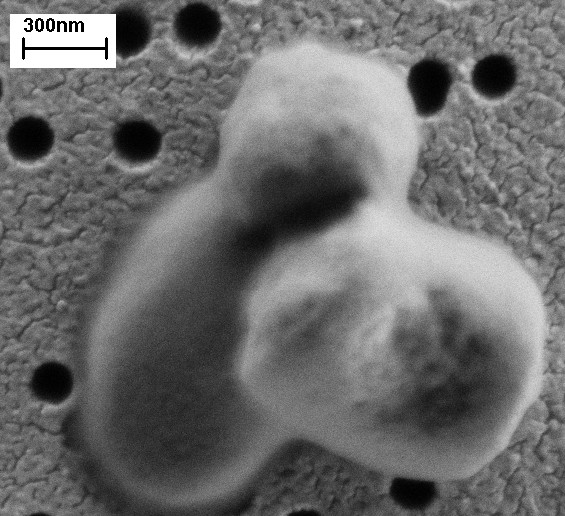
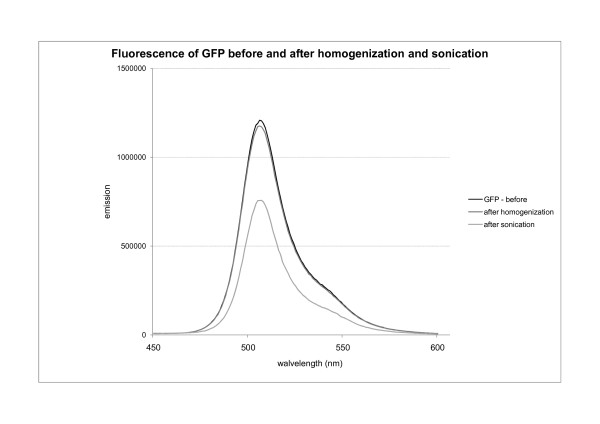
In this study, enzymatic lysis and two mechanical methods, high-pressure homogenization and sonication, were compared.During enzymatic lysis the enzyme lysozyme was found to attach to the surface of IBs, and it could not be removed by simple washing. As this represents an additional impurity in the engineered nanoparticles, we concluded that enzymatic lysis is not the most suitable method for IBs isolation.During sonication proteins are released (lost) from the surface of IBs and thus the surface of IBs appears more porous when compared to the other two methods. We also found that the acoustic output power needed to isolate the IBs from bacterial cells actually damages proteins structures, thereby causing a reduction in biological activity.High-pressure homogenization also caused some damage to IBs, however the protein loss from the IBs was negligible. Furthermore, homogenization had no side-effects on protein biological activity.

CONCLUSIONS

The study shows that among the three methods tested, homogenization is the most appropriate method for the isolation of active nanoparticles from bacterial cells.

摘要

背景

近年来,细菌包含体(IBs)被认为是细菌细胞内高纯度活性蛋白的沉积物。这些活性纳米颗粒对于进一步的下游蛋白质分离以及纳米医学、化妆品、化学和制药工业的许多其他应用非常有趣。为了制备大量高质量的产品,整个生物工艺都必须进行优化。这不仅包括细菌培养的优化,还包括分离步骤本身,这对生产过程可能至关重要。为了确定分离生物活性纳米颗粒的最合适方法,分析了三种细菌细胞破碎方法。

结果

在这项研究中,比较了酶裂解和两种机械方法,高压匀浆和超声。在酶裂解过程中,发现酶溶菌酶附着在 IBs 的表面,并且不能通过简单的洗涤去除。由于这代表了工程纳米颗粒中的额外杂质,因此我们得出结论,酶裂解不是分离 IBs 的最适合方法。在超声过程中,蛋白质从 IBs 的表面释放(损失),因此与其他两种方法相比,IBs 的表面看起来更加多孔。我们还发现,从细菌细胞中分离 IBs 所需的声输出功率实际上会破坏蛋白质结构,从而导致生物活性降低。高压匀浆也会对 IBs 造成一些损伤,但 IBs 中的蛋白质损失可以忽略不计。此外,匀浆对蛋白质生物活性没有副作用。

结论

该研究表明,在所测试的三种方法中,匀浆是从细菌细胞中分离活性纳米颗粒的最适合方法。
https://cdn.ncbi.nlm.nih.gov/pmc/blobs/767a/2944166/b06569740cd6/1475-2859-9-66-13.jpg
https://cdn.ncbi.nlm.nih.gov/pmc/blobs/767a/2944166/45dca6f51d69/1475-2859-9-66-1.jpg
https://cdn.ncbi.nlm.nih.gov/pmc/blobs/767a/2944166/cdf182bb74cb/1475-2859-9-66-2.jpg
https://cdn.ncbi.nlm.nih.gov/pmc/blobs/767a/2944166/c8b4eefd4ee7/1475-2859-9-66-3.jpg
https://cdn.ncbi.nlm.nih.gov/pmc/blobs/767a/2944166/8ddc35e9e94a/1475-2859-9-66-4.jpg
https://cdn.ncbi.nlm.nih.gov/pmc/blobs/767a/2944166/7b6cc52b474c/1475-2859-9-66-5.jpg
https://cdn.ncbi.nlm.nih.gov/pmc/blobs/767a/2944166/d691482a76d8/1475-2859-9-66-6.jpg
https://cdn.ncbi.nlm.nih.gov/pmc/blobs/767a/2944166/1a2458280799/1475-2859-9-66-7.jpg
https://cdn.ncbi.nlm.nih.gov/pmc/blobs/767a/2944166/8dd3174e0745/1475-2859-9-66-8.jpg
https://cdn.ncbi.nlm.nih.gov/pmc/blobs/767a/2944166/0da060bbb243/1475-2859-9-66-9.jpg
https://cdn.ncbi.nlm.nih.gov/pmc/blobs/767a/2944166/78e34db8fde9/1475-2859-9-66-10.jpg
https://cdn.ncbi.nlm.nih.gov/pmc/blobs/767a/2944166/40b514f56238/1475-2859-9-66-11.jpg
https://cdn.ncbi.nlm.nih.gov/pmc/blobs/767a/2944166/9aab17f9c865/1475-2859-9-66-12.jpg
https://cdn.ncbi.nlm.nih.gov/pmc/blobs/767a/2944166/b06569740cd6/1475-2859-9-66-13.jpg
https://cdn.ncbi.nlm.nih.gov/pmc/blobs/767a/2944166/45dca6f51d69/1475-2859-9-66-1.jpg
https://cdn.ncbi.nlm.nih.gov/pmc/blobs/767a/2944166/cdf182bb74cb/1475-2859-9-66-2.jpg
https://cdn.ncbi.nlm.nih.gov/pmc/blobs/767a/2944166/c8b4eefd4ee7/1475-2859-9-66-3.jpg
https://cdn.ncbi.nlm.nih.gov/pmc/blobs/767a/2944166/8ddc35e9e94a/1475-2859-9-66-4.jpg
https://cdn.ncbi.nlm.nih.gov/pmc/blobs/767a/2944166/7b6cc52b474c/1475-2859-9-66-5.jpg
https://cdn.ncbi.nlm.nih.gov/pmc/blobs/767a/2944166/d691482a76d8/1475-2859-9-66-6.jpg
https://cdn.ncbi.nlm.nih.gov/pmc/blobs/767a/2944166/1a2458280799/1475-2859-9-66-7.jpg
https://cdn.ncbi.nlm.nih.gov/pmc/blobs/767a/2944166/8dd3174e0745/1475-2859-9-66-8.jpg
https://cdn.ncbi.nlm.nih.gov/pmc/blobs/767a/2944166/0da060bbb243/1475-2859-9-66-9.jpg
https://cdn.ncbi.nlm.nih.gov/pmc/blobs/767a/2944166/78e34db8fde9/1475-2859-9-66-10.jpg
https://cdn.ncbi.nlm.nih.gov/pmc/blobs/767a/2944166/40b514f56238/1475-2859-9-66-11.jpg
https://cdn.ncbi.nlm.nih.gov/pmc/blobs/767a/2944166/9aab17f9c865/1475-2859-9-66-12.jpg
https://cdn.ncbi.nlm.nih.gov/pmc/blobs/767a/2944166/b06569740cd6/1475-2859-9-66-13.jpg

相似文献

1
Isolation of biologically active nanomaterial (inclusion bodies) from bacterial cells.从细菌细胞中分离具有生物活性的纳米材料(包含体)。
Microb Cell Fact. 2010 Sep 10;9:66. doi: 10.1186/1475-2859-9-66.
2
Bacterial cell disruption: a crucial step in protein production.细菌细胞破碎:蛋白质生产的关键步骤。
N Biotechnol. 2013 Jan 25;30(2):250-4. doi: 10.1016/j.nbt.2011.09.005. Epub 2011 Oct 1.
3
Isolation of cell-free bacterial inclusion bodies.无细胞细菌包含体的分离。
Microb Cell Fact. 2010 Sep 17;9:71. doi: 10.1186/1475-2859-9-71.
4
A novel method to recover inclusion body protein from recombinant E. coli fed-batch processes based on phage ΦX174-derived lysis protein E.一种基于噬菌体ΦX174来源的裂解蛋白E从重组大肠杆菌补料分批培养过程中回收包涵体蛋白的新方法。
Appl Microbiol Biotechnol. 2017 Jul;101(14):5603-5614. doi: 10.1007/s00253-017-8281-x. Epub 2017 Apr 20.
5
Removal and monitoring of residual nucleic acids from core streptavidin inclusion bodies for increased refolding yield.从核心链霉亲和素包涵体中去除和监测残留核酸以提高复性产率。
Protein Expr Purif. 2025 Jan;225:106591. doi: 10.1016/j.pep.2024.106591. Epub 2024 Aug 22.
6
Exploring the use of leucine zippers for the generation of a new class of inclusion bodies for pharma and biotechnological applications.探讨利用亮氨酸拉链生成一类新的包含体,用于制药和生物技术应用。
Microb Cell Fact. 2020 Sep 4;19(1):175. doi: 10.1186/s12934-020-01425-x.
7
High Pressure Homogenization for Inclusion Body Isolation.用于包涵体分离的高压均质法
Methods Mol Biol. 2023;2617:141-154. doi: 10.1007/978-1-0716-2930-7_9.
8
Bacterial inclusion bodies: making gold from waste.细菌包含体:变废为宝。
Trends Biotechnol. 2012 Feb;30(2):65-70. doi: 10.1016/j.tibtech.2011.09.003. Epub 2011 Oct 29.
9
One-step heating strategy for efficient solubilization of recombinant spider silk protein from inclusion bodies.一步加热策略用于高效溶解包涵体中的重组蜘蛛丝蛋白。
BMC Biotechnol. 2020 Jul 10;20(1):37. doi: 10.1186/s12896-020-00630-1.
10
Nucleic acids in inclusion bodies obtained from E. coli cells expressing human interferon-gamma.从表达人干扰素-γ的大肠杆菌细胞中获得的包涵体中的核酸。
Microb Cell Fact. 2020 Jul 11;19(1):139. doi: 10.1186/s12934-020-01400-6.

引用本文的文献

1
Assessment of bacteriocin production by clinical Pseudomonas aeruginosa isolates and their potential as therapeutic agents.临床铜绿假单胞菌分离株细菌素产生的评估及其作为治疗剂的潜力。
Microb Cell Fact. 2024 Jun 13;23(1):175. doi: 10.1186/s12934-024-02450-w.
2
Efficient strategy to isolate exosomes using anti-CD63 antibodies conjugated to gold nanoparticles.使用与金纳米颗粒偶联的抗CD63抗体分离外泌体的有效策略。
AMB Express. 2023 Aug 28;13(1):90. doi: 10.1186/s13568-023-01592-1.
3
Studies on the Structure and Properties of Membrane Phospholipase A Inclusion Bodies Formed at Low Growth Temperatures Using GFP Fusion Strategy.

本文引用的文献

1
Tunable geometry of bacterial inclusion bodies as substrate materials for tissue engineering.可调节细菌包含体的几何形状作为组织工程的基质材料。
Nanotechnology. 2010 May 21;21(20):205101. doi: 10.1088/0957-4484/21/20/205101. Epub 2010 Apr 23.
2
Engineering inclusion bodies for non denaturing extraction of functional proteins.工程化包涵体用于非变性提取功能蛋白。
Microb Cell Fact. 2008 Dec 1;7:34. doi: 10.1186/1475-2859-7-34.
3
New properties of inclusion bodies with implications for biotechnology.包涵体的新特性及其对生物技术的影响。
利用绿色荧光蛋白融合策略对低温生长条件下形成的膜磷脂酶A包涵体的结构与性质研究
Molecules. 2021 Jun 28;26(13):3936. doi: 10.3390/molecules26133936.
4
Selecting Subpopulations of High-Quality Protein Conformers among Conformational Mixtures of Recombinant Bovine MMP-9 Solubilized from Inclusion Bodies.从包涵体中溶解的重组牛基质金属蛋白酶-9的构象混合物中选择高质量蛋白质构象体的亚群。
Int J Mol Sci. 2021 Mar 16;22(6):3020. doi: 10.3390/ijms22063020.
5
FTIR Investigation of Secondary Structure of Reteplase Inclusion Bodies Produced in in Terms of Urea Concentration.基于尿素浓度对瑞替普酶包涵体二级结构的傅里叶变换红外光谱研究
Iran J Pharm Res. 2020 Spring;19(2):175-181. doi: 10.22037/ijpr.2020.1101092.
6
Optimization of Methods for the Production and Refolding of Biologically Active Disulfide Bond-Rich Antibody Fragments in Microbial Hosts.微生物宿主中具有生物活性的富含二硫键抗体片段的生产与重折叠方法的优化
Antibodies (Basel). 2020 Aug 5;9(3):39. doi: 10.3390/antib9030039.
7
Structure-Function Relationship of Inclusion Bodies of a Multimeric Protein.多聚体蛋白包涵体的结构-功能关系
Front Microbiol. 2020 May 8;11:876. doi: 10.3389/fmicb.2020.00876. eCollection 2020.
8
A Heterologous Viral Protein Scaffold for Chimeric Antigen Design: An Example PCV2 Virus Vaccine Candidate.一种用于嵌合抗原设计的异源病毒蛋白支架:一个示例 PCV2 病毒疫苗候选物。
Viruses. 2020 Mar 31;12(4):385. doi: 10.3390/v12040385.
9
Spontaneous C-cleavage of a truncated intein as fusion tag to produce tag-free VP1 inclusion body nanoparticle vaccine against CVB3-induced viral myocarditis by the oral route.通过口服途径,利用截短内含肽作为融合标签的自发 C 裂解,产生无标签 VP1 包涵体纳米颗粒疫苗,用于预防 CVB3 诱导的病毒性心肌炎。
Microb Cell Fact. 2019 Apr 4;18(1):66. doi: 10.1186/s12934-019-1115-z.
10
Evaluation of scFv protein recovery from E. coli by in vitro refolding and mild solubilization process.评估通过体外复性和温和溶解过程从大肠杆菌中回收 scFv 蛋白。
Microb Cell Fact. 2019 Jan 14;18(1):5. doi: 10.1186/s12934-019-1053-9.
Biotechnol Appl Biochem. 2008 Apr;49(Pt 4):239-46. doi: 10.1042/BA20070140.
4
Enzymatic lysis of microbial cells.微生物细胞的酶解
Biotechnol Lett. 2007 Jul;29(7):985-94. doi: 10.1007/s10529-007-9345-2. Epub 2007 Apr 27.
5
Binding of lysozyme to phospholipid bilayers: evidence for protein aggregation upon membrane association.溶菌酶与磷脂双层的结合:膜结合时蛋白质聚集的证据。
Biophys J. 2007 Jul 1;93(1):140-53. doi: 10.1529/biophysj.106.102749. Epub 2007 Apr 13.
6
Manufacturing of recombinant therapeutic proteins in microbial systems.在微生物系统中生产重组治疗性蛋白质。
Biotechnol J. 2006 Feb;1(2):164-86. doi: 10.1002/biot.200500051.
7
Overview of bacterial expression systems for heterologous protein production: from molecular and biochemical fundamentals to commercial systems.用于异源蛋白生产的细菌表达系统概述:从分子和生化基础到商业系统
Appl Microbiol Biotechnol. 2006 Sep;72(2):211-22. doi: 10.1007/s00253-006-0465-8. Epub 2006 Jun 22.
8
Production of nonclassical inclusion bodies from which correctly folded protein can be extracted.产生可从中提取正确折叠蛋白质的非经典包涵体。
Biotechnol Prog. 2005 Mar-Apr;21(2):632-9. doi: 10.1021/bp0497839.
9
Sonication of proteins causes formation of aggregates that resemble amyloid.蛋白质的超声处理会导致形成类似淀粉样蛋白的聚集体。
Protein Sci. 2004 Nov;13(11):3017-27. doi: 10.1110/ps.04831804. Epub 2004 Sep 30.
10
Stress induced by recombinant protein production in Escherichia coli.大肠杆菌中重组蛋白生产所诱导的应激
Adv Biochem Eng Biotechnol. 2004;89:73-92. doi: 10.1007/b93994.