Department of Oral Medicine, Pathology, and Immunology, King's College London Dental Institute, King's College London, London, UK.
Cell Host Microbe. 2010 Sep 16;8(3):225-35. doi: 10.1016/j.chom.2010.08.002.
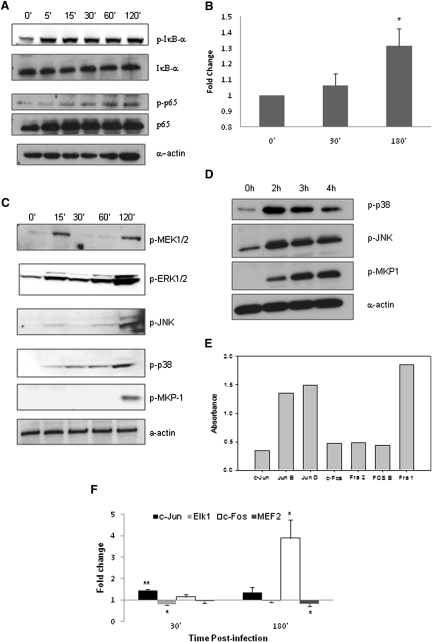
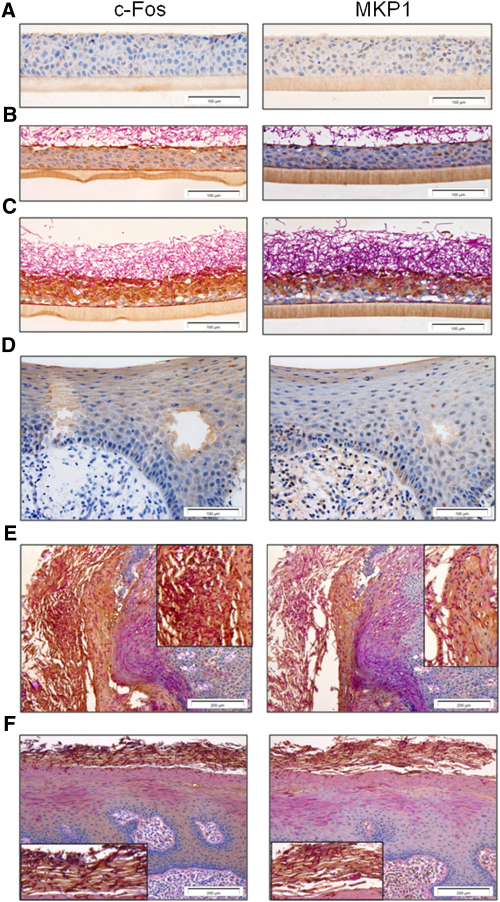
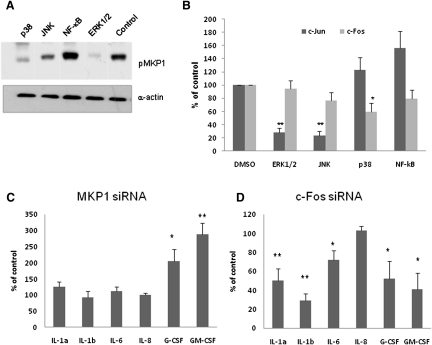
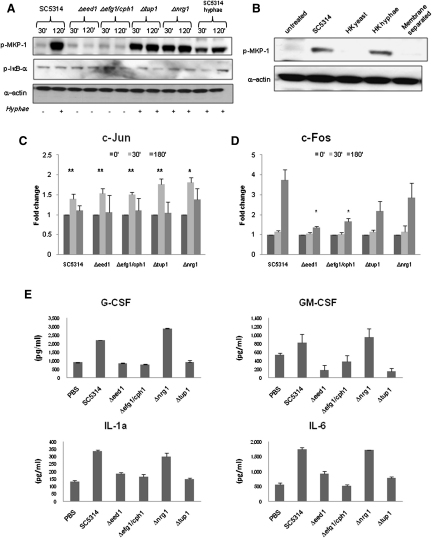
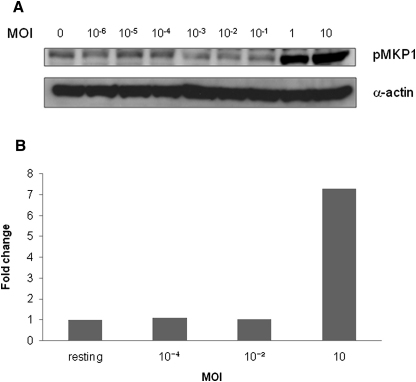
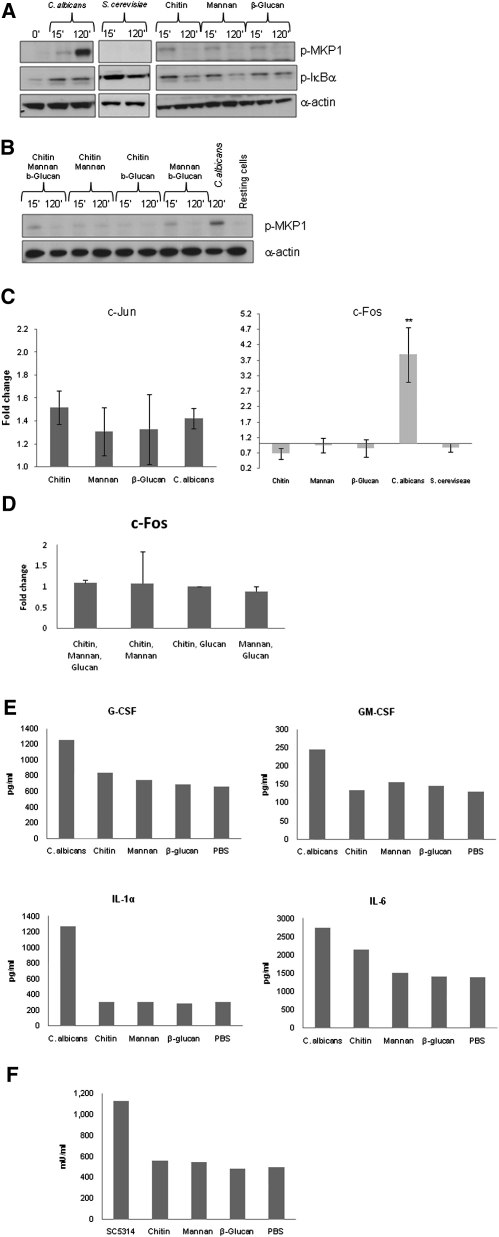
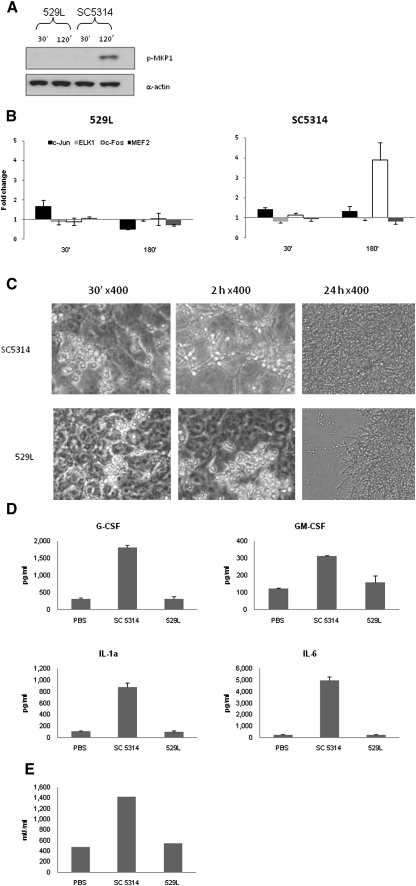
Discriminating between commensal and pathogenic states of opportunistic pathogens is critical for host mucosal defense and homeostasis. The opportunistic human fungal pathogen Candida albicans is also a constituent of the normal oral flora and grows either as yeasts or hyphae. We demonstrate that oral epithelial cells orchestrate an innate response to C. albicans via NF-κB and a biphasic MAPK response. Activation of NF-κB and the first MAPK phase, constituting c-Jun activation, is independent of morphology and due to fungal cell wall recognition. Activation of the second MAPK phase, constituting MKP1 and c-Fos activation, is dependent upon hypha formation and fungal burdens and correlates with proinflammatory responses. Such biphasic response may allow epithelial tissues to remain quiescent under low fungal burdens while responding specifically and strongly to damage-inducing hyphae when burdens increase. MAPK/MKP1/c-Fos activation may represent a "danger response" pathway that is critical for identifying and responding to the pathogenic switch of commensal microbes.
区分机会性病原体的共生和致病状态对于宿主黏膜防御和内稳态至关重要。机会性人类真菌病原体白念珠菌也是正常口腔菌群的组成部分,可生长为酵母或菌丝。我们证明口腔上皮细胞通过 NF-κB 和双相 MAPK 反应来协调对白念珠菌的先天反应。NF-κB 和第一 MAPK 相(构成 c-Jun 激活)的激活与形态无关,是由于真菌细胞壁识别所致。第二 MAPK 相(构成 MKP1 和 c-Fos 激活)的激活取决于菌丝形成和真菌负担,与促炎反应相关。这种双相反应可使上皮组织在低真菌负担下保持静止,而在真菌负担增加时,针对诱导损伤的菌丝特异性和强烈反应。MAPK/MKP1/c-Fos 激活可能代表一种“危险反应”途径,对于识别和响应共生微生物的致病开关至关重要。