Division of Rheumatology and Clinical Immunology, University of Pittsburgh, Pittsburgh, PA 15261, USA.
Mucosal and Salivary Biology Division, Dental Institute, King's College London, London, UK.
Sci Immunol. 2017 Nov 3;2(17). doi: 10.1126/sciimmunol.aam8834.
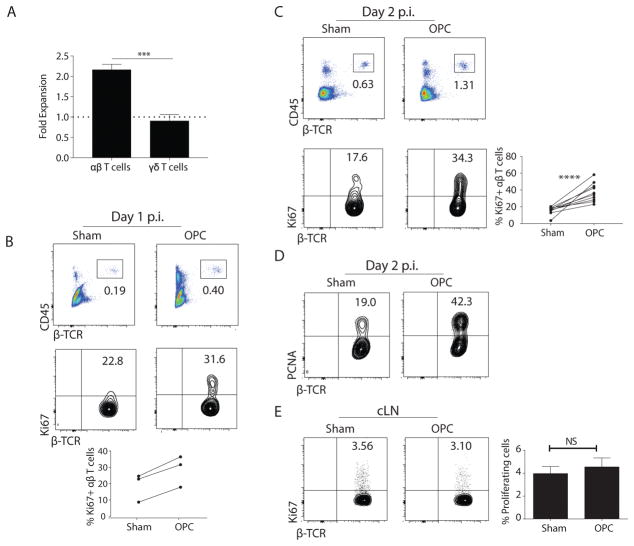
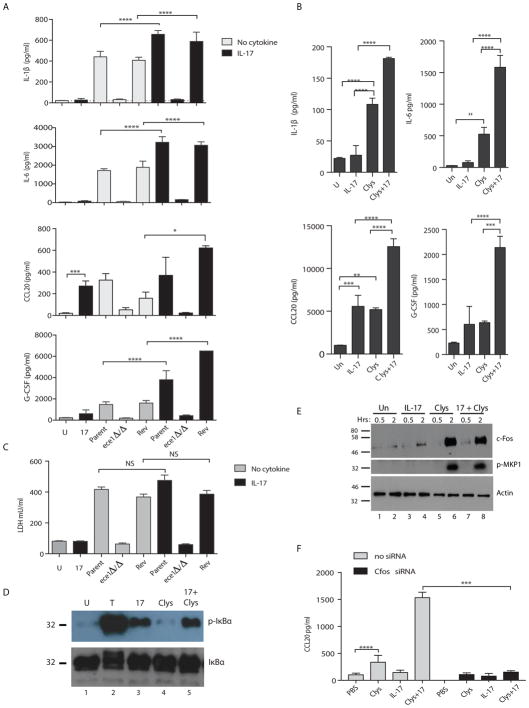
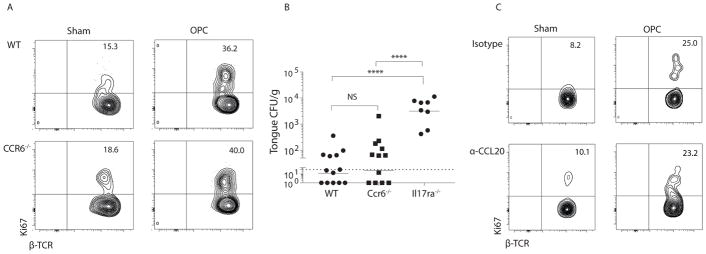
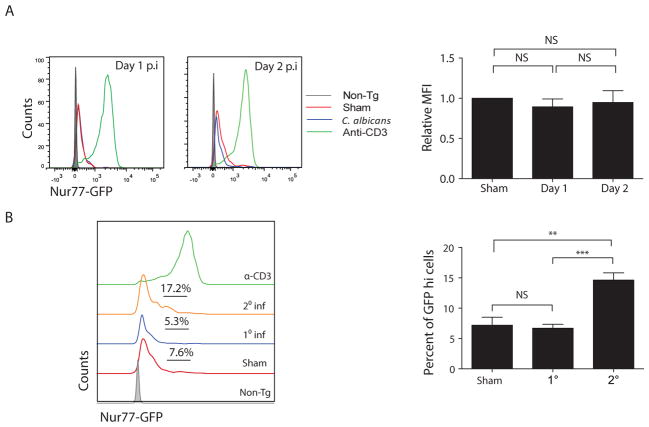
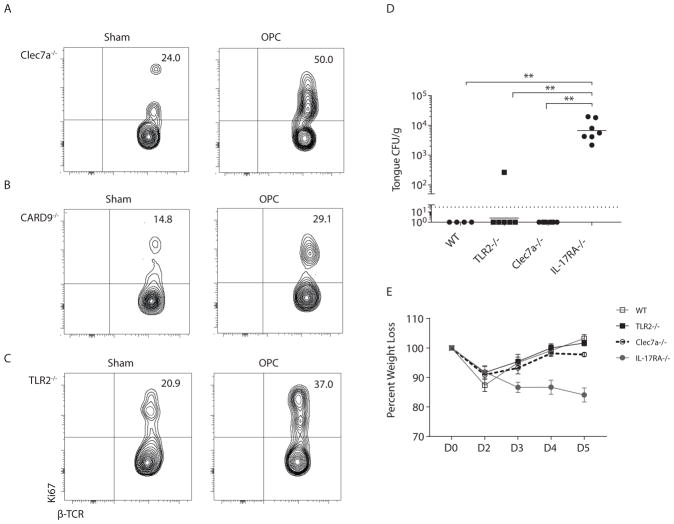
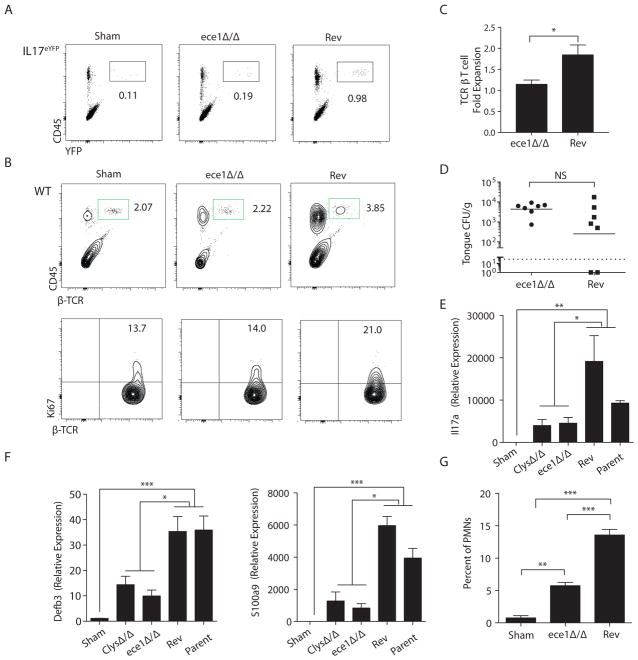
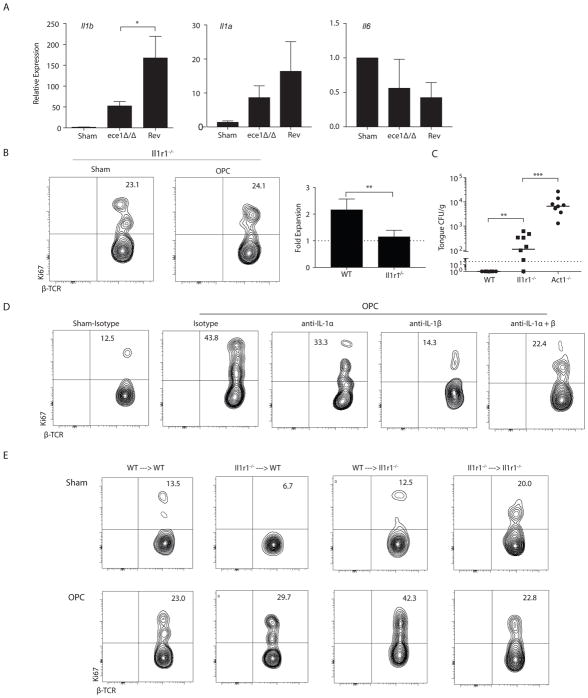
is a dimorphic commensal fungus that causes severe oral infections in immunodeficient patients. Invasion of hyphae into oral epithelium is an essential virulence trait. Interleukin-17 (IL-17) signaling is required for both innate and adaptive immunity to During the innate response, IL-17 is produced by γδ T cells and a poorly understood population of innate-acting CD4 αβ T cell receptor (TCRαβ) cells, but only the TCRαβ cells expand during acute infection. Confirming the innate nature of these cells, the TCR was not detectably activated during the primary response, as evidenced by mice that report antigen-specific signaling through the TCR. Rather, the expansion of innate TCRαβ cells was driven by both intrinsic and extrinsic IL-1R signaling. Unexpectedly, there was no requirement for CCR6/CCL20-dependent recruitment or prototypical fungal pattern recognition receptors. However, mutants that cannot switch from yeast to hyphae showed impaired TCRαβ cell proliferation and expression. This prompted us to assess the role of candidalysin, a hyphal-associated peptide that damages oral epithelial cells and triggers production of inflammatory cytokines including IL-1. Candidalysin-deficient strains failed to up-regulate or drive the proliferation of innate TCRαβ cells. Moreover, candidalysin signaled synergistically with IL-17, which further augmented the expression of IL-1α/β and other cytokines. Thus, IL-17 and , via secreted candidalysin, amplify inflammation in a self-reinforcing feed-forward loop. These findings challenge the paradigm that hyphal formation per se is required for the oral innate response and demonstrate that establishment of IL-1- and IL-17-dependent innate immunity is induced by tissue-damaging hyphae.
是一种二相共生真菌,可引起免疫功能低下患者严重的口腔感染。菌丝侵入口腔上皮是其重要的毒力特征。白细胞介素-17(IL-17)信号对于固有免疫和适应性免疫对 至关重要。在固有免疫反应中,γδ T 细胞和一群尚未完全阐明的固有作用 CD4αβ T 细胞受体(TCRαβ)细胞产生 IL-17,但只有 TCRαβ细胞在急性感染期间扩增。这些细胞的固有性质得到了证实,因为在原发性反应中,TCR 没有可检测到的激活,这一点可以通过报告 TCR 抗原特异性信号的 小鼠得到证实。相反,固有 TCRαβ细胞的扩增是由内在和外在的 IL-1R 信号驱动的。出乎意料的是,不需要 CCR6/CCL20 依赖的招募或典型的真菌模式识别受体。然而,无法从酵母切换到菌丝的 突变体显示出 TCRαβ细胞增殖和 的受损。这促使我们评估了菌丝相关肽 candidalysin 的作用,该肽损伤口腔上皮细胞并触发包括白细胞介素-1(IL-1)在内的炎症细胞因子的产生。candidalysin 缺陷株不能上调 或驱动固有 TCRαβ细胞的增殖。此外,candidalysin 与白细胞介素-17 协同作用,进一步增强了 IL-1α/β和其他细胞因子的表达。因此,IL-17 和 通过分泌的 candidalysin,在一个自我强化的正反馈环中放大炎症。这些发现挑战了菌丝形成本身是口腔固有反应所必需的范式,并表明通过组织损伤的菌丝诱导建立依赖白细胞介素-1 和白细胞介素-17 的固有免疫。