Department of Community Medicine, Kasturba Medical College, Manipal, Karnataka, India.
Indian J Psychiatry. 2010 Apr;52(2):150-3. doi: 10.4103/0019-5545.64595.
The point prevalence of depressive disorders in the elderly population in India varies from 13 to 25%. Since the World Health Organization (five) Well-being Index (1998 version) is simple and easy to administer, an attempt is made to evaluate the Indian version of this instrument to identify depression in the elderly Indian community.
(1) To determine the prevalence of depression among the elderly population of rural areas of Udupi district, Karnataka, India. (2) To determine the validity and reliability of WHO (five) Well-being Index (1998 version) as a screening instrument to identify depressive disorders in elderly population in this Indian setting.
This cross-sectional study was conducted over a period of eight months (from March 1 to October 31, 2002) in the three taluks of Udupi, Kundapura, and Karkala; belonging to the Udupi district of South India. We selected 627 people in the age group of 60 years and above for the study. Simple random sampling, without replacement method, using the probability proportionate to size (PPS) technique was used. The WHO (five) well-being index (1998 version) was validated against the major International Classification of Diseases and Related Health Problems 10th Revision (ICD-10) depression inventory of mastering depression in primary care version 2.2. Proportions and their 95% confidence intervals were calculated and Kappa statistics was applied to determine the reliability of the screening instrument. P value<0.05 was considered statistically significant.
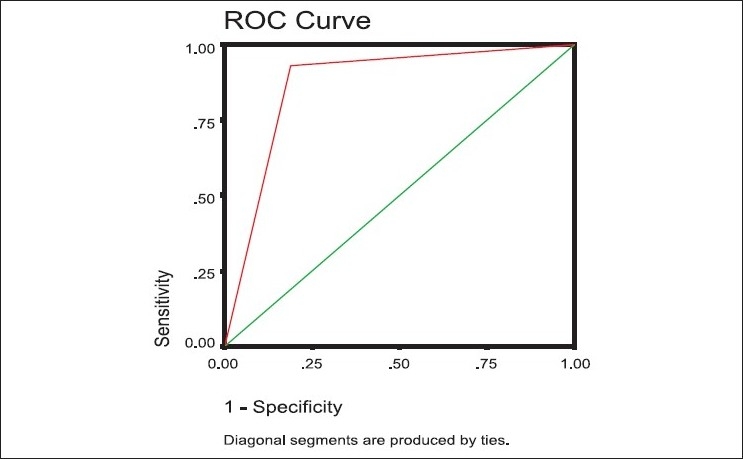
The prevalence of depression in elderly population was determined to be 21.7% (95% CI = 18.4 - 24.9). The Indian version of WHO-five well-being index (1998 version) showed a sensitivity of 97.0%, specificity of 86.4%, positive predictive value of 66.3% and an overall accuracy of 0.89. The Kappa statistics showed significantly high reliability of k = 0.71.
The Indian version of "WHO (five) Well-being Index (1998 version)" was found to be an effective instrument for identifying depression in elderly Indian community.
印度老年人群中抑郁障碍的时点患病率为 13%至 25%。由于世界卫生组织(世卫组织)五维健康量表(1998 年版)简单易用,因此尝试对该工具的印度版本进行评估,以确定印度老年人群中抑郁的情况。
(1)确定印度卡纳塔克邦乌杜皮县农村地区老年人群的抑郁患病率。(2)确定世卫组织五维健康量表(1998 年版)作为在印度这一环境中识别老年人群抑郁障碍的筛查工具的有效性和可靠性。
本横断面研究于 2002 年 3 月 1 日至 10 月 31 日在印度南部乌代浦县的乌杜皮、库达帕拉和卡尔卡拉三个 taluks 进行。我们选择了年龄在 60 岁及以上的 627 人进行研究。采用简单随机抽样,不替换方法,使用概率与大小成比例(PPS)技术。世卫组织五维健康量表(1998 年版)通过与主要的国际疾病分类第十版(ICD-10)初级保健掌握抑郁的相关健康问题 2.2 版抑郁清单进行验证。计算了比例及其 95%置信区间,并应用 Kappa 统计量确定了筛查工具的可靠性。P 值<0.05 被认为具有统计学意义。
确定老年人群的抑郁患病率为 21.7%(95%置信区间=18.4-24.9)。印度版世卫组织五维健康量表(1998 年版)显示敏感性为 97.0%,特异性为 86.4%,阳性预测值为 66.3%,总准确率为 0.89。Kappa 统计量显示高度可靠的 k 值为 0.71。
印度版“世卫组织五维健康量表(1998 年版)”被认为是识别印度老年人群中抑郁的有效工具。