Center for Neuroscience Research, Children's National Medical Center, Washington, District of Columbia 20010, USA.
Nature. 2010 Sep 16;467(7313):323-7. doi: 10.1038/nature09347.
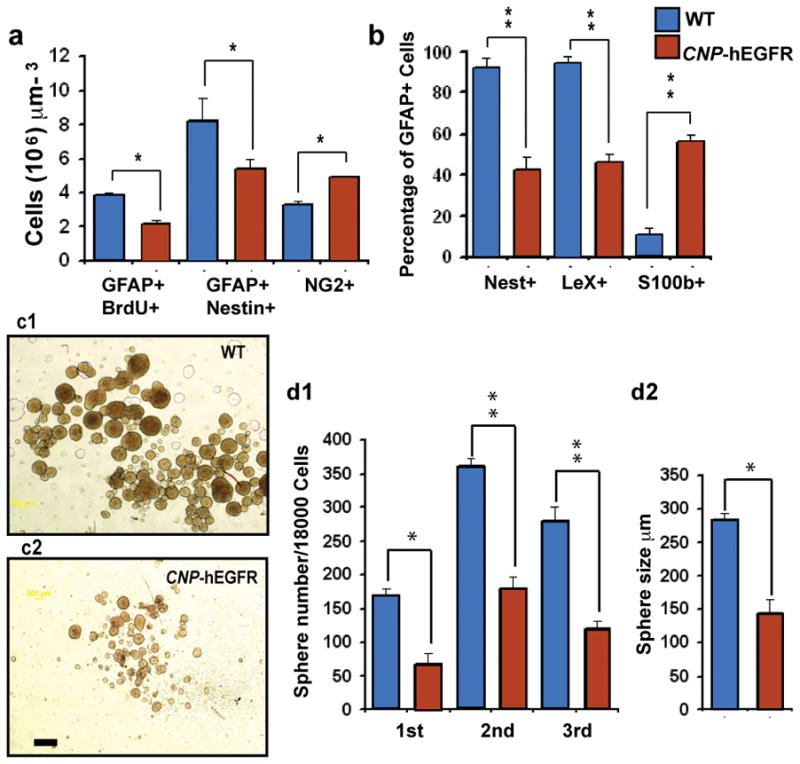
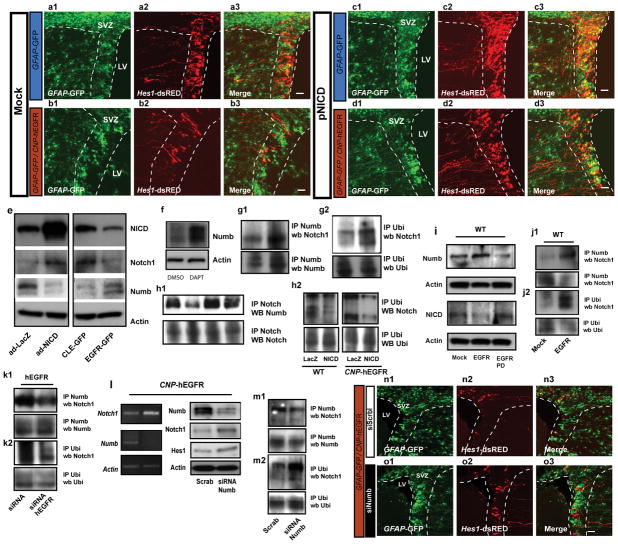
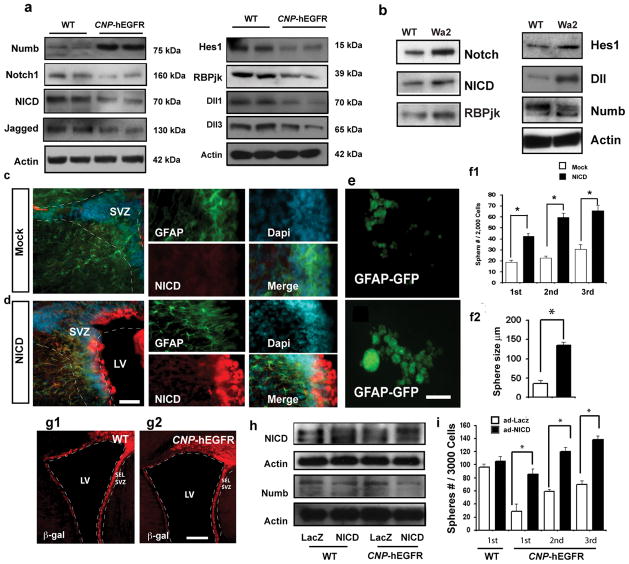
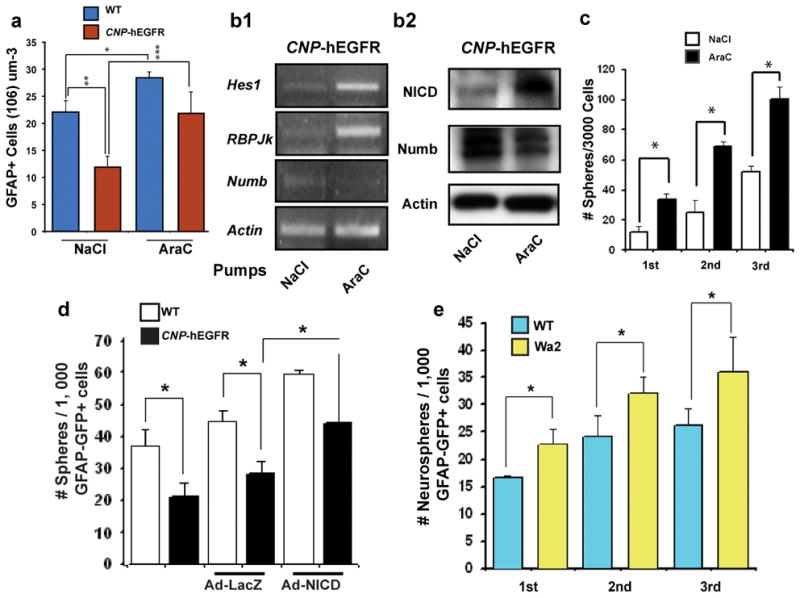
Specialized cellular microenvironments, or 'niches', modulate stem cell properties, including cell number, self-renewal and fate decisions. In the adult brain, niches that maintain a source of neural stem cells (NSCs) and neural progenitor cells (NPCs) are the subventricular zone (SVZ) of the lateral ventricle and the dentate gyrus of the hippocampus. The size of the NSC population of the SVZ at any time is the result of several ongoing processes, including self-renewal, cell differentiation, and cell death. Maintaining the balance between NSCs and NPCs in the SVZ niche is critical to supply the brain with specific neural populations, both under normal conditions or after injury. A fundamental question relevant to both normal development and to cell-based repair strategies in the central nervous system is how the balance of different NSC and NPC populations is maintained in the niche. EGFR (epidermal growth factor receptor) and Notch signalling pathways have fundamental roles during development of multicellular organisms. In Drosophila and in Caenorhabditis elegans these pathways may have either cooperative or antagonistic functions. In the SVZ, Notch regulates NSC identity and self-renewal, whereas EGFR specifically affects NPC proliferation and migration. This suggests that interplay of these two pathways may maintain the balance between NSC and NPC numbers. Here we show that functional cell-cell interaction between NPCs and NSCs through EGFR and Notch signalling has a crucial role in maintaining the balance between these cell populations in the SVZ. Enhanced EGFR signalling in vivo results in the expansion of the NPC pool, and reduces NSC number and self-renewal. This occurs through a non-cell-autonomous mechanism involving EGFR-mediated regulation of Notch signalling. Our findings define a novel interaction between EGFR and Notch pathways in the adult SVZ, and thus provide a mechanism for NSC and NPC pool maintenance.
专门的细胞微环境,或“龛”,调节干细胞特性,包括细胞数量、自我更新和命运决定。在成年大脑中,维持神经干细胞(NSC)和神经祖细胞(NPC)来源的龛位是侧脑室的室下区(SVZ)和海马的齿状回。SVZ 中 NSC 群体的大小是几个持续进行的过程的结果,包括自我更新、细胞分化和细胞死亡。维持 SVZ 龛位中 NSC 和 NPC 之间的平衡对于在正常情况下或受伤后为大脑提供特定的神经群体至关重要。一个与正常发育和中枢神经系统基于细胞的修复策略都相关的基本问题是,龛位中不同 NSC 和 NPC 群体的平衡是如何维持的。EGFR(表皮生长因子受体)和 Notch 信号通路在多细胞生物的发育过程中具有基本作用。在果蝇和秀丽隐杆线虫中,这些通路可能具有协同或拮抗作用。在 SVZ 中,Notch 调节 NSC 身份和自我更新,而 EGFR 则特异性影响 NPC 的增殖和迁移。这表明这两种途径的相互作用可能维持 NSC 和 NPC 数量之间的平衡。在这里,我们表明 NPC 和 NSC 之间通过 EGFR 和 Notch 信号的功能性细胞-细胞相互作用在维持 SVZ 中这些细胞群体之间的平衡方面起着至关重要的作用。体内增强的 EGFR 信号导致 NPC 池的扩张,并减少 NSC 数量和自我更新。这是通过涉及 EGFR 介导的 Notch 信号调节的非细胞自主机制发生的。我们的发现定义了成年 SVZ 中 EGFR 和 Notch 途径之间的一种新的相互作用,从而为 NSC 和 NPC 池的维持提供了一种机制。