Department of Physical Therapy and Neuroscience Program, The College of Staten Island/CUNY, Staten Island, NY 10314, USA.
J Neuroeng Rehabil. 2010 Sep 17;7:46. doi: 10.1186/1743-0003-7-46.
Electrical stimulation of the central and peripheral nervous systems is a common tool that is used to improve functional recovery after neuronal injury.
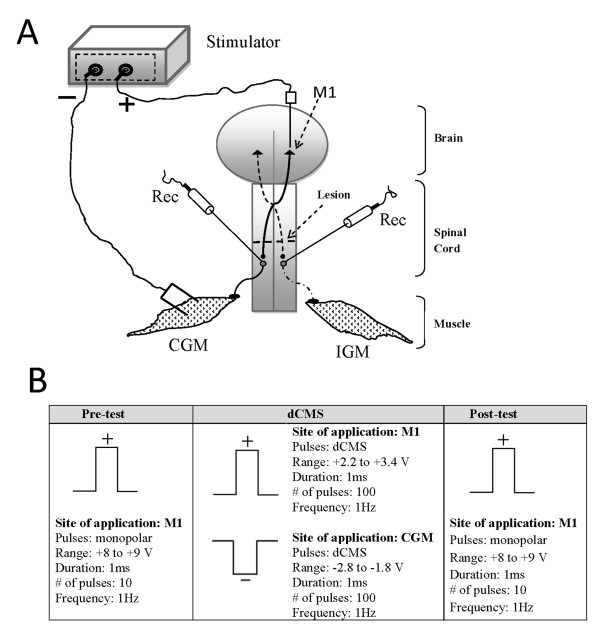
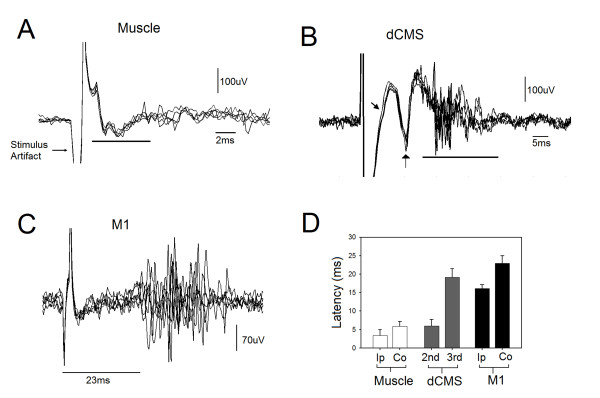
Here we described a new configuration of electrical stimulation as it was tested in anesthetized control and spinal cord injury (SCI) mice. Constant voltage output was delivered through two electrodes. While the negative voltage output (ranging from -1.8 to -2.6 V) was delivered to the muscle via transverse wire electrodes (diameter, 500 μm) located at opposite ends of the muscle, the positive output (ranging from + 2.4 to +3.2 V) was delivered to the primary motor cortex (M1) (electrode tip, 100 μm). The configuration was named dipolar cortico-muscular stimulation (dCMS) and consisted of 100 pulses (1 ms pulse duration, 1 Hz frequency).
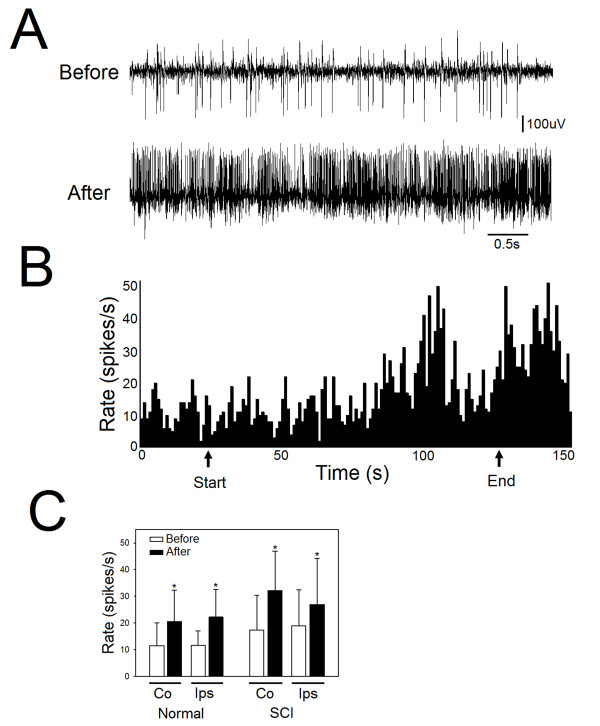
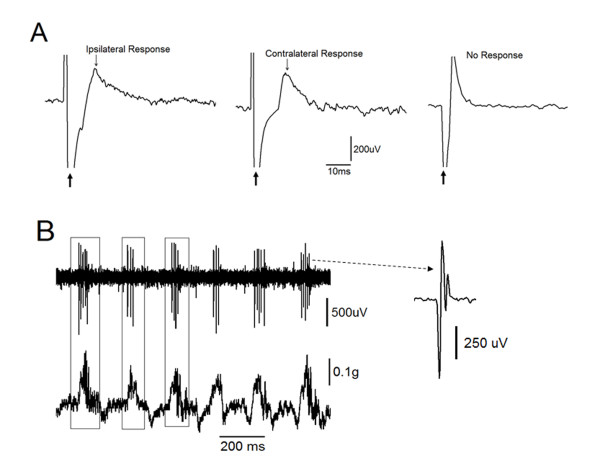
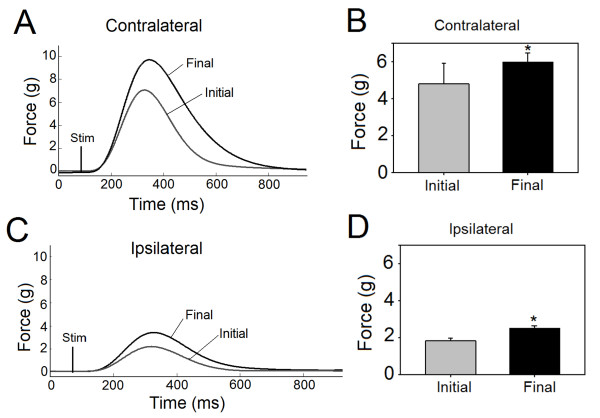
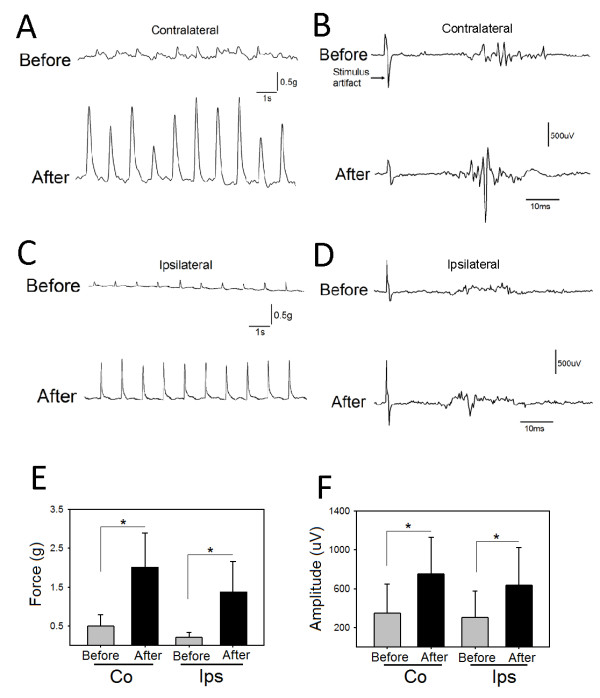
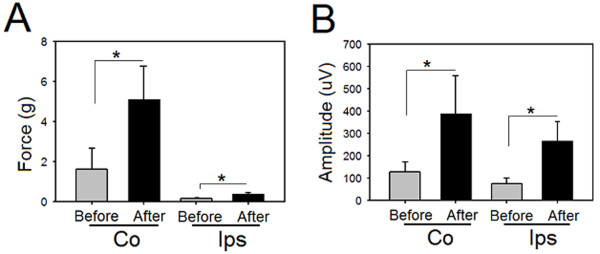
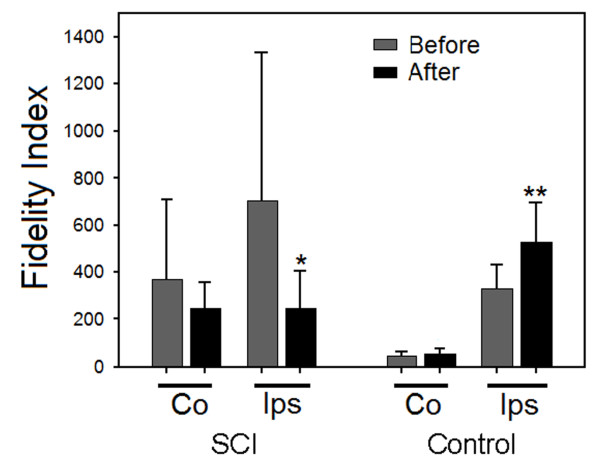
In SCI animals, after dCMS, cortically-elicited muscle contraction improved markedly at the contralateral (456%) and ipsilateral (457%) gastrocnemius muscles. The improvement persisted for the duration of the experiment (60 min). The enhancement of cortically-elicited muscle contraction was accompanied by the reduction of M1 maximal threshold and the potentiation of spinal motoneuronal evoked responses at the contralateral (313%) and ipsilateral (292%) sides of the spinal cord. Moreover, spontaneous activity recorded from single spinal motoneurons was substantially increased contralaterally (121%) and ipsilaterally (54%). Interestingly, spinal motoneuronal responses and muscle twitches evoked by the test stimulation of non-treated M1 (received no dCMS) were significantly enhanced as well. Similar results obtained from normal animals albeit the changes were relatively smaller.
These findings demonstrated that dCMS could improve functionality of corticomotoneuronal pathway and thus it may have therapeutic potential.
电刺激中枢和周围神经系统是一种常用的工具,可用于改善神经元损伤后的功能恢复。
本文描述了一种新的电刺激配置,在麻醉对照和脊髓损伤(SCI)小鼠中进行了测试。通过两个电极输出恒压。当负电压输出(范围为-1.8 至-2.6 V)通过位于肌肉相对两端的横向线电极(直径 500μm)传递到肌肉时,正电压输出(范围为+2.4 至+3.2 V)传递到初级运动皮层(M1)(电极尖端,100μm)。该配置被命名为双极皮质-肌肉刺激(dCMS),由 100 个脉冲(1ms 脉冲持续时间,1Hz 频率)组成。
在 SCI 动物中,dCMS 后,对侧(456%)和同侧(457%)比目鱼肌的皮质诱发肌肉收缩明显改善。这种改善持续了整个实验过程(60 分钟)。皮质诱发肌肉收缩的增强伴随着 M1 最大阈值的降低以及脊髓运动神经元诱发反应的增强,对侧(313%)和同侧(292%)脊髓侧。此外,从单个脊髓运动神经元记录的自发活动在对侧(121%)和同侧(54%)显著增加。有趣的是,非治疗性 M1(未接受 dCMS)的测试刺激诱发的脊髓运动神经元反应和肌肉抽搐也显著增强。正常动物也得到了类似的结果,尽管变化相对较小。
这些发现表明 dCMS 可以改善皮质运动神经元通路的功能,因此可能具有治疗潜力。