Crawford Daniel K, Mangiardi Mario, Song Bingbing, Patel Rhusheet, Du Sienmi, Sofroniew Michael V, Voskuhl Rhonda R, Tiwari-Woodruff Seema K
Multiple Sclerosis Program at UCLA, Department of Neurology, School of Medicine, University of California-Los Angeles, 635 Charles E Young Drive, Los Angeles, CA 90095-1769, USA.
Brain. 2010 Oct;133(10):2999-3016. doi: 10.1093/brain/awq237. Epub 2010 Sep 21.
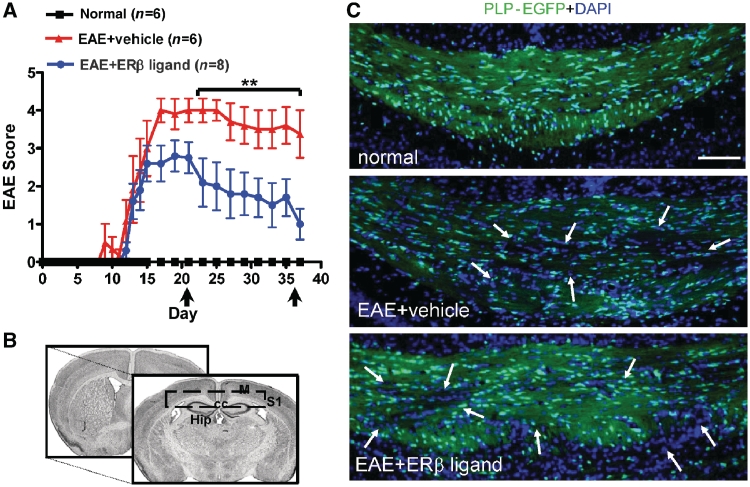
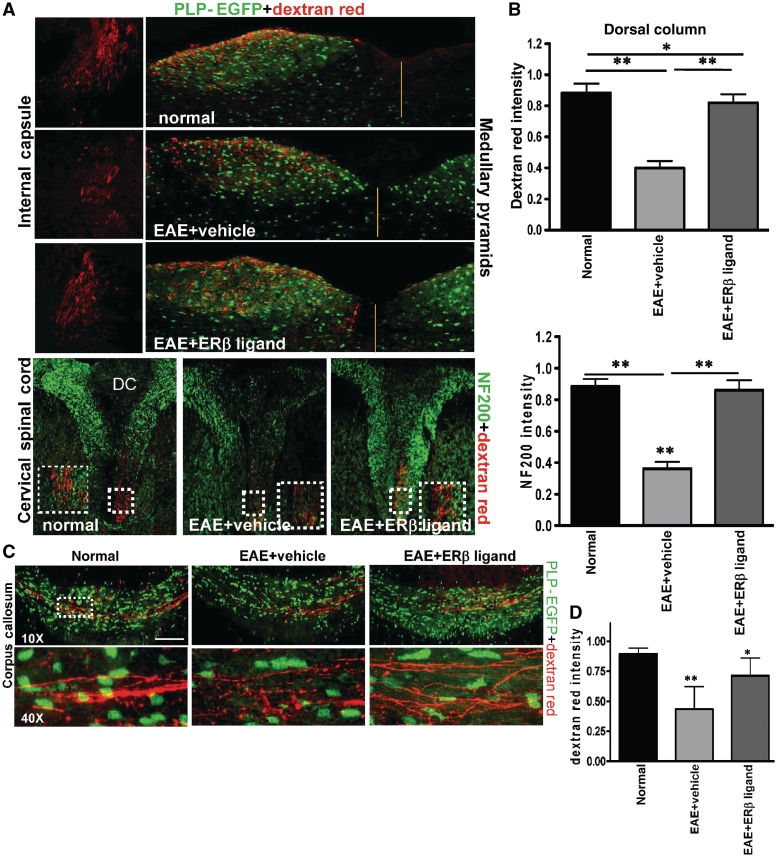
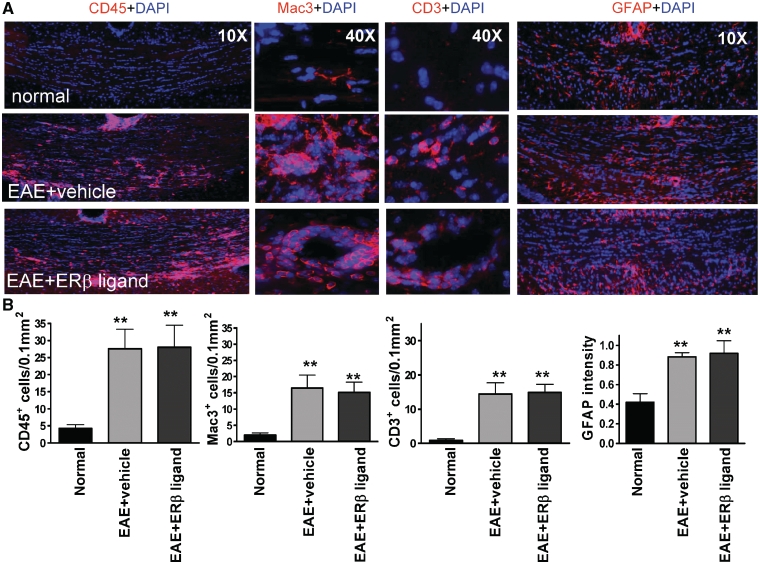
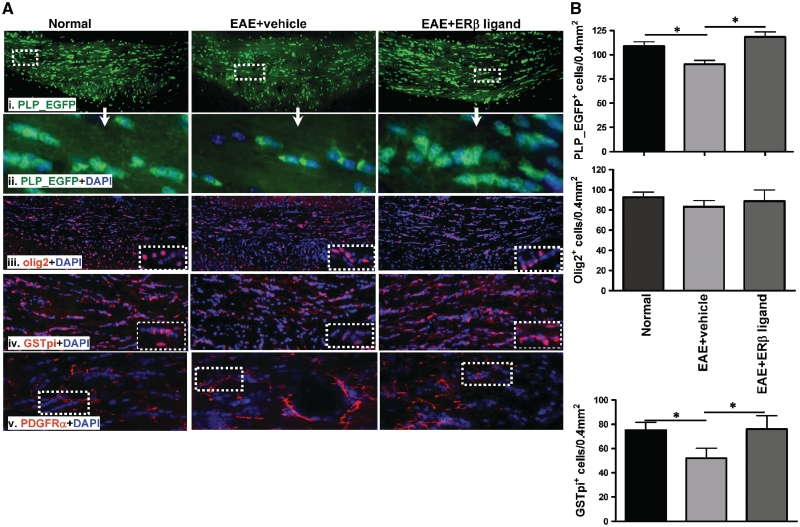
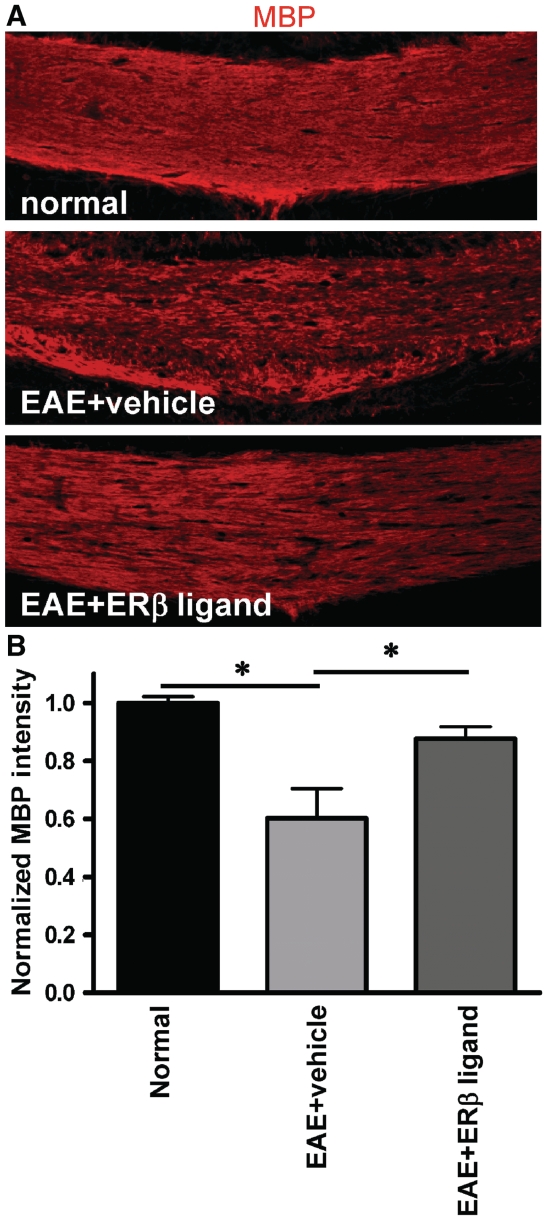
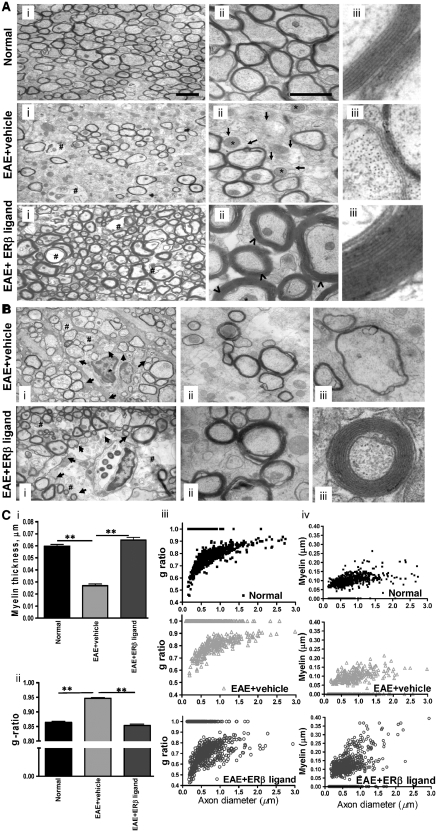
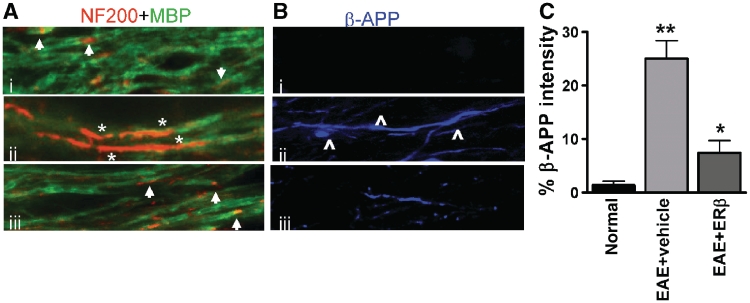
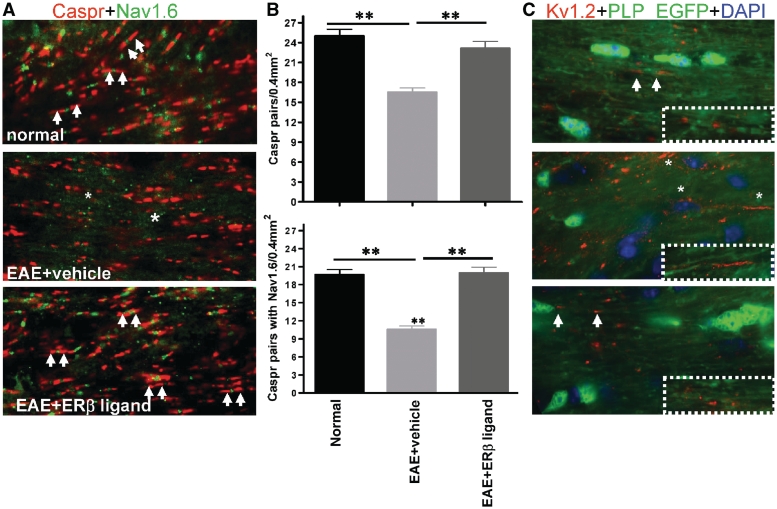
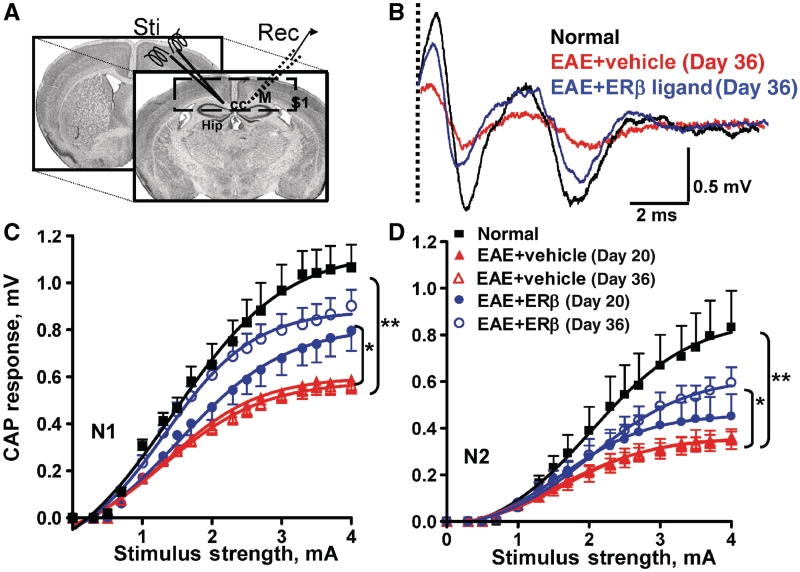
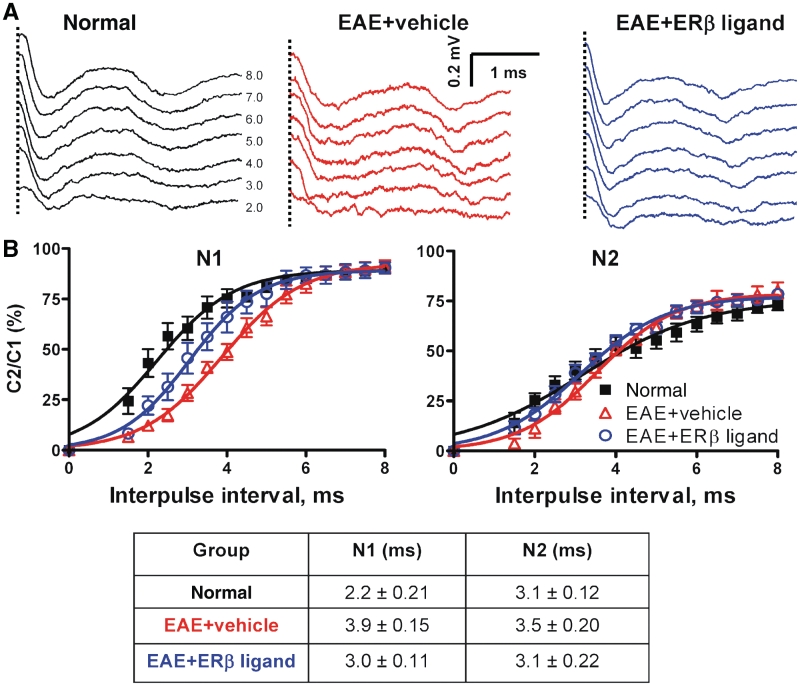
Demyelinating diseases, such as multiple sclerosis, are characterized by inflammatory demyelination and neurodegeneration of the central nervous system. Therapeutic strategies that induce effective neuroprotection and enhance intrinsic repair mechanisms are central goals for future therapy of multiple sclerosis. Oestrogens and oestrogen receptor ligands are promising treatments to prevent multiple sclerosis-induced neurodegeneration. In the present study we investigated the capacity of oestrogen receptor β ligand treatment to affect callosal axon demyelination and stimulate endogenous myelination in chronic experimental autoimmune encephalomyelitis using electrophysiology, electron microscopy, immunohistochemistry and tract-tracing methods. Oestrogen receptor β ligand treatment of experimental autoimmune encephalomyelitis mice prevented both histopathological and functional abnormalities of callosal axons despite the presence of inflammation. Specifically, there were fewer demyelinated, damaged axons and more myelinated axons with intact nodes of Ranvier in oestrogen receptor β ligand-treated mice. In addition, oestrogen receptor β ligand treatment caused an increase in mature oligodendrocyte numbers, a significant increase in myelin sheath thickness and axon transport. Functional analysis of callosal axon conduction showed a significant improvement in compound action potential amplitudes, latency and in axon refractoriness. These findings show a direct neuroprotective effect of oestrogen receptor β ligand treatment on oligodendrocyte differentiation, myelination and axon conduction during experimental autoimmune encephalomyelitis.
脱髓鞘疾病,如多发性硬化症,其特征是中枢神经系统的炎性脱髓鞘和神经退行性变。诱导有效的神经保护并增强内在修复机制的治疗策略是未来多发性硬化症治疗的核心目标。雌激素和雌激素受体配体是预防多发性硬化症诱导的神经退行性变的有前景的治疗方法。在本研究中,我们使用电生理学、电子显微镜、免疫组织化学和示踪方法,研究了雌激素受体β配体治疗对慢性实验性自身免疫性脑脊髓炎胼胝体轴突脱髓鞘和刺激内源性髓鞘形成的能力。尽管存在炎症,但雌激素受体β配体治疗实验性自身免疫性脑脊髓炎小鼠可预防胼胝体轴突的组织病理学和功能异常。具体而言,在雌激素受体β配体治疗的小鼠中,脱髓鞘、受损的轴突较少,而具有完整郎飞结的有髓轴突较多。此外,雌激素受体β配体治疗导致成熟少突胶质细胞数量增加、髓鞘厚度和轴突运输显著增加。胼胝体轴突传导的功能分析显示复合动作电位幅度、潜伏期和轴突不应期有显著改善。这些发现表明雌激素受体β配体治疗在实验性自身免疫性脑脊髓炎期间对少突胶质细胞分化、髓鞘形成和轴突传导具有直接的神经保护作用。