Department of Biology, Georgetown University, Biology Reiss Building 37th and O St. NW, Washington, D.C. 20057, USA.
Mol Pain. 2010 Sep 22;6:60. doi: 10.1186/1744-8069-6-60.
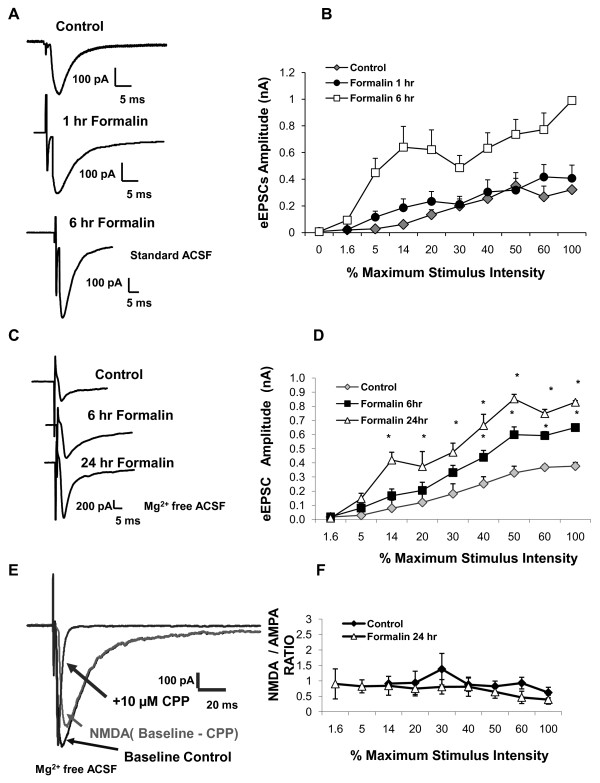
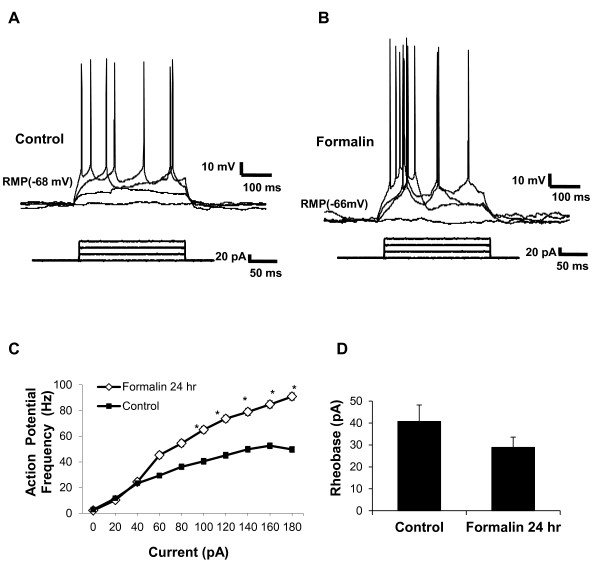
The peptide neurotransmitter N-acetylaspartylglutamate (NAAG) is widely expressed throughout the vertebrate nervous system, including the pain processing neuraxis. Inhibitors of NAAG peptidases are analgesic in animal models of pain. However, the brain regions involved in NAAG's analgesic action have not been rigorously defined. Group II metabotropic glutamate receptors (mGluR2/3) play a role in pain processing in the laterocapsular part of the central nucleus of the amygdala (CeLC). Given the high concentration of NAAG in the amygdala and its activation of group II mGluRs (mGluR3 > mGluR2), this study was undertaken using the mouse formalin model of inflammatory pain to test the hypothesis that NAAG influences pain processing in the amygdala. Evoked excitatory postsynaptic currents (eEPSCs) were studied in neurons in the CeLC of mouse brain slices following stimulation of the spinoparabrachial amygdaloid afferents.
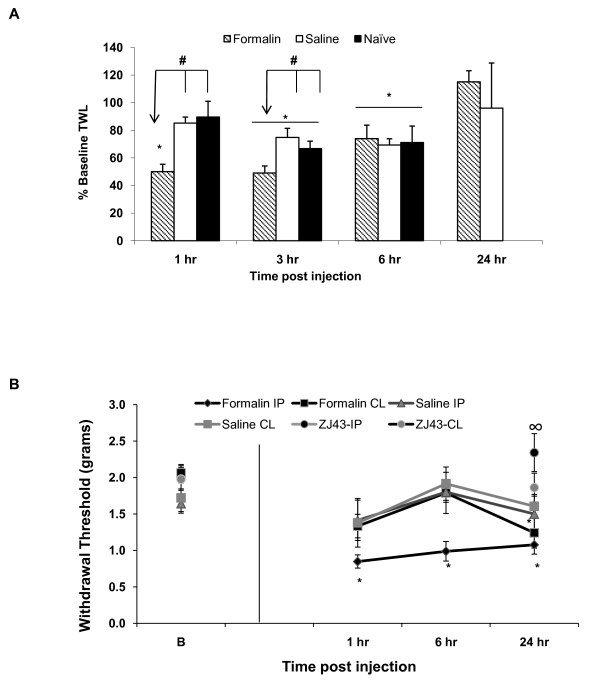
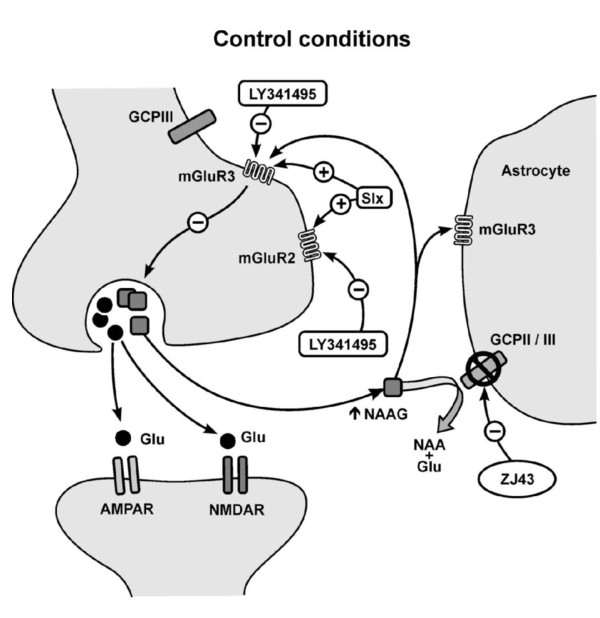
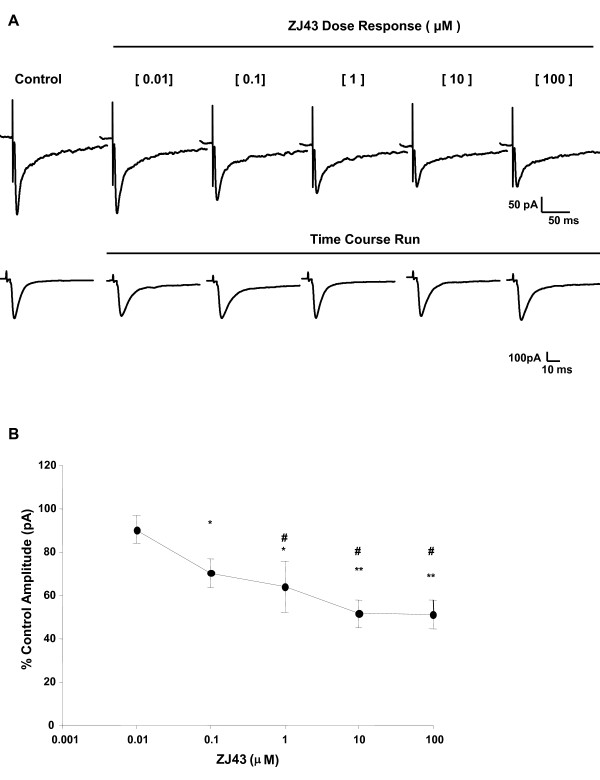
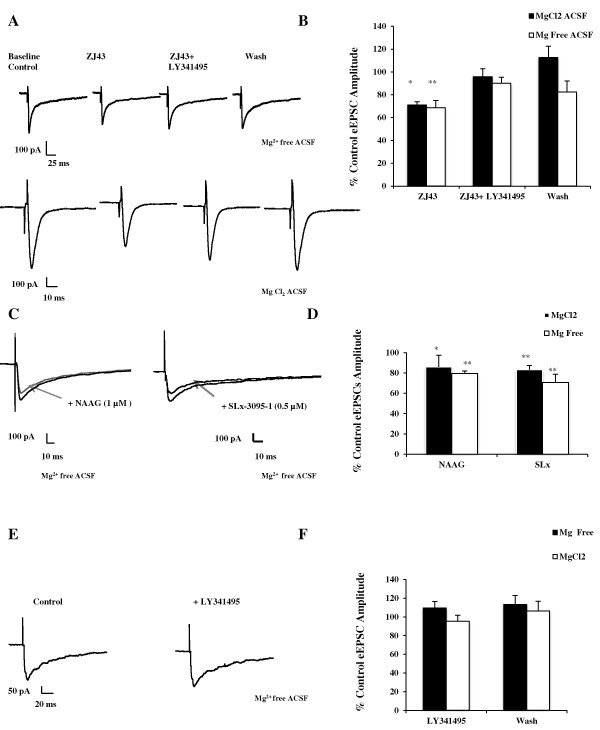
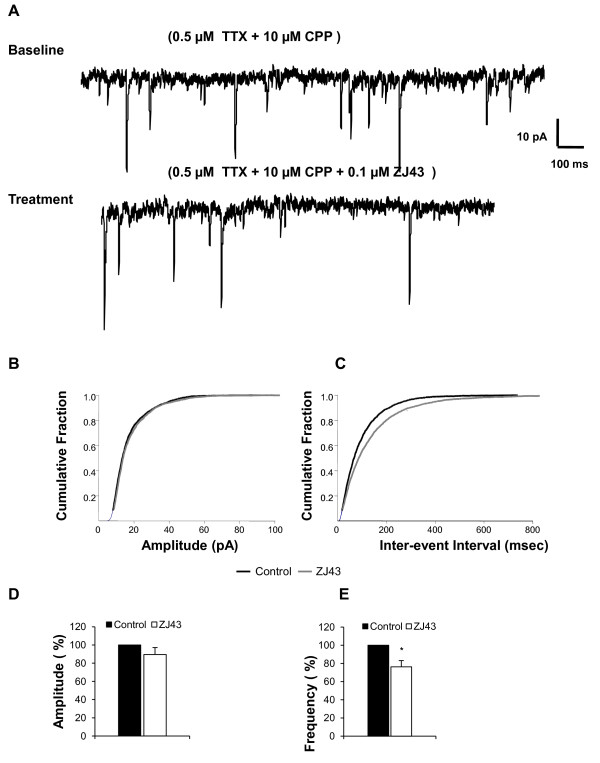
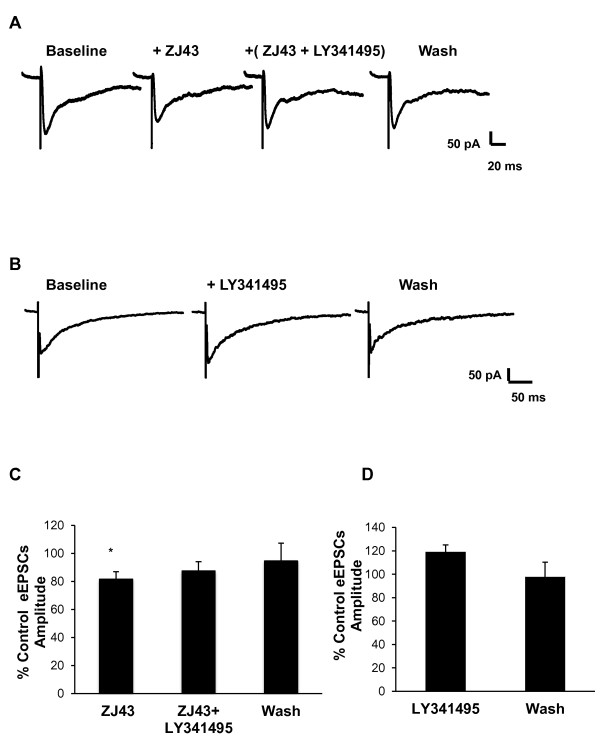
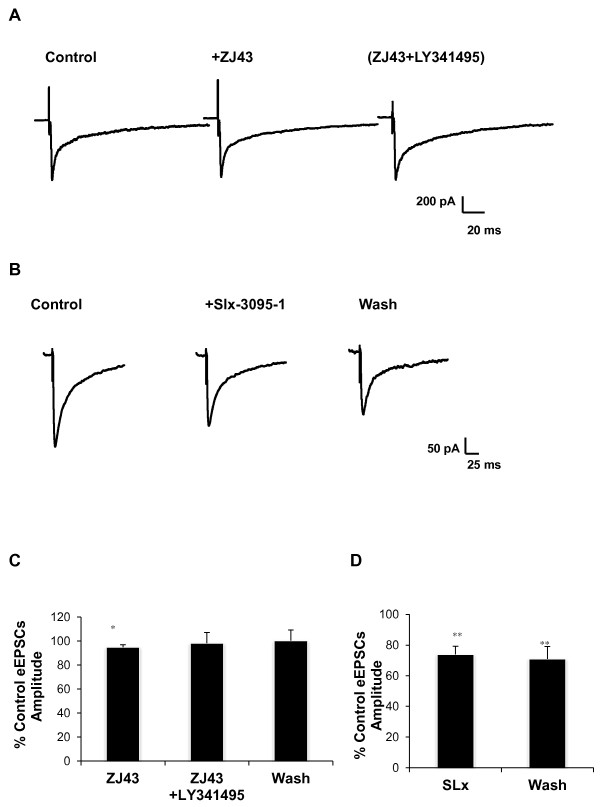
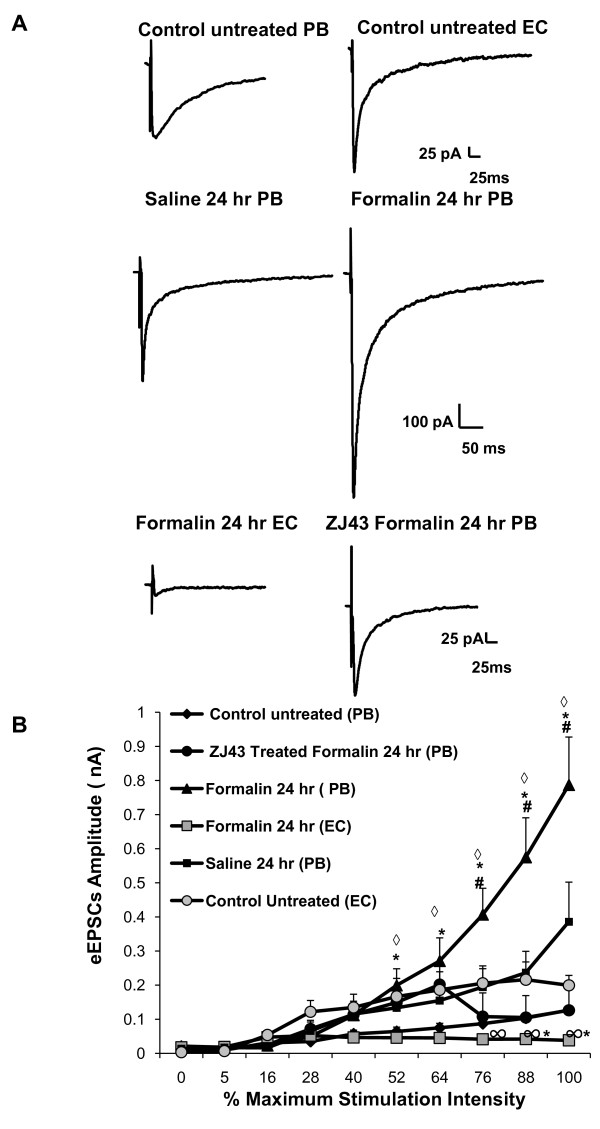
Application of a NAAG peptidase inhibitor, ZJ43, dose dependently inhibited the amplitude of the eEPSCs by up to 50% in control CeLC demonstrating the role of NAAG in regulation of excitatory transmission at this synapse. A group II mGluR agonist (SLx-3095-1) similarly inhibited eEPSC amplitude by about 30%. Both effects were blocked by the group II mGluR antagonist LY341495. ZJ43 was much less effective than SLx in reducing eEPSCs 24 hours post inflammation suggesting an inflammation induced reduction in NAAG release or an increase in the ratio of mGluR2 to mGluR3 expression. Systemic injection of ZJ43 proximal to the time of inflammation blocked peripheral inflammation-induced increases in synaptic transmission of this pathway 24 hrs later and blocked the induction of mechanical allodynia that developed by this time point.
The main finding of this study is that NAAG and NAAG peptidase inhibition reduce excitatory neurotransmission and inflammation-induced plasticity at the spinoparabrachial synapse within the pain processing pathway of the central amygdaloid nucleus.
肽神经递质 N-乙酰天冬氨酰谷氨酸(NAAG)广泛存在于脊椎动物的神经系统中,包括疼痛处理轴突。NAAG 肽酶抑制剂在动物疼痛模型中具有镇痛作用。然而,NAAG 镇痛作用涉及的脑区尚未得到严格定义。II 组代谢型谷氨酸受体(mGluR2/3)在杏仁中央核外侧区(CeLC)的疼痛处理中发挥作用。鉴于 NAAG 在杏仁核中的高浓度及其对 II 组 mGluR(mGluR3>mGluR2)的激活,本研究采用小鼠福尔马林炎症性疼痛模型,测试 NAAG 是否影响杏仁核中的疼痛处理。在刺激脊髓-臂旁杏仁核传入纤维后,研究了小鼠脑切片中 CeLC 神经元的诱发兴奋性突触后电流(eEPSC)。
NAAG 肽酶抑制剂 ZJ43 呈剂量依赖性抑制 eEPSC 幅度,最大可达 50%,表明 NAAG 在调节该突触的兴奋性传递中起作用。II 组 mGluR 激动剂(SLx-3095-1)也使 eEPSC 幅度降低约 30%。两种作用均被 II 组 mGluR 拮抗剂 LY341495 阻断。ZJ43 在炎症后 24 小时比 SLx 更有效地减少 eEPSC,这表明炎症诱导的 NAAG 释放减少或 mGluR2 与 mGluR3 表达比例增加。炎症发生前在体内注射 ZJ43 可阻断 24 小时后该途径突触传递的外周炎症诱导增加,并阻断此时出现的机械性痛觉过敏的诱导。
本研究的主要发现是,NAAG 和 NAAG 肽酶抑制可减少疼痛处理途径中杏仁中央核内的脊髓-臂旁突触的兴奋性神经传递和炎症诱导的可塑性。