Department of Developmental and Cell Biology, Center for Complex Biological Systems, University of California-Irvine, Irvine, CA 92697, USA.
Mol Biol Cell. 2010 Nov 15;21(22):4028-41. doi: 10.1091/mbc.E10-04-0348. Epub 2010 Sep 22.
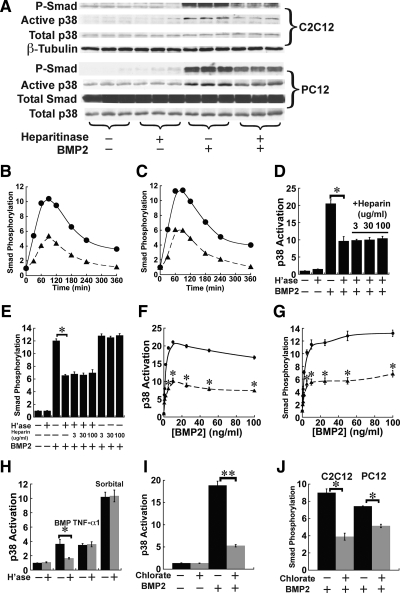
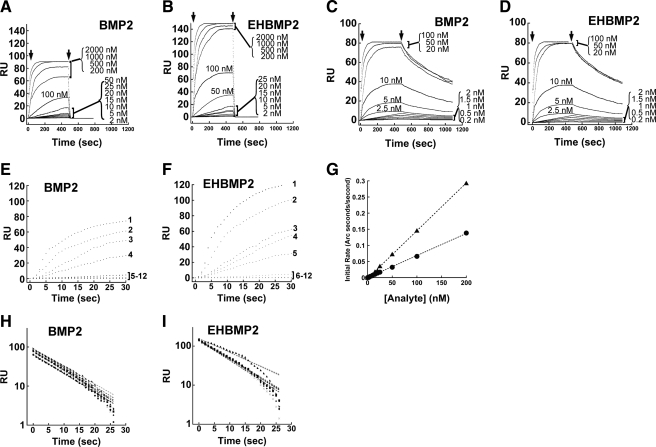
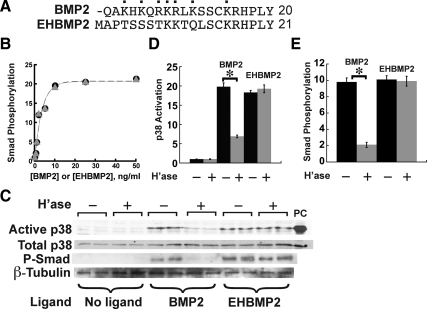
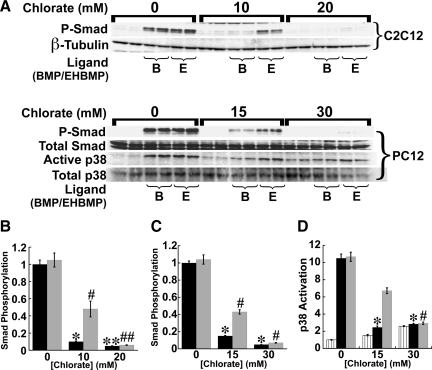
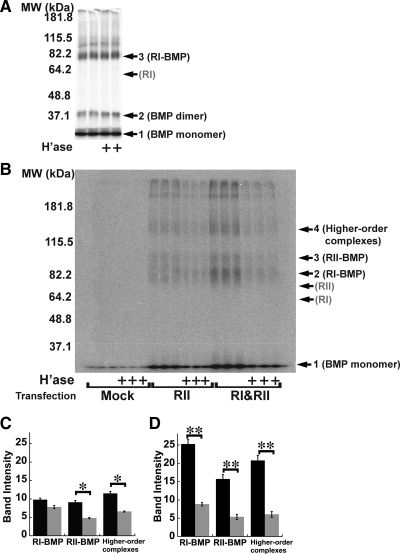
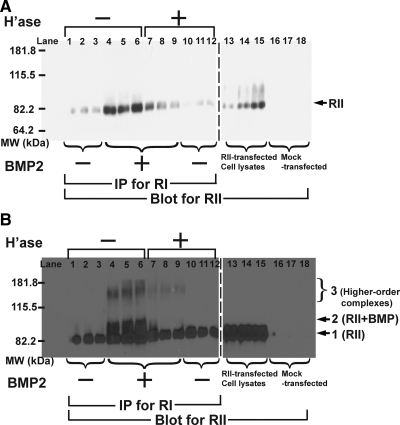
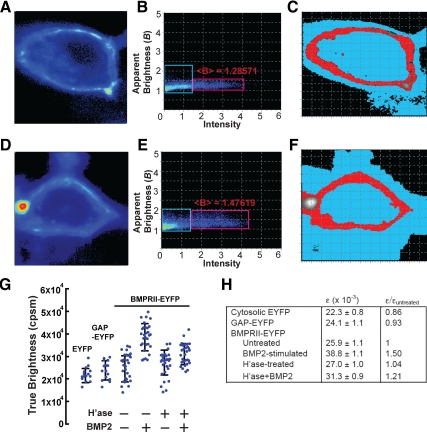
Cell surface heparan sulfate (HS) not only binds several major classes of growth factors but also sometimes potentiates their activities--an effect usually termed "coreception." A view that coreception is due to the stabilization of growth factor-receptor interactions has emerged primarily from studies of the fibroblast growth factors (FGFs). Recent in vivo studies have strongly suggested that HS also plays an important role in regulating signaling by the bone morphogenetic proteins (BMPs). Here, we provide evidence that the mechanism of coreception for BMPs is markedly different from that established for FGFs. First, we demonstrate a direct, stimulatory role for cell surface HS in the immediate signaling activities of BMP2 and BMP4, and we provide evidence that HS-BMP interactions are required for this effect. Next, using several independent assays of ligand binding and receptor assembly, including coimmunoprecipitation, cross-linking, and fluorescence fluctuation microscopy, we show that HS does not affect BMP binding to type I receptor subunits but instead enhances the subsequent recruitment of type II receptor subunits to BMP-type I receptor complexes. This suggests a view of HS as a catalyst of the formation of signaling complexes, rather than as a stabilizer of growth factor binding.
细胞表面的肝素硫酸盐(HS)不仅可以结合几大主要类别的生长因子,而且有时还能增强它们的活性——这种效应通常被称为“共受体”。这种共受体是由于生长因子-受体相互作用的稳定的观点,主要是从成纤维细胞生长因子(FGFs)的研究中得出的。最近的体内研究强烈表明,HS 也在调节骨形态发生蛋白(BMPs)的信号转导中发挥着重要作用。在这里,我们提供的证据表明,BMPs 的共受体机制与已确立的 FGFs 机制明显不同。首先,我们证明了细胞表面 HS 对 BMP2 和 BMP4 的即时信号活性具有直接的刺激作用,并且我们提供了证据表明 HS-BMP 相互作用是这种效应所必需的。接下来,我们使用几种独立的配体结合和受体组装测定方法,包括共免疫沉淀、交联和荧光波动显微镜,我们表明 HS 不会影响 BMP 与 I 型受体亚基的结合,而是增强了 II 型受体亚基随后向 BMP-I 型受体复合物的募集。这表明 HS 可以作为信号转导复合物形成的催化剂,而不是作为生长因子结合的稳定剂。