Instituto de Biocomputación y Física de Sistemas Complejos (BIFI), Universidad de Zaragoza, Zaragoza, Spain.
PLoS One. 2010 Aug 26;5(8):e12313. doi: 10.1371/journal.pone.0012313.
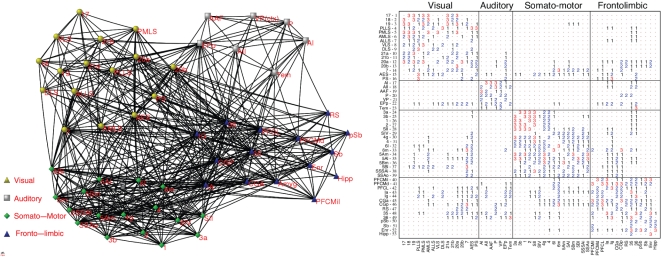
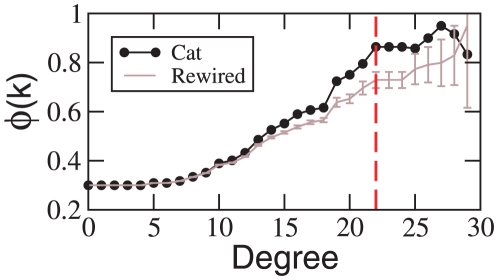
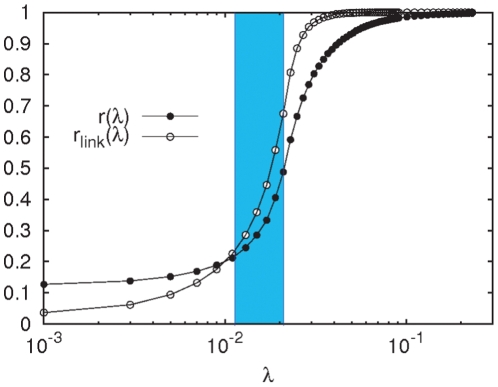
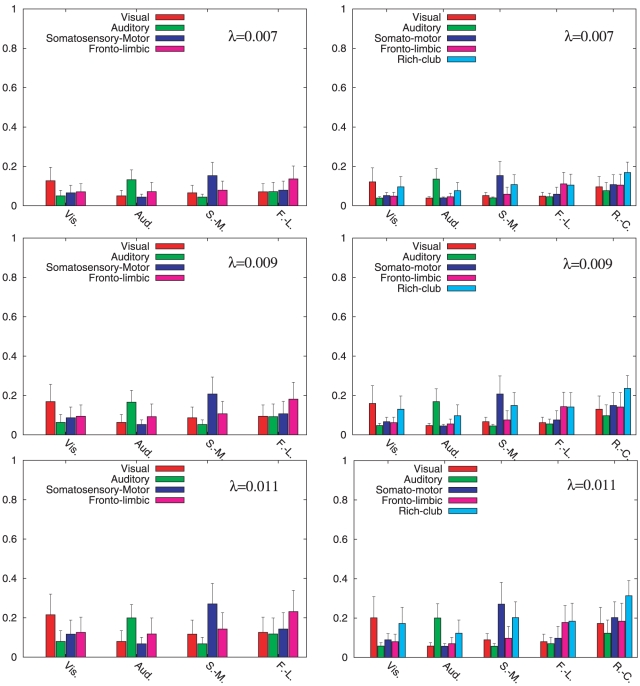
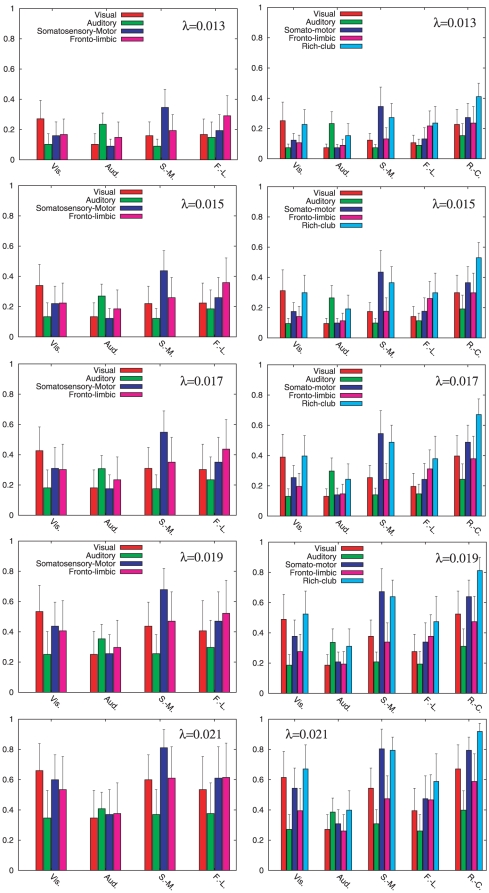
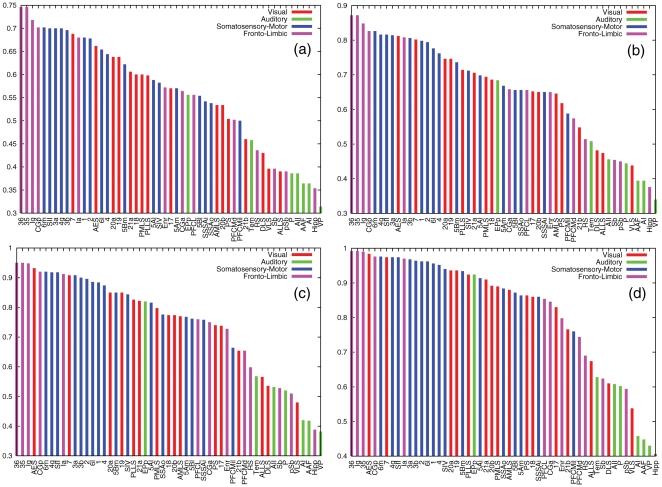
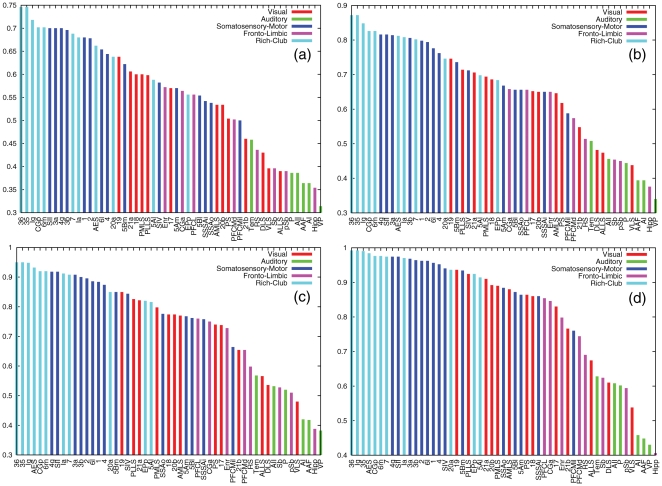
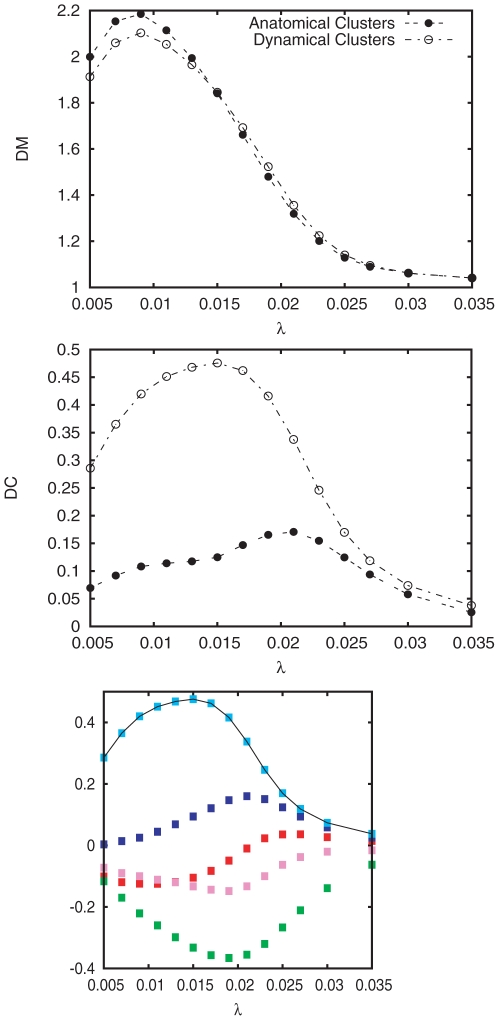
Recent studies have pointed out the importance of transient synchronization between widely distributed neural assemblies to understand conscious perception. These neural assemblies form intricate networks of neurons and synapses whose detailed map for mammals is still unknown and far from our experimental capabilities. Only in a few cases, for example the C. elegans, we know the complete mapping of the neuronal tissue or its mesoscopic level of description provided by cortical areas. Here we study the process of transient and global synchronization using a simple model of phase-coupled oscillators assigned to cortical areas in the cerebral cat cortex. Our results highlight the impact of the topological connectivity in the developing of synchronization, revealing a transition in the synchronization organization that goes from a modular decentralized coherence to a centralized synchronized regime controlled by a few cortical areas forming a Rich-Club connectivity pattern.
最近的研究指出,理解意识感知需要广泛分布的神经集合体之间的瞬时同步。这些神经集合体形成了神经元和突触的复杂网络,而哺乳动物的详细图谱仍然未知,远远超出了我们的实验能力。只有在少数情况下,例如秀丽隐杆线虫,我们才知道神经元组织的完整图谱,或者皮质区域提供的其介观水平的描述。在这里,我们使用分配给大脑皮层皮质区域的相耦合振荡器的简单模型来研究瞬时和全局同步的过程。我们的结果强调了拓扑连接在同步发展中的影响,揭示了从模块化分散相干到由少数几个形成富团连接模式的皮质区域控制的集中同步状态的同步组织的转变。