Department of Parasitology, College of Veterinary Medicine, South China Agricultural University, Guangzhou, Guangdong Province 510642, PR China.
BMC Genomics. 2010 Sep 28;11:521. doi: 10.1186/1471-2164-11-521.
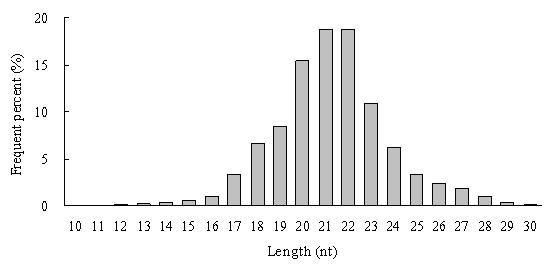
Clonorchis sinensis is a zoonotic parasite causing clonorchiasis-associated human disease such as biliary calculi, cholecystitis, liver cirrhosis, and it is currently classified as carcinogenic to humans for cholangiocarcinoma. MicroRNAs (miRNAs) are non-coding, regulating small RNA molecules which are essential for the complex life cycles of parasites and are involved in parasitic infections. To identify and characterize miRNAs expressed in adult C. sinensis residing chronically in the biliary tract, we developed an integrative approach combining deep sequencing and bioinformatic predictions with stem-loop real-time PCR analysis.
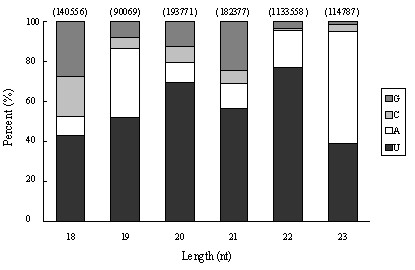
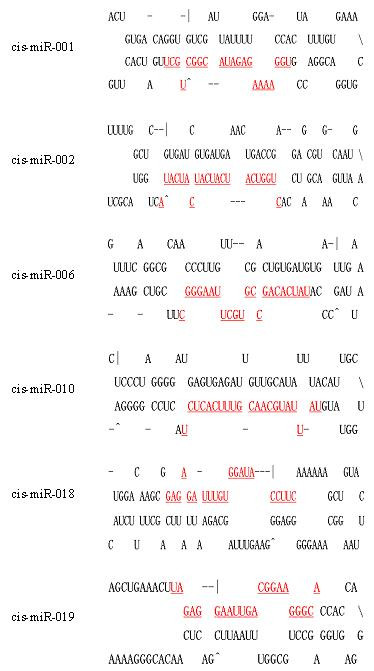
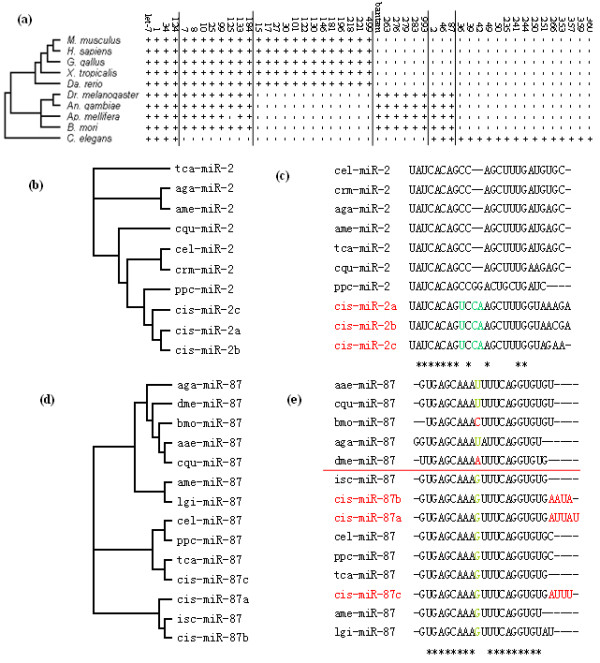
Here we report the use of this approach to identify and clone 6 new and 62,512 conserved C. sinensis miRNAs which belonged to 284 families. There was strong bias on families, family members and sequence nucleotides in C. sinensis. Uracil was the dominant nucleotide, particularly at positions 1, 14 and 22, which were located approximately at the beginning, middle and end of conserved miRNAs. There was no significant "seed region" at the first and ninth positions which were commonly found in human, animals and plants. Categorization of conserved miRNAs indicated that miRNAs of C. sinensis were still innovated and concentrated along three branches of the phylogenetic tree leading to bilaterians, insects and coelomates. There were two miRNA strategies in C. sinensis for its parasitic life: keeping a large category of miRNA families of different animals and keeping stringent conserved seed regions with high active innovation in other places of miRNAs mainly in the middle and the end, which were perfect for the parasite to perform its complex life style and for host changes.
The present study represented the first large scale characterization of C. sinensis miRNAs, which have implications for understanding the complex biology of this zoonotic parasite, as well as miRNA studies of other related species such as Opisthorchis viverrini and Opisthorchis felineus of human and animal health significance.
华支睾吸虫是一种人畜共患寄生虫,可引起与华支睾吸虫病相关的人类疾病,如胆石症、胆囊炎、肝硬化,目前已被归类为胆管癌的人类致癌物质。微 RNA(miRNA)是一类非编码、调节小分子 RNA,对寄生虫复杂的生命周期至关重要,并参与寄生虫感染。为了鉴定和描述在胆管中长期存在的成虫中华支睾吸虫中表达的 miRNA,我们开发了一种综合方法,结合深度测序和生物信息学预测与茎环实时 PCR 分析。
在这里,我们报告了使用这种方法来鉴定和克隆 6 个新的和 62512 个保守的中华支睾吸虫 miRNA,它们属于 284 个家族。中华支睾吸虫在家族、家族成员和序列核苷酸上存在强烈的偏好。尿嘧啶是主要的核苷酸,特别是在位置 1、14 和 22,这些位置大约位于保守 miRNA 的开始、中间和结束处。在第一个和第九个位置没有发现显著的“种子区”,而在人类、动物和植物中通常可以发现这些位置。保守 miRNA 的分类表明,中华支睾吸虫的 miRNA 仍然沿着导致两侧对称动物、昆虫和体腔动物的三个进化分支进行创新和集中。中华支睾吸虫有两种 miRNA 策略来适应其寄生生活:保持不同动物的大量 miRNA 家族,以及在 miRNA 的其他地方保持严格保守的种子区,并在中间和末端进行高度活跃的创新,这对寄生虫执行其复杂的生活方式和适应宿主变化非常有利。
本研究代表了中华支睾吸虫 miRNA 的首次大规模特征描述,这对于理解这种人畜共患寄生虫的复杂生物学以及对人类和动物健康有重要意义的其他相关物种,如华支睾吸虫和猫后睾吸虫的 miRNA 研究具有重要意义。