The Cochrane Hepato-Biliary Group, Copenhagen Trial Unit, Centre for Clinical Intervention Research, Rigshospitalet, Copenhagen University Hospital, Copenhagen, Denmark.
BMC Med Res Methodol. 2010 Oct 1;10:90. doi: 10.1186/1471-2288-10-90.
Clinical evidence continues to expand and is increasingly difficult to overview. We aimed at conceptualizing a visual assessment tool, i.e., a matrix for overviewing studies and their data in order to assess the clinical evidence at a glance.
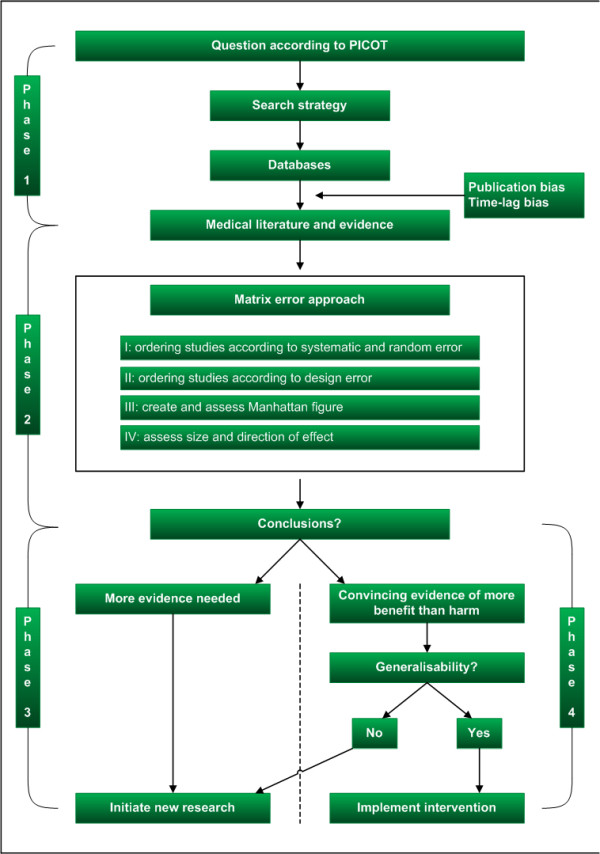
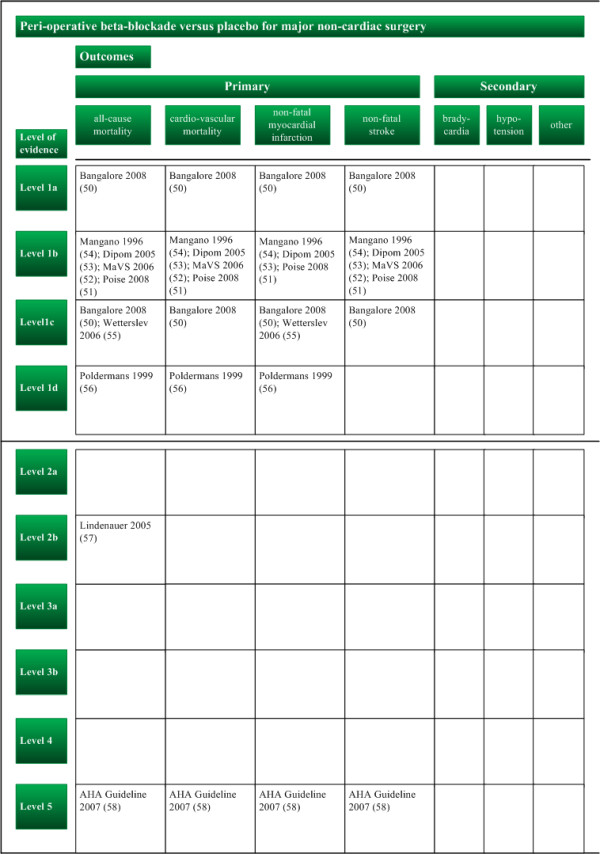
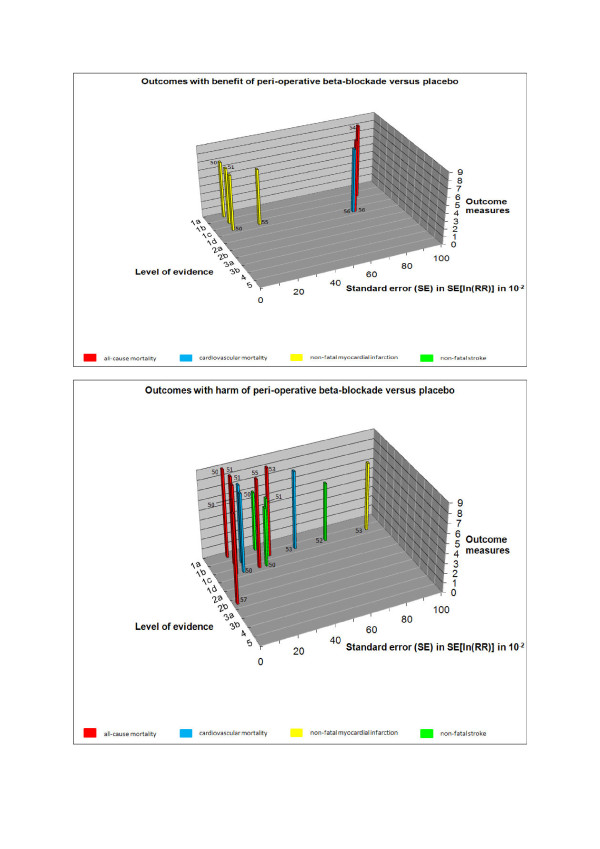
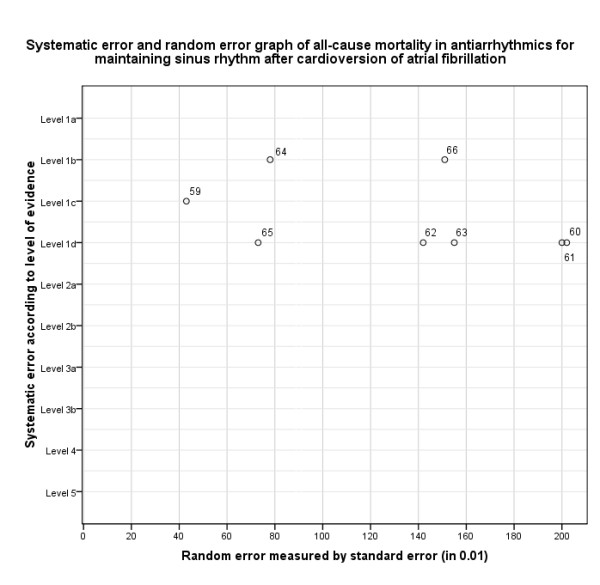
A four-step matrix was constructed using the three dimensions of systematic error, random error, and design error. Matrix step I ranks the identified studies according to the dimensions of systematic errors and random errors. Matrix step II orders the studies according to the design errors. Matrix step III assesses the three dimensions of errors in studies. Matrix step IV assesses the size and direction of the intervention effect.
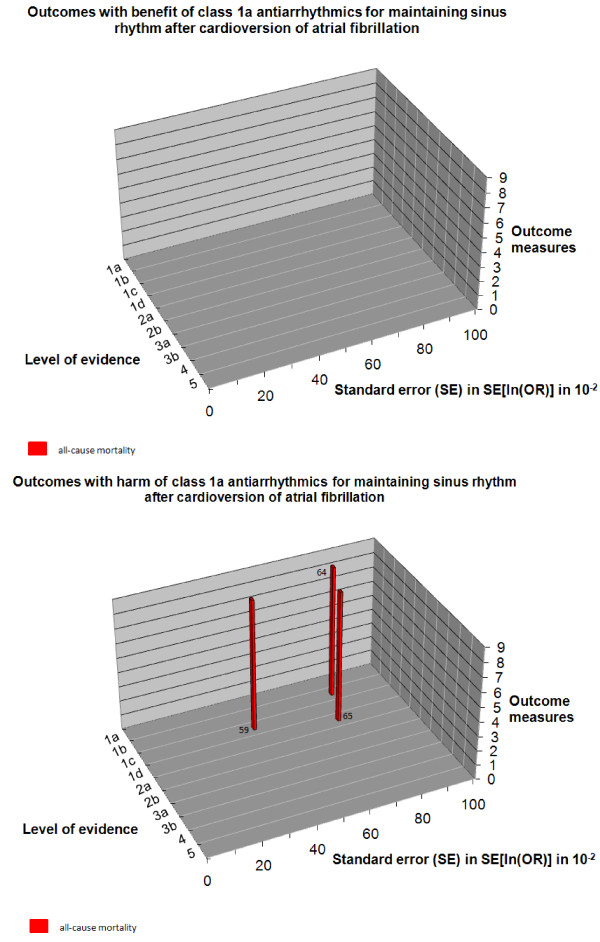
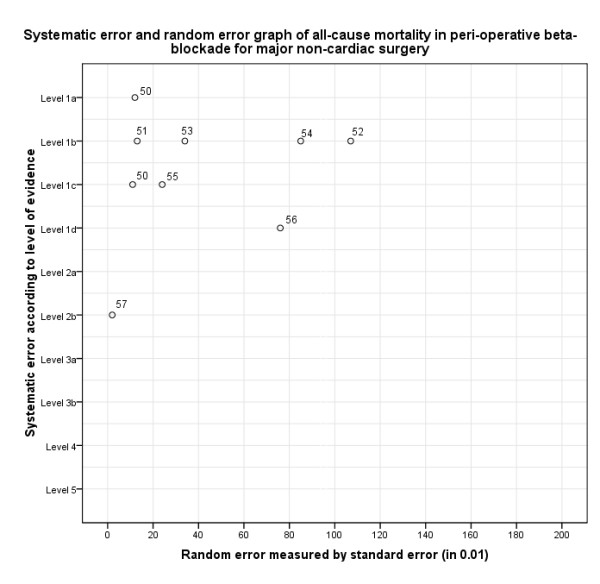
The application of this four-step matrix is illustrated with two examples: peri-operative beta-blockade initialized in relation to surgery versus placebo for major non-cardiac surgery, and antiarrhythmics for maintaining sinus rhythm after cardioversion of atrial fibrillation. When clinical evidence is deemed both internally and externally valid, the size of the intervention effect is to be assessed.
The error matrix provides an overview of the validity of the available evidence at a glance, and may assist in deciding which interventions to use in clinical practice.
临床证据不断扩展,越来越难以全面概述。我们旨在构思一种可视化评估工具,即用于全面评估研究及其数据的矩阵,以便一目了然地评估临床证据。
使用系统误差、随机误差和设计误差这三个维度构建了一个四步矩阵。矩阵步骤 I 根据系统误差和随机误差维度对已确定的研究进行排序。矩阵步骤 II 根据设计误差对研究进行排序。矩阵步骤 III 评估研究中三个误差维度。矩阵步骤 IV 评估干预效果的大小和方向。
该四步矩阵的应用通过两个示例进行说明:主要非心脏手术中与手术相关的围手术期β受体阻滞剂与安慰剂的比较,以及心房颤动电复律后维持窦性节律的抗心律失常药物。当临床证据被认为具有内部和外部有效性时,需要评估干预效果的大小。
误差矩阵可一目了然地概述现有证据的有效性,并有助于决定在临床实践中使用哪些干预措施。