Department of Molecular Biology and Biochemistry, Simon Fraser University, Burnaby, British Columbia, Canada.
BMC Genomics. 2010 Oct 5;11:539. doi: 10.1186/1471-2164-11-539.
The genomes of salmonids are considered pseudo-tetraploid undergoing reversion to a stable diploid state. Given the genome duplication and extensive biological data available for salmonids, they are excellent model organisms for studying comparative genomics, evolutionary processes, fates of duplicated genes and the genetic and physiological processes associated with complex behavioral phenotypes. The evolution of the tetrapod hemoglobin genes is well studied; however, little is known about the genomic organization and evolution of teleost hemoglobin genes, particularly those of salmonids. The Atlantic salmon serves as a representative salmonid species for genomics studies. Given the well documented role of hemoglobin in adaptation to varied environmental conditions as well as its use as a model protein for evolutionary analyses, an understanding of the genomic structure and organization of the Atlantic salmon α and β hemoglobin genes is of great interest.
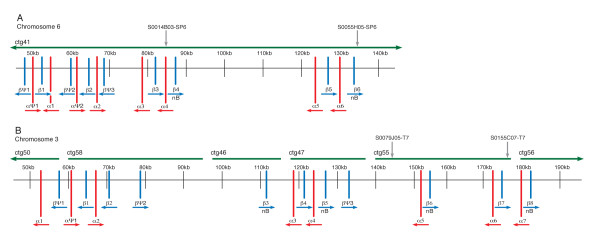
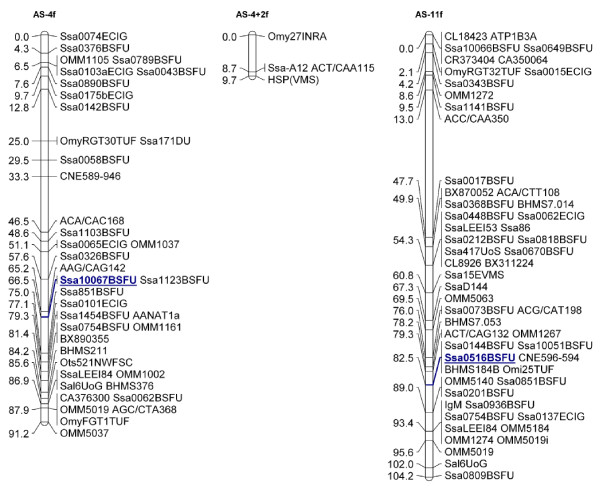
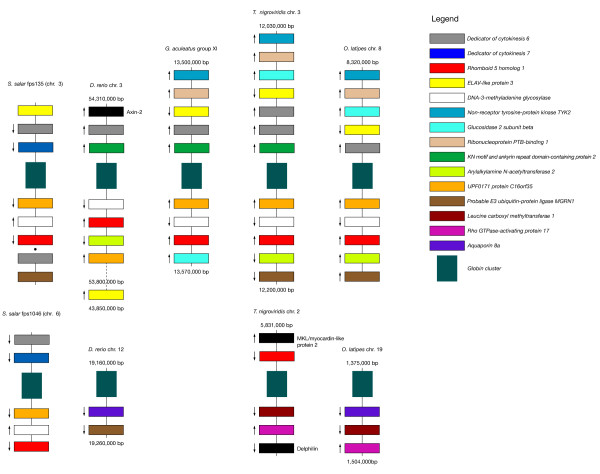
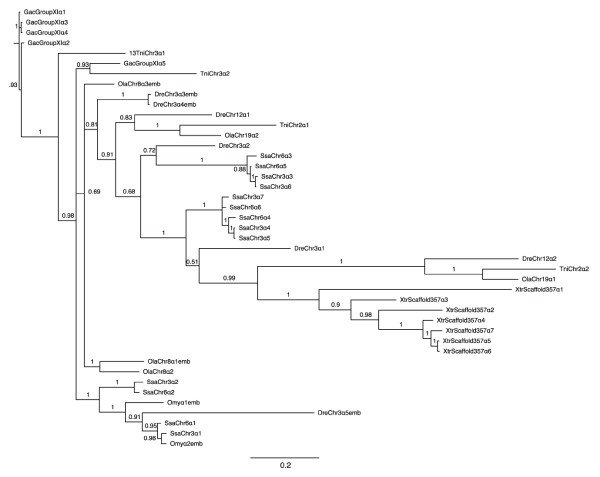
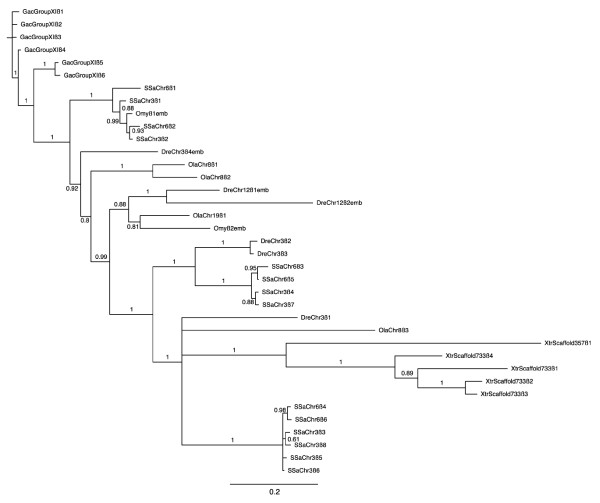
We identified four bacterial artificial chromosomes (BACs) comprising two hemoglobin gene clusters spanning the entire α and β hemoglobin gene repertoire of the Atlantic salmon genome. Their chromosomal locations were established using fluorescence in situ hybridization (FISH) analysis and linkage mapping, demonstrating that the two clusters are located on separate chromosomes. The BACs were sequenced and assembled into scaffolds, which were annotated for putatively functional and pseudogenized hemoglobin-like genes. This revealed that the tail-to-tail organization and alternating pattern of the α and β hemoglobin genes are well conserved in both clusters, as well as that the Atlantic salmon genome houses substantially more hemoglobin genes, including non-Bohr β globin genes, than the genomes of other teleosts that have been sequenced.
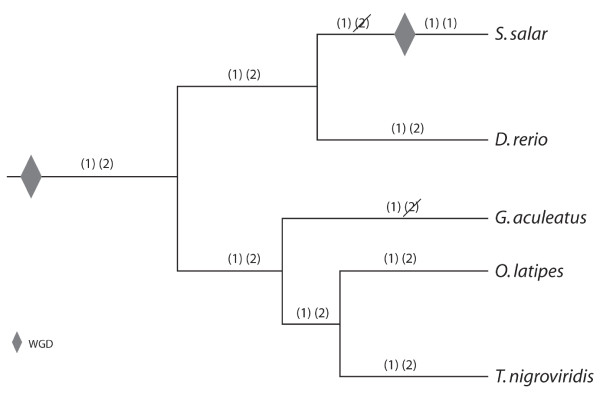
We suggest that the most parsimonious evolutionary path leading to the present organization of the Atlantic salmon hemoglobin genes involves the loss of a single hemoglobin gene cluster after the whole genome duplication (WGD) at the base of the teleost radiation but prior to the salmonid-specific WGD, which then produced the duplicated copies seen today. We also propose that the relatively high number of hemoglobin genes as well as the presence of non-Bohr β hemoglobin genes may be due to the dynamic life history of salmon and the diverse environmental conditions that the species encounters.Data deposition: BACs S0155C07 and S0079J05 (fps135): GenBank GQ898924; BACs S0055H05 and S0014B03 (fps1046): GenBank GQ898925.
鲑鱼的基因组被认为是经历了向稳定二倍体状态回复的假四倍体。鉴于鲑鱼基因组的大量重复和广泛的生物学数据,它们是研究比较基因组学、进化过程、重复基因的命运以及与复杂行为表型相关的遗传和生理过程的极佳模式生物。四足动物血红蛋白基因的进化得到了很好的研究;然而,关于硬骨鱼血红蛋白基因的基因组组织和进化,特别是鲑鱼的基因组组织和进化,知之甚少。大西洋鲑是鲑鱼基因组学研究的代表性物种。鉴于血红蛋白在适应不同环境条件中的作用以及它作为进化分析模型蛋白的用途,了解大西洋鲑α和β血红蛋白基因的基因组结构和组织非常重要。
我们鉴定了四个包含整个大西洋鲑基因组α和β血红蛋白基因库的两个血红蛋白基因簇的细菌人工染色体 (BAC)。通过荧光原位杂交 (FISH) 分析和连锁图谱定位确定了它们的染色体位置,证明这两个簇位于不同的染色体上。BAC 被测序并组装成支架,这些支架被注释为可能具有功能和假基因化的血红蛋白样基因。这表明,两个簇中α和β血红蛋白基因的串联排列和交替模式都很好地保守,并且大西洋鲑基因组拥有比其他已测序的硬骨鱼更多的血红蛋白基因,包括非 Bohr β珠蛋白基因。
我们认为,导致大西洋鲑血红蛋白基因目前组织的最简约进化途径涉及在硬骨鱼辐射基础上的全基因组复制(WGD)之后但在鲑鱼特异性 WGD 之前丢失单个血红蛋白基因簇,然后产生了今天看到的重复拷贝。我们还提出,相对较高数量的血红蛋白基因以及非 Bohr β血红蛋白基因的存在可能是由于鲑鱼的动态生活史和该物种遇到的各种环境条件。
BACs S0155C07 和 S0079J05(fps135):GenBank GQ898924;BACs S0055H05 和 S0014B03(fps1046):GenBank GQ898925。