Instituto de Ciencias Ambientales y Evolutivas, Facultad de Ciencias, Universidad Austral de Chile, Valdivia, Chile.
Mol Biol Evol. 2013 Jan;30(1):140-53. doi: 10.1093/molbev/mss212. Epub 2012 Sep 4.
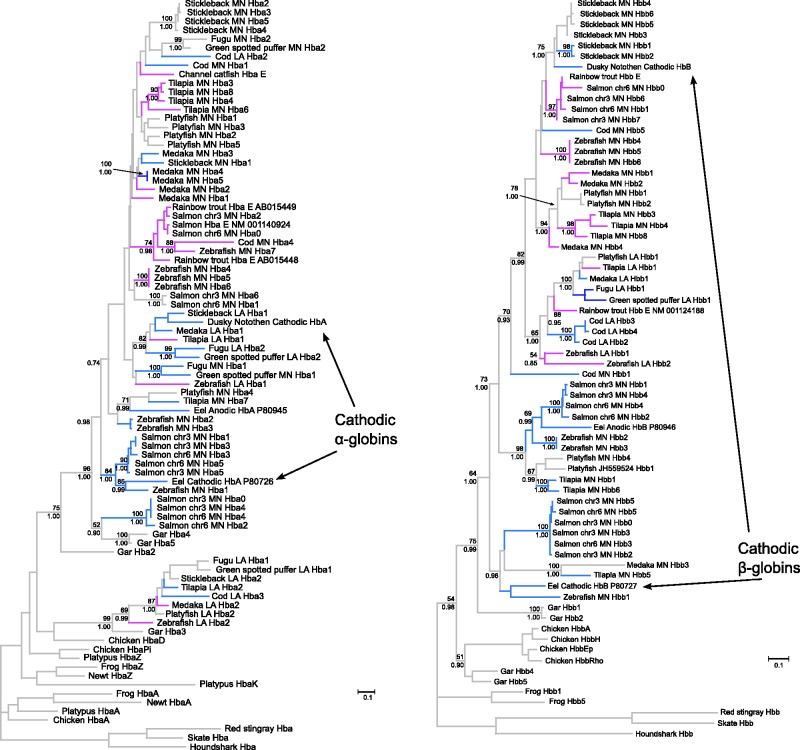
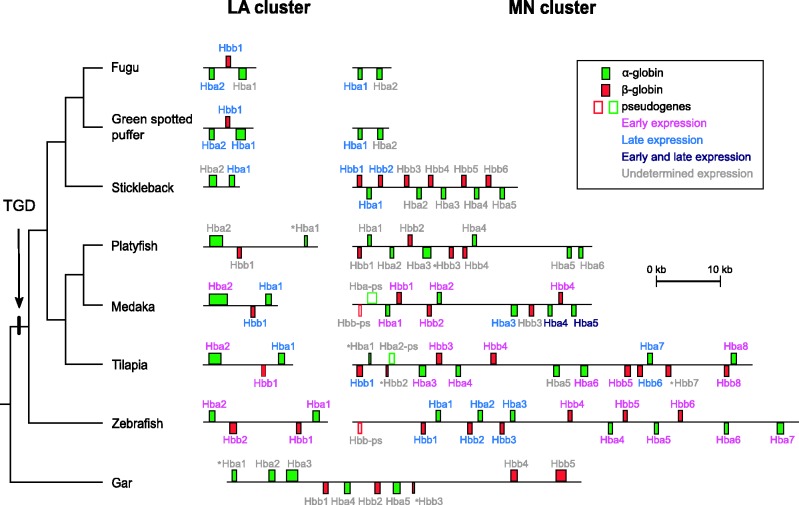
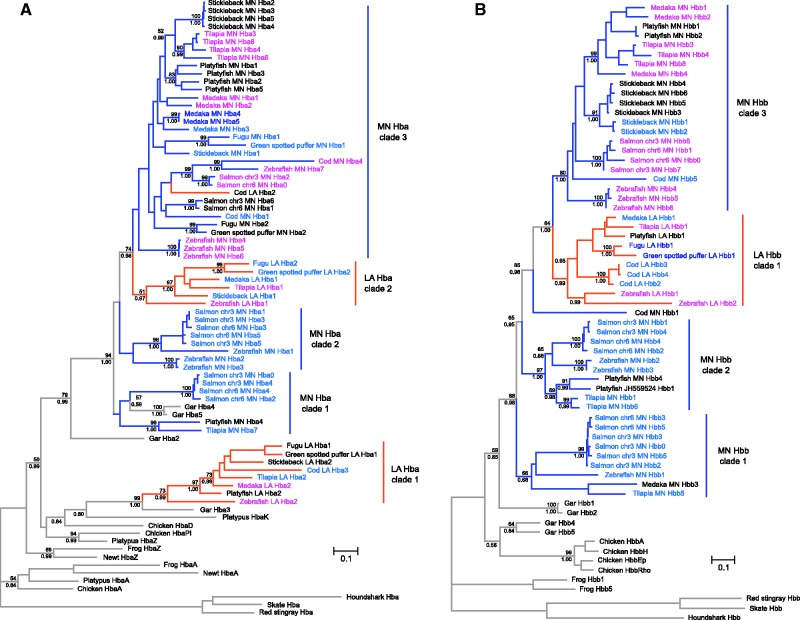
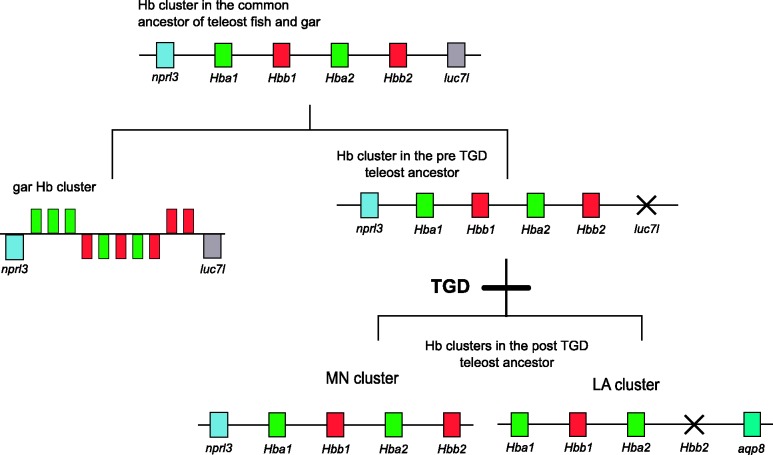
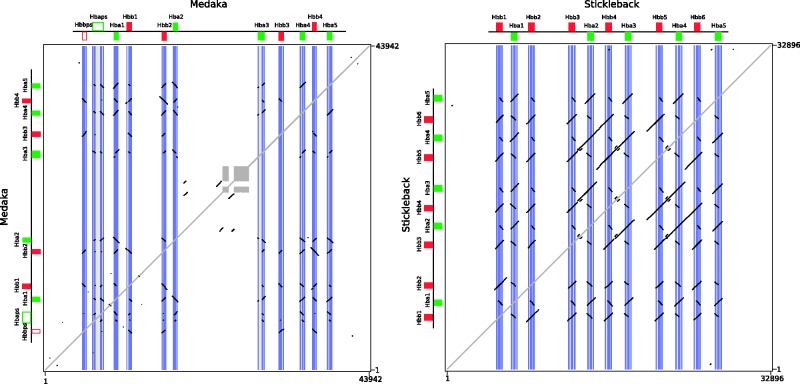
Subsequent to the two rounds of whole-genome duplication that occurred in the common ancestor of vertebrates, a third genome duplication occurred in the stem lineage of teleost fishes. This teleost-specific genome duplication (TGD) is thought to have provided genetic raw materials for the physiological, morphological, and behavioral diversification of this highly speciose group. The extreme physiological versatility of teleost fish is manifest in their diversity of blood-gas transport traits, which reflects the myriad solutions that have evolved to maintain tissue O(2) delivery in the face of changing metabolic demands and environmental O(2) availability during different ontogenetic stages. During the course of development, regulatory changes in blood-O(2) transport are mediated by the expression of multiple, functionally distinct hemoglobin (Hb) isoforms that meet the particular O(2)-transport challenges encountered by the developing embryo or fetus (in viviparous or oviparous species) and in free-swimming larvae and adults. The main objective of the present study was to assess the relative contributions of whole-genome duplication, large-scale segmental duplication, and small-scale gene duplication in producing the extraordinary functional diversity of teleost Hbs. To accomplish this, we integrated phylogenetic reconstructions with analyses of conserved synteny to characterize the genomic organization and evolutionary history of the globin gene clusters of teleosts. These results were then integrated with available experimental data on functional properties and developmental patterns of stage-specific gene expression. Our results indicate that multiple α- and β-globin genes were present in the common ancestor of gars (order Lepisoteiformes) and teleosts. The comparative genomic analysis revealed that teleosts possess a dual set of TGD-derived globin gene clusters, each of which has undergone lineage-specific changes in gene content via repeated duplication and deletion events. Phylogenetic reconstructions revealed that paralogous genes convergently evolved similar functional properties in different teleost lineages. Consistent with other recent studies of globin gene family evolution in vertebrates, our results revealed evidence for repeated evolutionary transitions in the developmental regulation of Hb synthesis.
在脊椎动物的共同祖先经历了两轮全基因组复制之后,第三轮基因组复制发生在硬骨鱼类的谱系主干中。这种硬骨鱼类特异性基因组复制(TGD)被认为为这个高度多样化的群体的生理、形态和行为多样化提供了遗传原料。硬骨鱼类极端的生理多样性体现在它们血液气体运输特征的多样性上,这反映了为了在不同的个体发育阶段面对代谢需求变化和环境氧气供应变化而进化出的无数解决方案。在发育过程中,血液-O2 运输的调节变化是通过表达多种功能不同的血红蛋白(Hb)同工型来介导的,这些同工型满足了胚胎或胎儿(在胎生或卵生物种中)以及自由游动的幼虫和成年鱼类发育过程中遇到的特定 O2 运输挑战。本研究的主要目的是评估全基因组复制、大规模片段复制和小尺度基因复制在产生硬骨鱼类 Hb 非凡功能多样性方面的相对贡献。为了实现这一目标,我们将系统发育重建与保守同线性分析相结合,以描述硬骨鱼类球蛋白基因簇的基因组组织和进化历史。然后将这些结果与关于特定阶段基因表达的功能特性和发育模式的现有实验数据相结合。我们的研究结果表明,在长鳍鱼目(Lepisoteiformes)和硬骨鱼类的共同祖先中存在多个α-和β-珠蛋白基因。比较基因组分析表明,硬骨鱼类拥有两套 TGD 衍生的球蛋白基因簇,每个基因簇都通过重复的复制和缺失事件发生了谱系特异性的基因内容变化。系统发育重建揭示了在不同的硬骨鱼类谱系中,旁系同源基因趋同进化出了相似的功能特性。与最近对脊椎动物球蛋白基因家族进化的其他研究一致,我们的研究结果表明,Hb 合成的发育调控中存在反复的进化转变。