Department of Pathobiological Sciences,Louisiana State University, Baton Rouge, LA 70803, USA.
J Immunol. 2010 Nov 15;185(10):6214-25. doi: 10.4049/jimmunol.0903843. Epub 2010 Oct 11.
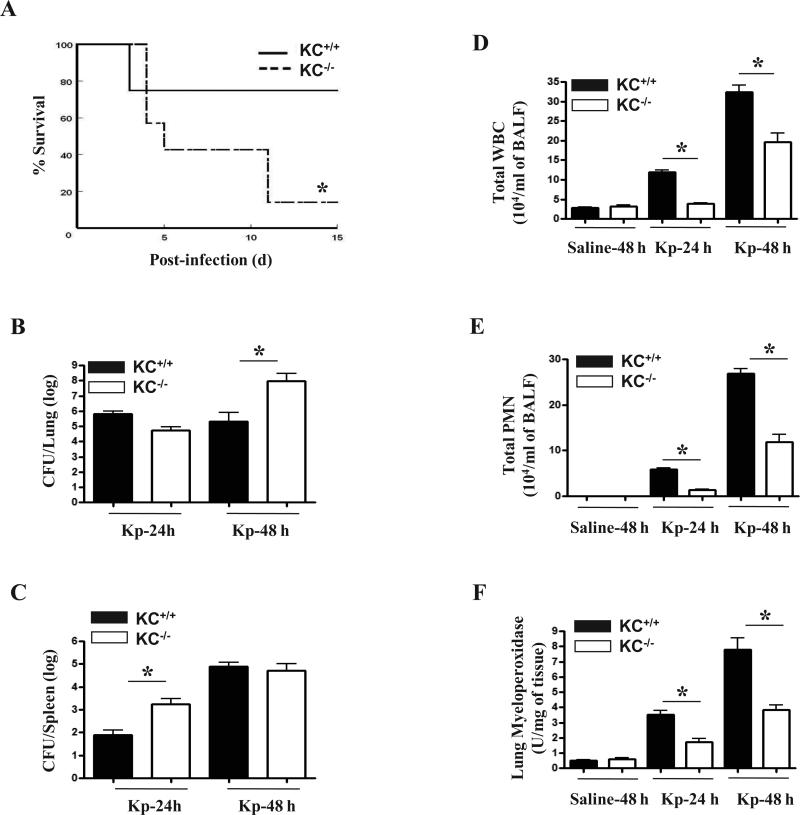
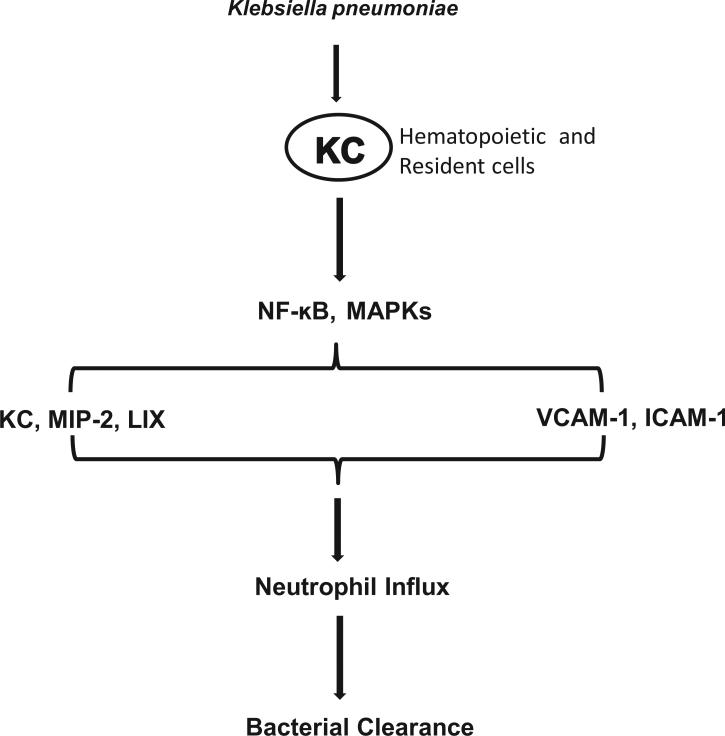
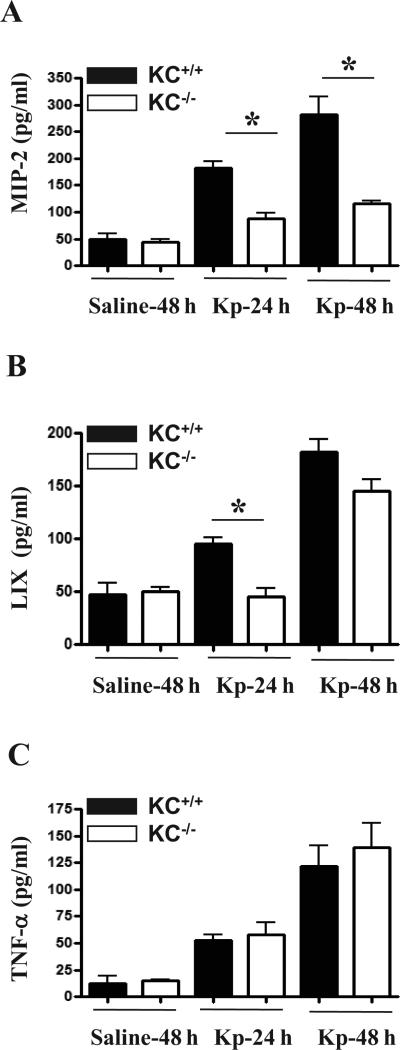
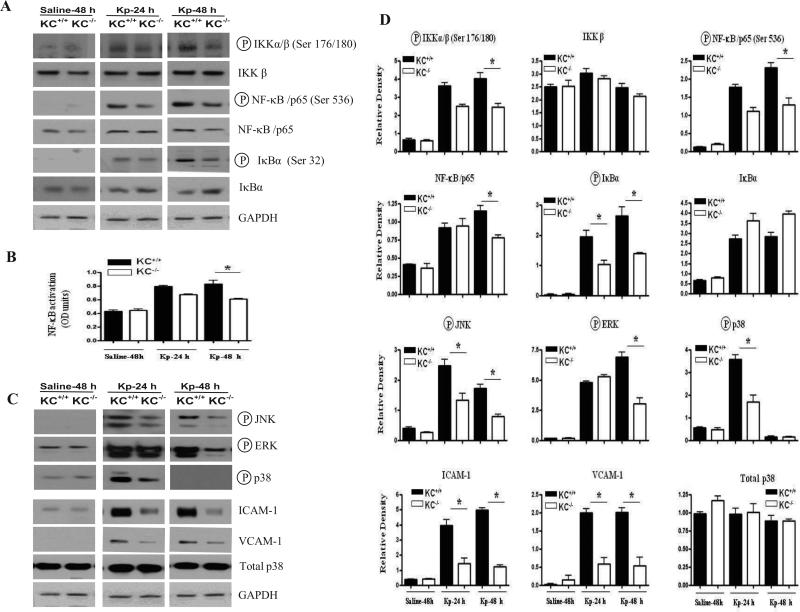
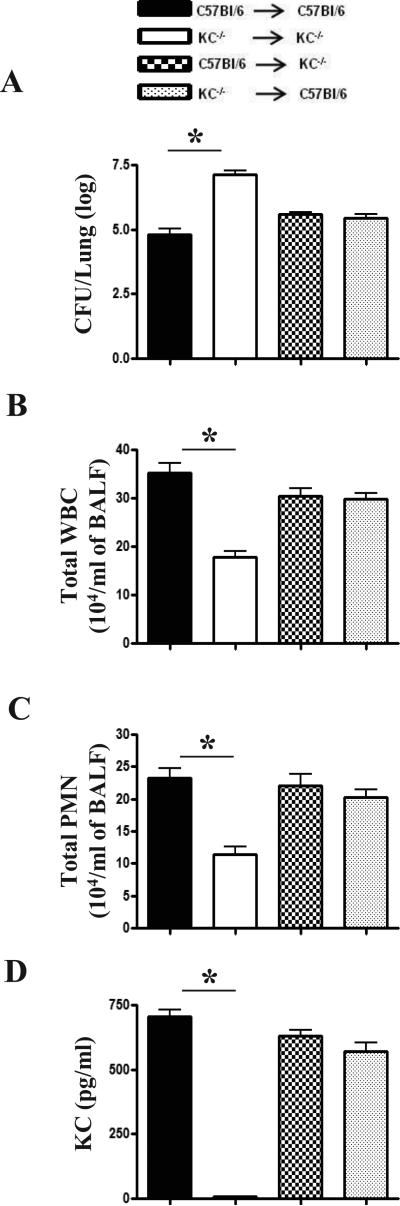
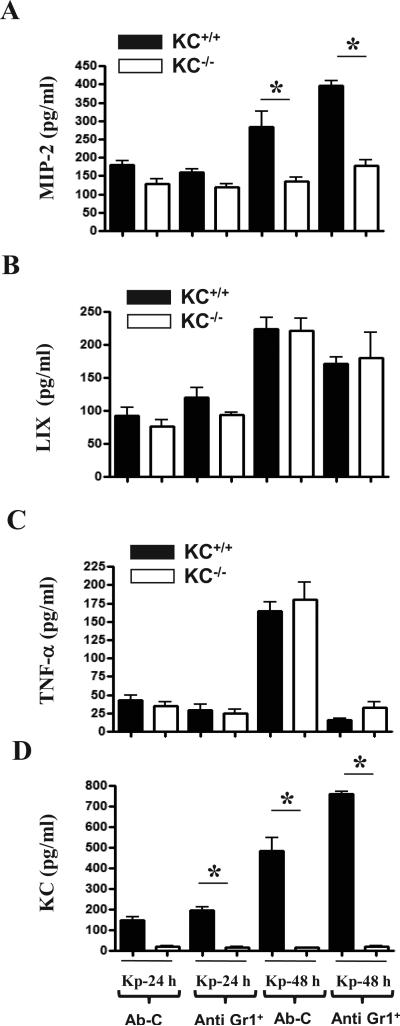
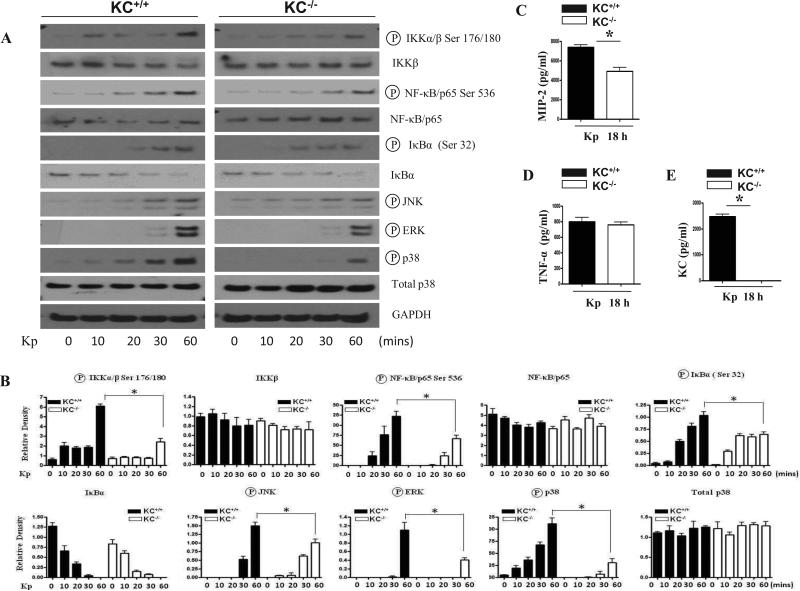
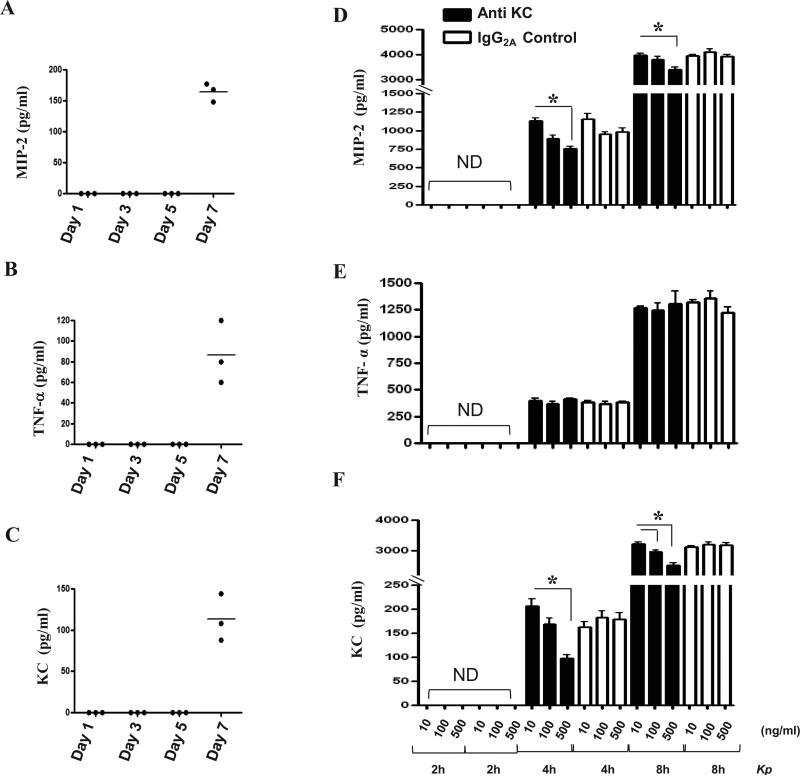
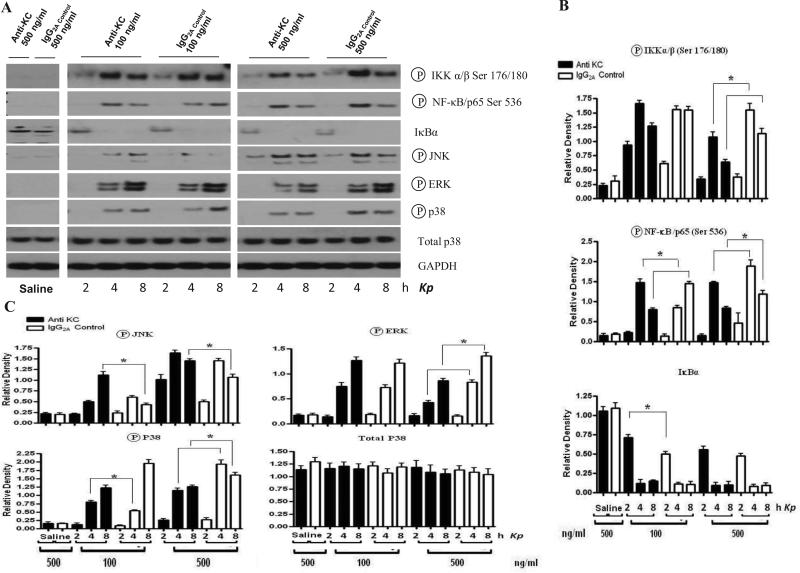
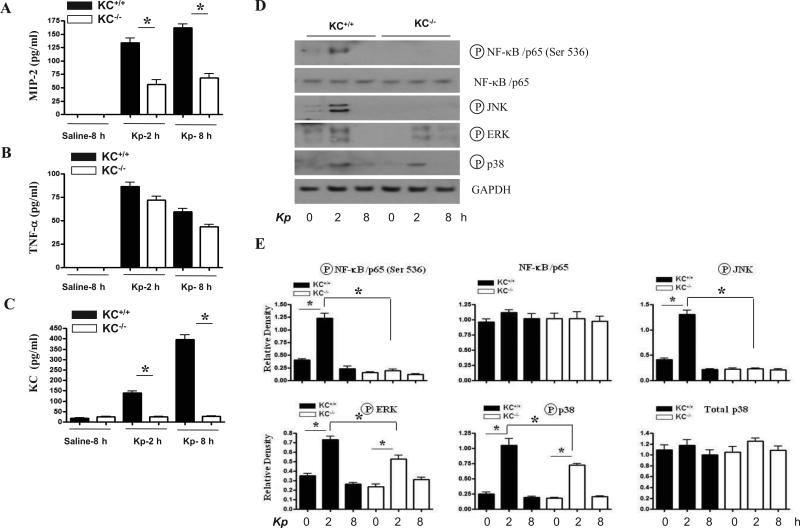
Pulmonary bacterial infections are a leading cause of death. Since the introduction of antibiotics, multidrug-resistant Klebsiella pneumoniae became an escalating threat. Therefore, development of methods to augment antibacterial defense is warranted. Neutrophil recruitment is critical to clear bacteria, and neutrophil migration in the lung requires the production of ELR(+) CXC chemokines. Although lung-specific CXCL1/keratinocyte cell-derived chemokine (KC) transgene expression causes neutrophil-mediated clearance of K. pneumoniae, the mechanisms underlying KC-mediated host defense against K. pneumoniae have not been explored. In this study, we delineated the host defense functions of KC during pulmonary K. pneumoniae infection using KC(-/-) mice. Our findings demonstrate that KC is important for expression of CXCL2/MIP-2 and CXCL5/LPS-induced CXC chemokine, and activation of NF-κB and MAPKs in the lung. Furthermore, KC derived from both hematopoietic and resident cells contributes to host defense against K. pneumoniae. Neutrophil depletion in mice before K. pneumoniae infection reveals no differences in the production of MIP-2 and LPS-induced CXC chemokine or activation of NF-κB and MAPKs in the lung. Using murine bone marrow-derived and alveolar macrophages, we confirmed KC-mediated upregulation of MIP-2 and activation of NF-κB and MAPKs on K. pneumoniae infection. Moreover, neutralizing KC in bone marrow-derived macrophages before K. pneumoniae challenge decreases bacteria-induced production of KC and MIP-2, and activation of NF-κB and MAPKs. These findings reveal the importance of KC produced by hematopoietic and resident cells in regulating pulmonary host defense against a bacterial pathogen via the activation of transcription factors and MAPKs, as well as the expression of cell adhesion molecules and other neutrophil chemoattractants.
肺部细菌感染是导致死亡的主要原因之一。自从抗生素问世以来,多药耐药性肺炎克雷伯菌已成为日益严重的威胁。因此,有必要开发增强抗菌防御的方法。中性粒细胞的募集对于清除细菌至关重要,而肺部中性粒细胞的迁移需要产生 ELR(+) CXC 趋化因子。虽然肺特异性 CXCL1/角质形成细胞衍生趋化因子 (KC) 转基因表达导致中性粒细胞介导的清除肺炎克雷伯菌,但 KC 介导的宿主防御肺炎克雷伯菌的机制尚未得到探索。在这项研究中,我们使用 KC(-/-) 小鼠阐明了 KC 在肺部肺炎克雷伯菌感染期间的宿主防御功能。我们的发现表明,KC 对于 CXCL2/MIP-2 和 CXCL5/LPS 诱导的 CXC 趋化因子的表达以及 NF-κB 和 MAPKs 在肺部的激活很重要。此外,来自造血细胞和固有细胞的 KC 有助于宿主抵抗肺炎克雷伯菌。在肺炎克雷伯菌感染前对小鼠进行中性粒细胞耗竭,发现在肺部产生 MIP-2 和 LPS 诱导的 CXC 趋化因子或激活 NF-κB 和 MAPKs 方面没有差异。使用鼠骨髓源性和肺泡巨噬细胞,我们证实了 KC 介导的 MIP-2 上调以及 NF-κB 和 MAPKs 在肺炎克雷伯菌感染时的激活。此外,在肺炎克雷伯菌攻击前用骨髓源性巨噬细胞中的 KC 中和,可减少细菌诱导的 KC 和 MIP-2 的产生,以及 NF-κB 和 MAPKs 的激活。这些发现揭示了造血细胞和固有细胞产生的 KC 通过激活转录因子和 MAPKs 以及细胞粘附分子和其他中性粒细胞趋化因子的表达,在调节肺部针对细菌病原体的宿主防御中的重要性。