Department of Cardiology, Leiden University Medical Center, Albinusdreef 2, 2333 ZA Leiden, The Netherlands.
Heart Fail Rev. 2011 Jul;16(4):411-23. doi: 10.1007/s10741-010-9196-0.
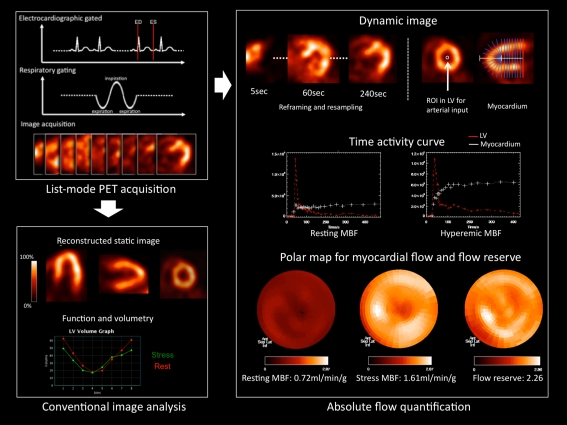
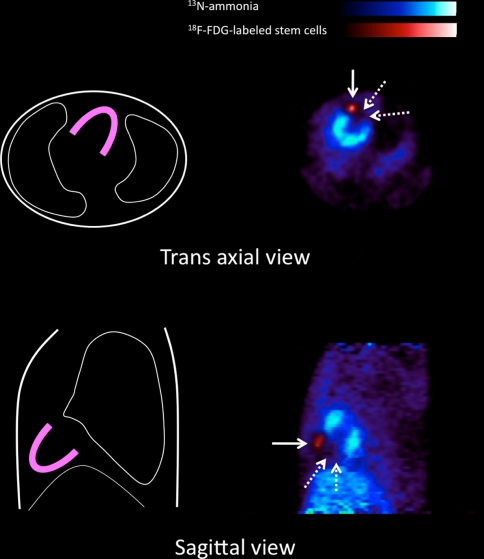
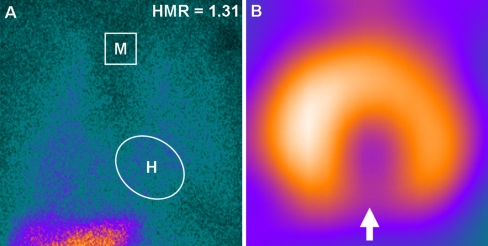
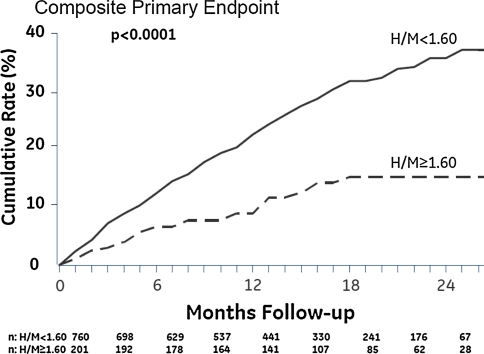
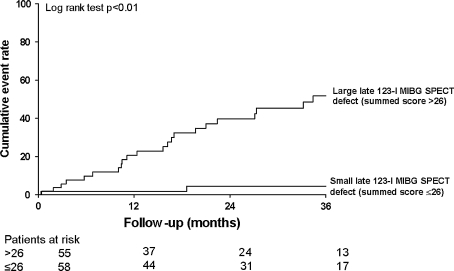
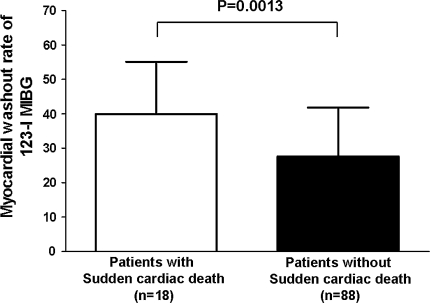
Heart failure represents a common disease affecting approximately 5 million patients in the United States. Several conditions play an important role in the development and progression of heart failure, including abnormalities in myocardial blood flow and sympathetic innervation. Nuclear imaging represents the only imaging modality with sufficient sensitivity to assess myocardial blood flow and sympathetic innervation of the failing heart. Although nuclear imaging with single-photon emission computed tomography (SPECT) is most commonly used for the evaluation of myocardial perfusion, positron emission tomography (PET) allows absolute quantification of myocardial blood flow beyond the assessment of relative myocardial perfusion. Both techniques can be used for evaluation of diagnosis, treatment options, and prognosis in heart failure patients. Besides myocardial blood flow, cardiac sympathetic innervation represents another important parameter in patients with heart failure. Currently, sympathetic nerve imaging with 123-iodine metaiodobenzylguanidine (123-I MIBG) is often used for the assessment of cardiac innervation. A large number of studies have shown that an abnormal myocardial sympathetic innervation, as assessed with 123-I MIBG imaging, is associated with increased mortality and morbidity rates in patients with heart failure. Also, cardiac 123-I MIBG imaging can be used to risk stratify patients for ventricular arrhythmias or sudden cardiac death. Furthermore, novel nuclear imaging techniques are being developed that may provide more detailed information for the detection of heart failure in an early phase as well as for monitoring the effects of new therapeutic interventions in patients with heart failure.
心力衰竭是一种常见疾病,影响美国约 500 万患者。多种情况在心衰的发生和发展中起着重要作用,包括心肌血流和交感神经支配的异常。核成像代表唯一具有足够敏感性来评估衰竭心脏的心肌血流和交感神经支配的成像方式。尽管单光子发射计算机断层扫描(SPECT)核成像最常用于评估心肌灌注,但正电子发射断层扫描(PET)允许绝对量化心肌血流,而不仅仅是评估相对心肌灌注。这两种技术都可用于评估心力衰竭患者的诊断、治疗选择和预后。除了心肌血流,心脏交感神经支配也是心力衰竭患者的另一个重要参数。目前,使用 123-碘间位碘苄胍(123-I MIBG)进行的心脏交感神经成像常用于评估心脏神经支配。大量研究表明,123-I MIBG 成像评估的异常心肌交感神经支配与心力衰竭患者的死亡率和发病率增加相关。此外,心脏 123-I MIBG 成像可用于对室性心律失常或心源性猝死风险分层。此外,正在开发新的核成像技术,这些技术可能为早期检测心力衰竭以及监测心力衰竭患者新治疗干预措施的效果提供更详细的信息。