Department of Medicine, Section of Hematology, University of Verona, Verona, Italy.
Mol Cancer. 2010 Oct 14;9:273. doi: 10.1186/1476-4598-9-273.
Increased numbers of tumour-associated macrophages correlate with shortened survival in some cancers. The molecular bases of this correlation are not thoroughly understood. Events triggered by CXCL12 may play a part, as CXCL12 drives the migration of both CXCR4-positive cancer cells and macrophages and may promote a molecular crosstalk between them.
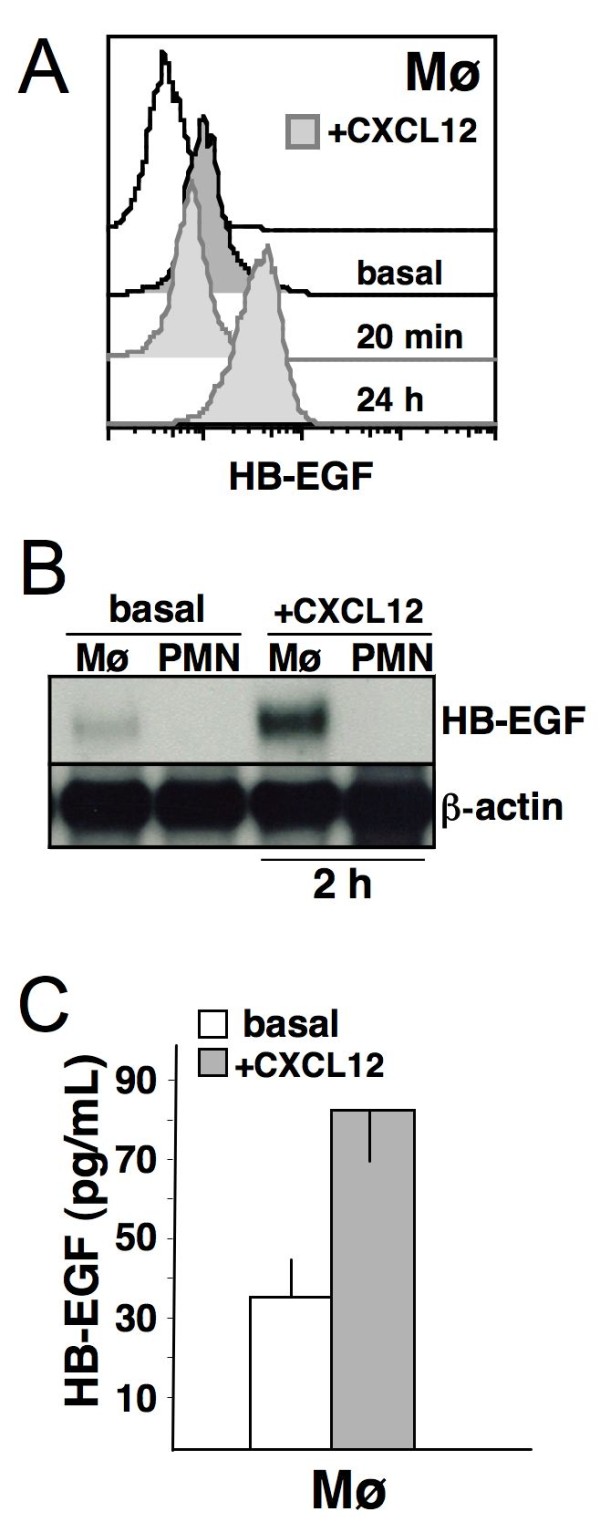
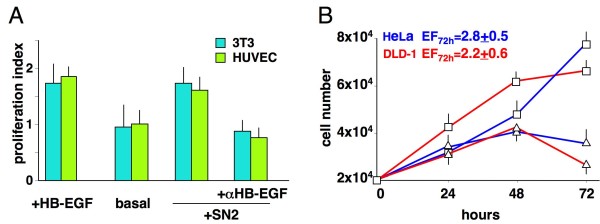
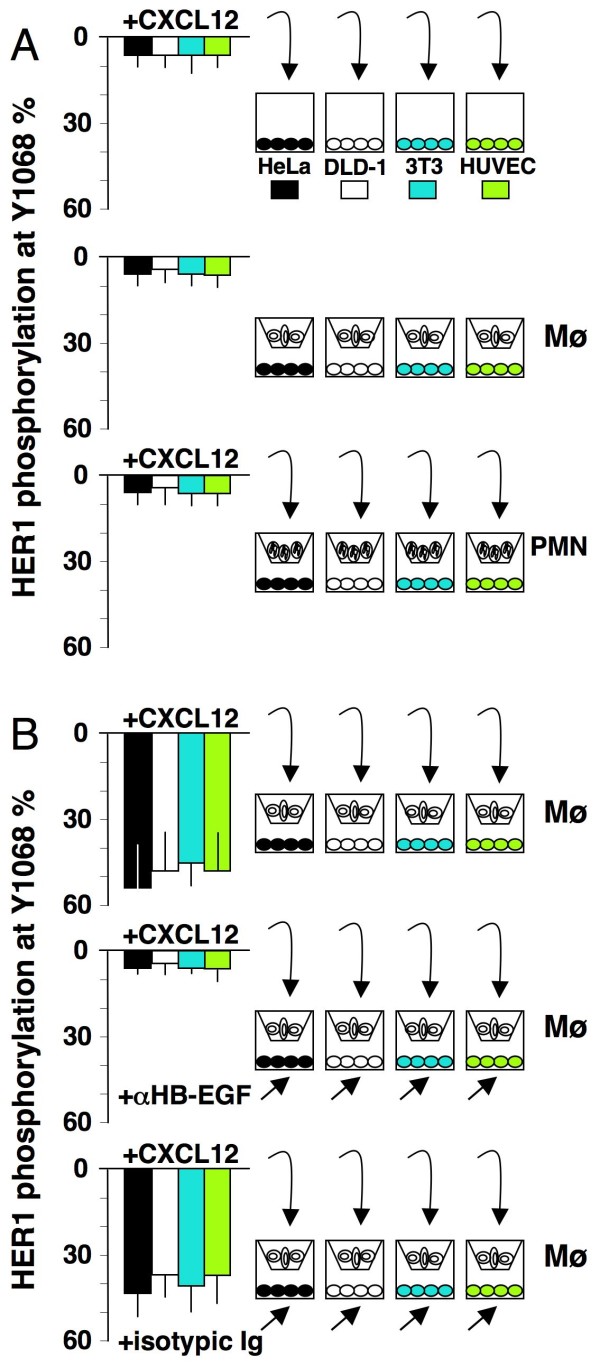
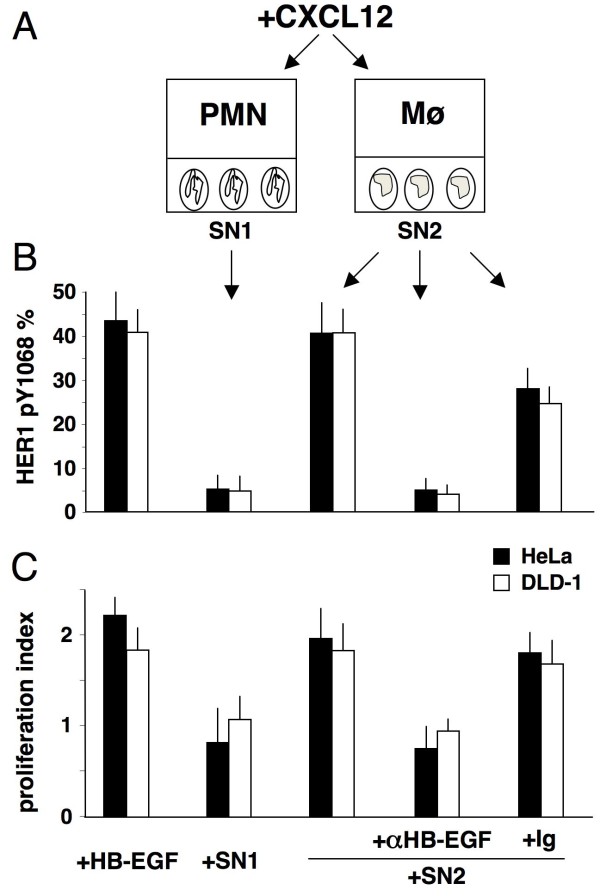
Samples of HER1-positive colon cancer metastases in liver, a tissue with high expression of CXCL12, were analysed by immunohistochemistry. In all of the patient biopsies, CD68-positive tumour-associated macrophages presented a mixed CXCL10 (M1)/CD163 (M2) pattern, expressed CXCR4, GM-CSF and HB-EGF, and some stained positive for CXCL12. Cancer cells stained positive for CXCR4, CXCL12, HER1, HER4 and GM-CSF. Regulatory interactions among these proteins were validated via experiments in vitro involving crosstalk between human mononuclear phagocytes and the cell lines DLD-1 (human colon adenocarcinoma) and HeLa (human cervical carcinoma), which express the above-mentioned ligand/receptor repertoire. CXCL12 induced mononuclear phagocytes to release HB-EGF, which activated HER1 and triggered anti-apoptotic and proliferative signals in cancer cells. The cancer cells then proliferated and released GM-CSF, which in turn activated mononuclear phagocytes and induced them to release more HB-EGF. Blockade of GM-CSF with neutralising antibodies or siRNA suppressed this loop.
CXCL12-driven stimulation of cancer cells and macrophages may elicit and reinforce a GM-CSF/HB-EGF paracrine loop, whereby macrophages contribute to cancer survival and expansion. The involvement of mixed M1/M2 GM-CSF-stimulated macrophages in a tumour-promoting loop may challenge the paradigm of tumour-favouring macrophages as polarized M2 mononuclear phagocytes.
在一些癌症中,肿瘤相关巨噬细胞数量的增加与生存期缩短相关。这种相关性的分子基础尚不完全清楚。CXCL12 引发的事件可能起作用,因为 CXCL12 驱动 CXCR4 阳性的癌细胞和巨噬细胞的迁移,并可能促进它们之间的分子串扰。
通过免疫组织化学分析了 HER1 阳性结肠癌转移到肝脏的样本,这是一种 CXCL12 高表达的组织。在所有患者的活检中,CD68 阳性的肿瘤相关巨噬细胞表现出混合的 CXCL10(M1)/CD163(M2)模式,表达 CXCR4、GM-CSF 和 HB-EGF,一些细胞对 CXCL12 染色阳性。癌细胞对 CXCR4、CXCL12、HER1、HER4 和 GM-CSF 染色阳性。通过体外实验验证了这些蛋白质之间的调节相互作用,涉及人单核吞噬细胞与表达上述配体/受体谱的细胞系 DLD-1(人结肠腺癌)和 HeLa(人宫颈癌细胞)之间的串扰。CXCL12 诱导单核吞噬细胞释放 HB-EGF,激活 HER1,并在癌细胞中触发抗凋亡和增殖信号。然后癌细胞增殖并释放 GM-CSF,反过来激活单核吞噬细胞并诱导其释放更多的 HB-EGF。用中和抗体或 siRNA 阻断 GM-CSF 抑制了这个循环。
CXCL12 驱动的癌细胞和巨噬细胞的刺激可能引发并加强 GM-CSF/HB-EGF 旁分泌环,从而促进巨噬细胞促进肿瘤的存活和扩张。参与肿瘤促进环的混合 M1/M2 GM-CSF 刺激的巨噬细胞可能挑战肿瘤支持巨噬细胞作为极化 M2 单核吞噬细胞的范例。