Comparative Medicine and Integrative Biology Program, College of Veterinary Medicine, Michigan State University, East Lansing, Michigan, USA.
BMC Cancer. 2010 Oct 15;10:559. doi: 10.1186/1471-2407-10-559.
Gastrointestinal stromal tumors (GISTs) are common mesenchymal neoplasms in the gastrointestinal tract of humans and dogs. Little is known about the pathogenesis of these tumors. This study evaluated the role of c-KIT in canine GISTs; specifically, we investigated activating mutations in exons 8, 9, 11, 13, and 17 of c-KIT and exons 12, 14, and 18 of platelet-derived growth factor receptor, alpha polypeptide (PDGFRA), all of which have been implicated in human GISTs.
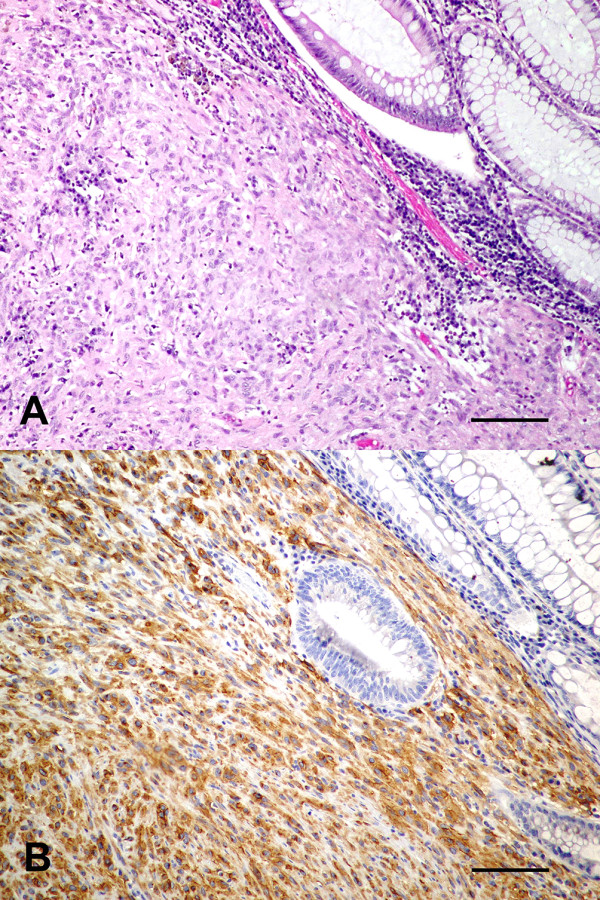
Seventeen canine GISTs all confirmed to be positive for KIT immunostaining were studied. Exons 8, 9, 11, 13 and 17 of c-KIT and exons 12, 14, and 18 of PDGFRA, were amplified from DNA isolated from formalin-fixed paraffin-embedded samples.
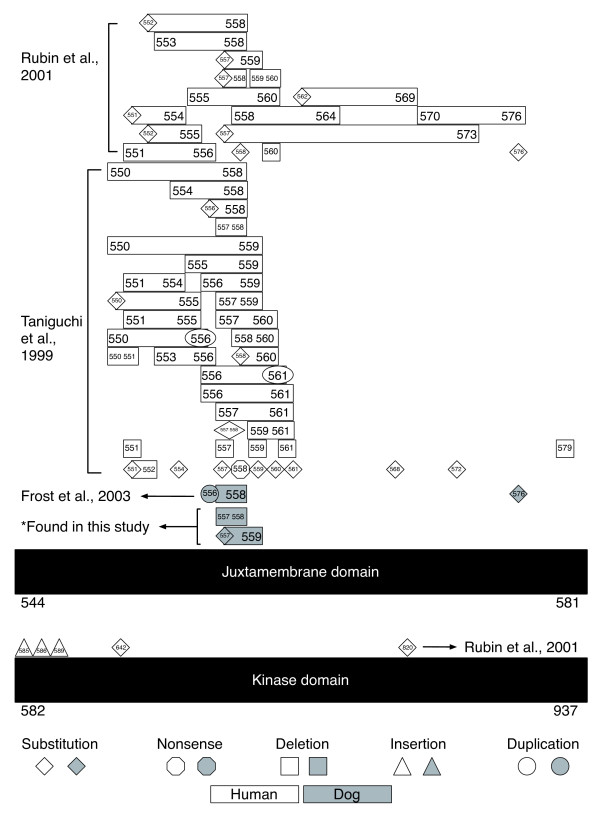
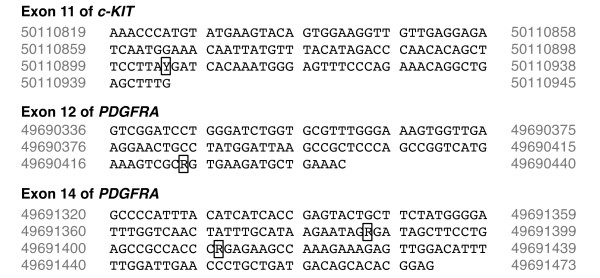
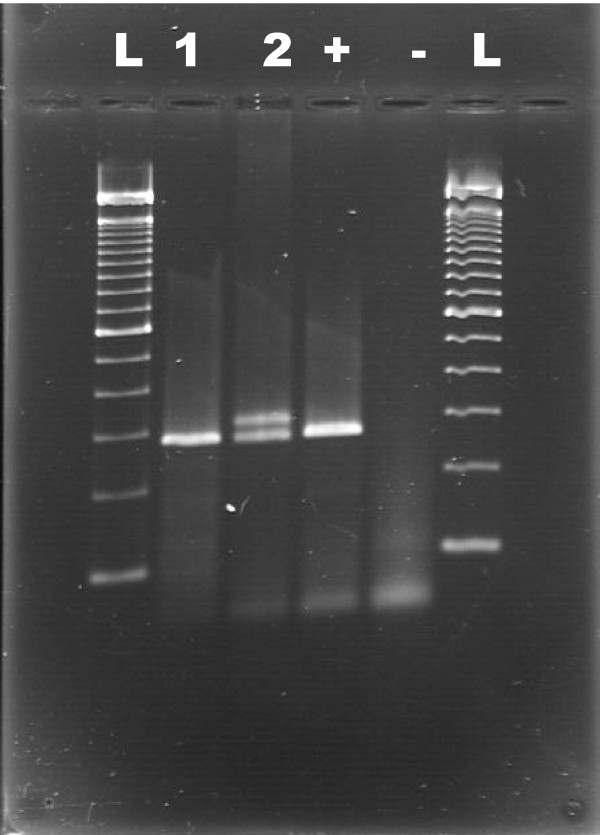
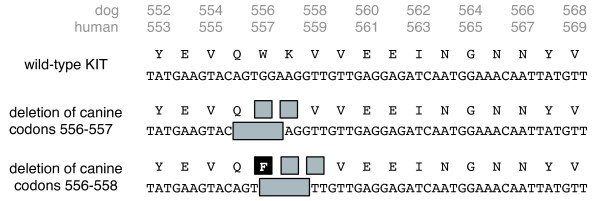
Of these seventeen cases, six amplicons of exon 11 of c-KIT showed aberrant bands on gel electrophoresis. Sequencing of these amplicons revealed heterozygous in-frame deletions in six cases. The mutations include two different but overlapping six base pair deletions. Exons 8, 9, 13, and 17 of c-KIT and exons 12, 14, and 18 of PDGFRA had no abnormalities detected by electrophoresis and sequencing did not reveal any mutations, other than synonymous single nucleotide polymorphisms (SNPs) found in exon 11 of c-KIT and exons 12 and 14 of PDGFRA.
The deletion mutations detected in canine GISTs are similar to those previously found in the juxtamembrane domain of c-KIT in canine cutaneous mast cell tumors in our laboratory as well as to those reported in human GISTs. Interestingly, none of the other c-KIT or PDGFRA exons showed any abnormalities in our cases. This finding underlines the critical importance of c-KIT in the pathophysiology of canine GISTs. The expression of KIT and the identification of these activating mutations in c-KIT implicate KIT in the pathogenesis of these tumors. Our results indicate that mutations in c-KIT may be of prognostic significance and that targeting KIT may be a rational approach to treatment of these malignant tumors. This study further demonstrates that spontaneously occurring canine GISTs share molecular features with human GISTs and are an appropriate model for human GISTs.
胃肠道间质瘤(GISTs)是人类和犬胃肠道中常见的间叶性肿瘤。目前对于这些肿瘤的发病机制知之甚少。本研究评估了 c-KIT 在犬 GISTs 中的作用;具体来说,我们研究了 c-KIT 外显子 8、9、11、13 和 17 以及血小板衍生生长因子受体,α 多肽(PDGFRA)外显子 12、14 和 18 的激活突变,这些突变都与人类 GISTs 有关。
本研究共纳入 17 例犬 GIST 组织,均为 KIT 免疫染色阳性。从福尔马林固定石蜡包埋样本中提取 DNA,扩增 c-KIT 外显子 8、9、11、13 和 17 以及 PDGFRA 外显子 12、14 和 18。
在这 17 例病例中,有 6 例 c-KIT 外显子 11 的扩增产物在凝胶电泳上显示出异常条带。对这些扩增产物进行测序发现,6 例存在杂合框内缺失突变。这些突变包括两种不同但重叠的 6 个碱基对缺失。c-KIT 的外显子 8、9、13 和 17 以及 PDGFRA 的外显子 12、14 和 18 经电泳检测无异常,测序未发现除 c-KIT 外显子 11 和 PDGFRA 外显子 12 和 14 发现同义单核苷酸多态性(SNP)外的其他突变。
本研究在犬 GISTs 中检测到的缺失突变与本实验室先前在犬皮肤肥大细胞瘤中发现的 c-KIT 近膜区突变以及人类 GISTs 报道的突变相似。有趣的是,在我们的病例中,其他 c-KIT 或 PDGFRA 外显子均未显示任何异常。这一发现强调了 c-KIT 在犬 GIST 病理生理学中的重要性。KIT 的表达和这些 c-KIT 激活突变的鉴定表明 KIT 参与了这些肿瘤的发病机制。我们的结果表明,c-KIT 突变可能具有预后意义,靶向 KIT 可能是治疗这些恶性肿瘤的合理方法。本研究进一步证明,自发性发生的犬 GISTs 与人类 GISTs 具有分子特征,是研究人类 GISTs 的合适模型。