University of Zurich, Psychopathology and Clinical Intervention, Binzmühlestraße, Zürich, Switzerland.
BMC Public Health. 2010 Oct 22;10:634. doi: 10.1186/1471-2458-10-634.
Despite frequent and serious mental health problems after interpersonal traumatization, only a fraction of those affected by interpersonal violence seek formal help after the event. Reasons for this mismatch can be found in the individual help-seeking process but also in the individual's social environment. These social factors are explored based on a model describing the survivor's help-seeking process.
Survivors of interpersonal traumatization and professionals providing help for this population were asked about factors influencing the ease of seeking and receiving professional help after interpersonal traumatization. A deductive and inductive content analysis of the experiences of 43 survivors of interpersonal traumatization and 16 professionals providing help for this population was carried out.
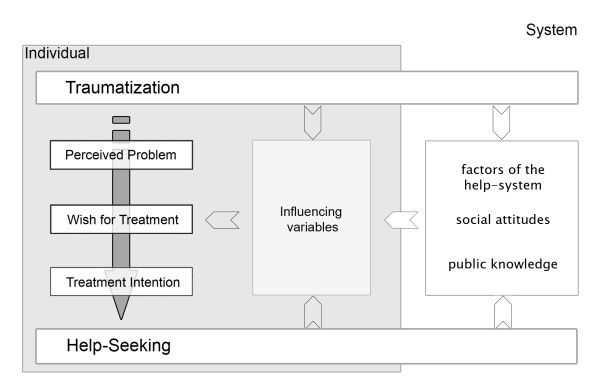
The analysis suggested a clear distinction of an individual and a social system level of influencing variables. At the system level three main factors were identified: factors of the help-system, dominant attitudes in society and public knowledge about traumatization and available help.
The results confirmed a complex interaction of variables on the individual and system level in the help-seeking process. The system level affects the individual's help-seeking through multiple pathways, especially through the individual's representation of the traumatization, through the reactions of the individual's social network and through barriers the individual perceives or experiences in the formal help-system.
尽管人际创伤后经常出现严重的心理健康问题,但只有一部分遭受人际暴力的人在事件发生后会寻求正式帮助。这种不匹配的原因既可以在个体的求助过程中找到,也可以在个体的社会环境中找到。这些社会因素是基于描述幸存者求助过程的模型来探索的。
我们询问了人际创伤的幸存者和为这一人群提供帮助的专业人员,了解影响他们在人际创伤后寻求和接受专业帮助的难易程度的因素。对 43 名人际创伤幸存者和 16 名为这一人群提供帮助的专业人员的经验进行了演绎和归纳内容分析。
分析结果表明,影响因素在个体和社会系统层面上有明显的区分。在系统层面上,确定了三个主要因素:帮助系统的因素、社会中的主导态度以及公众对创伤和可用帮助的认识。
结果证实了个体和系统层面上的变量在求助过程中的复杂相互作用。系统层面通过多种途径影响个体的求助,特别是通过个体对创伤的表现、个体社交网络的反应以及个体在正式帮助系统中感知或经历的障碍。