School of Biology, University of St Andrews, St Andrews, Fife KY16 8LB, UK.
Philos Trans R Soc Lond B Biol Sci. 2010 Nov 27;365(1558):3611-20. doi: 10.1098/rstb.2010.0285.
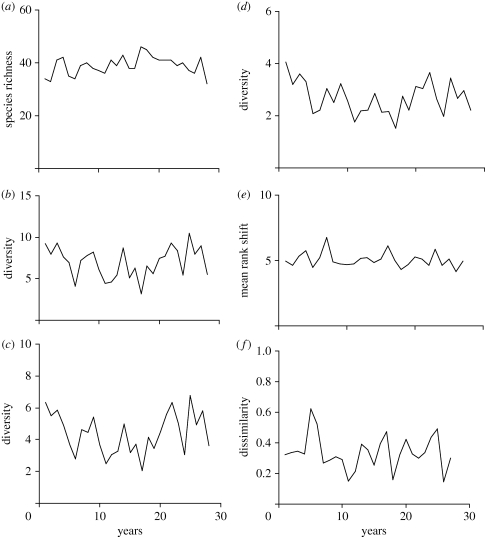
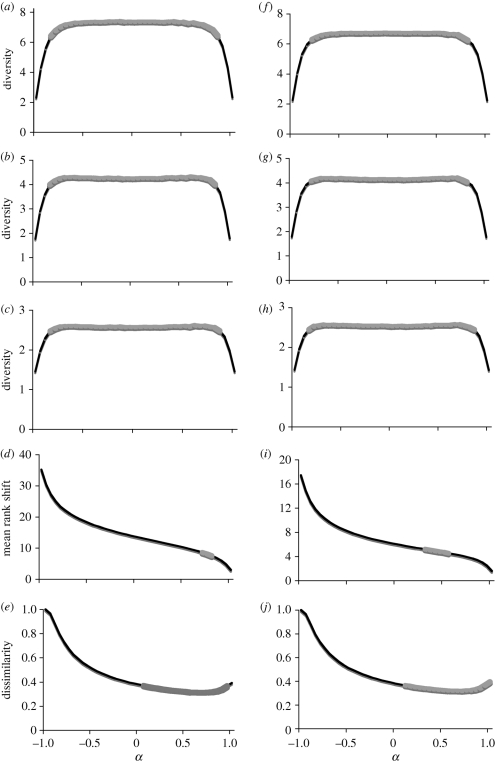
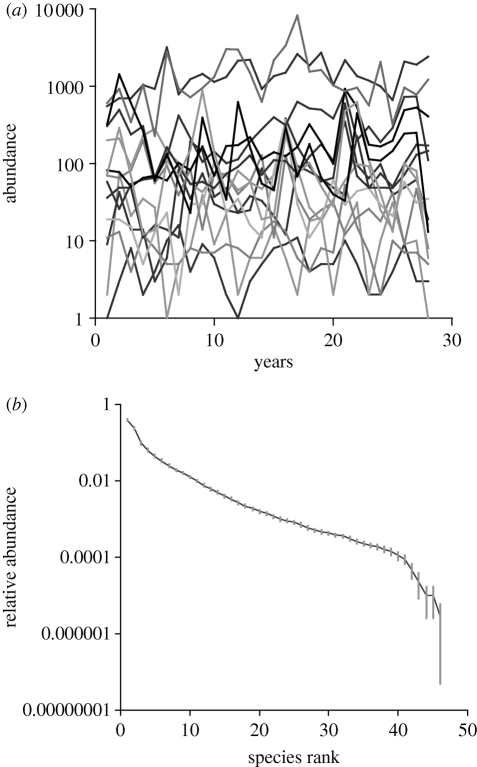
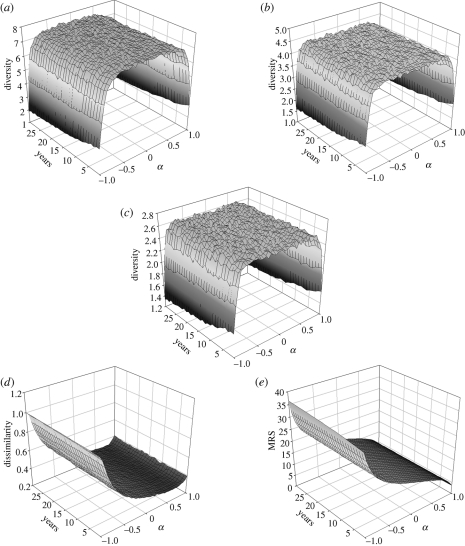
Temporal variation in species abundances occurs in all ecological communities. Here, we explore the role that this temporal turnover plays in maintaining assemblage diversity. We investigate a three-decade time series of estuarine fishes and show that the abundances of the individual species fluctuate asynchronously around their mean levels. We then use a time-series modelling approach to examine the consequences of different patterns of turnover, by asking how the correlation between the abundance of a species in a given year and its abundance in the previous year influences the structure of the overall assemblage. Classical diversity measures that ignore species identities reveal that the observed assemblage structure will persist under all but the most extreme conditions. However, metrics that track species identities indicate a narrower set of turnover scenarios under which the predicted assemblage resembles the natural one. Our study suggests that species diversity metrics are insensitive to change and that measures that track species ranks may provide better early warning that an assemblage is being perturbed. It also highlights the need to incorporate temporal turnover in investigations of assemblage structure and function.
所有生态群落中物种丰度都存在时间变化。在这里,我们探讨了这种时间更替在维持组合多样性方面所起的作用。我们研究了一个长达三十年的河口鱼类时间序列,结果表明,各个物种的丰度围绕其平均值呈非同步波动。然后,我们通过询问物种在给定年份的丰度与其前一年的丰度之间的相关性如何影响整体组合的结构,使用时间序列建模方法来研究不同更替模式的后果。忽略物种身份的经典多样性度量表明,在除了最极端的条件下,观察到的组合结构将持续存在。然而,跟踪物种身份的指标表明,在更窄的一组更替情景下,预测的组合类似于自然组合。我们的研究表明,物种多样性度量对变化不敏感,而跟踪物种等级的度量可能会更好地提供早期预警,表明组合受到干扰。它还强调了在组合结构和功能研究中纳入时间更替的必要性。