Department of Medicine, Division of Endocrinology and Metabolism, University of Pittsburgh, Pittsburgh, Pennsylvania, USA.
Diabetes. 2011 Feb;60(2):525-36. doi: 10.2337/db09-1305. Epub 2010 Oct 27.
To determine the role of hepatocyte growth factor (HGF)/c-Met on β-cell survival in diabetogenic conditions in vivo and in response to cytokines in vitro.
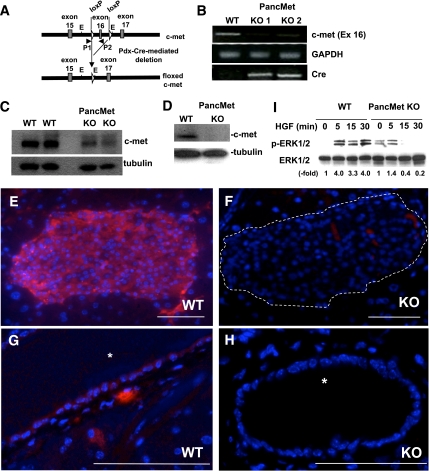
We generated pancreas-specific c-Met-null (PancMet KO) mice and characterized their response to diabetes induced by multiple low-dose streptozotocin (MLDS) administration. We also analyzed the effect of HGF/c-Met signaling in vitro on cytokine-induced β-cell death in mouse and human islets, specifically examining the role of nuclear factor (NF)-κB.
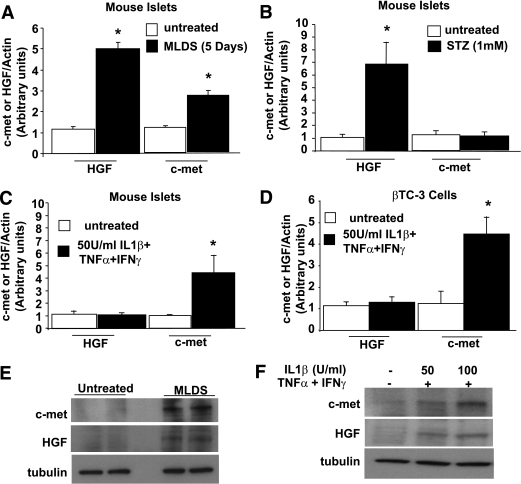
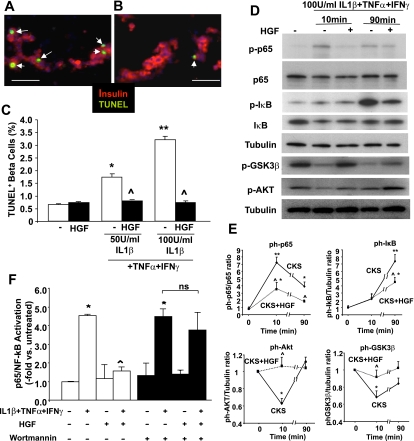
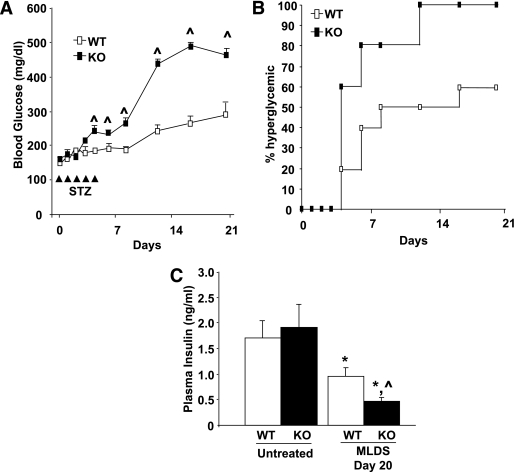
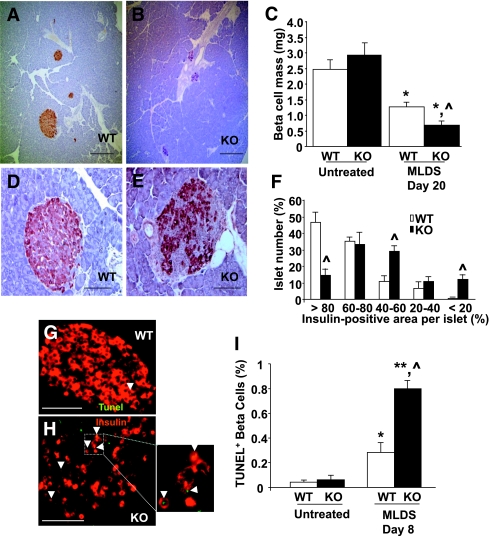
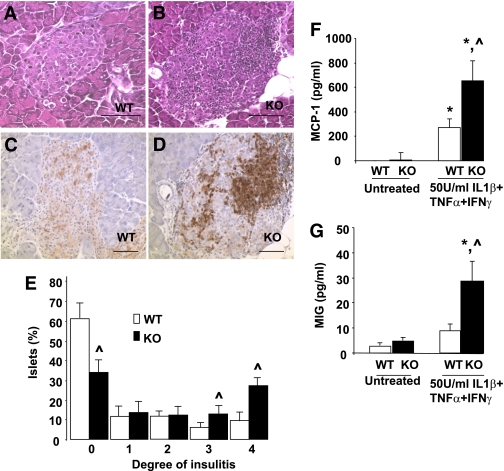
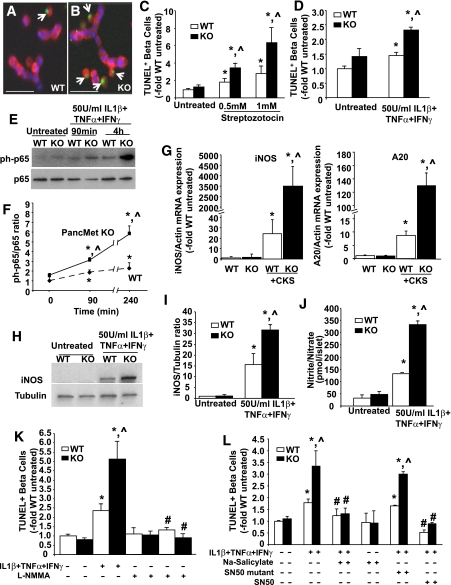
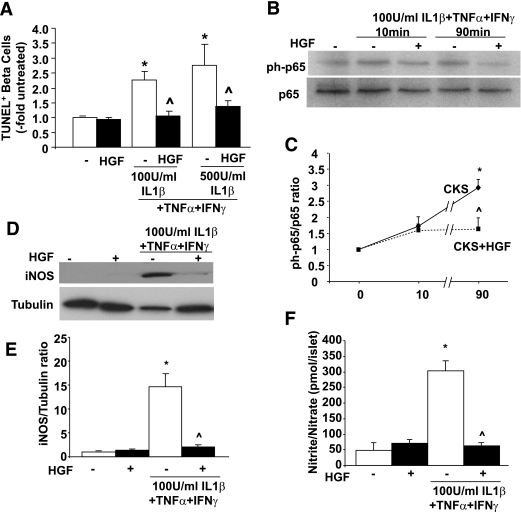
Islets exposed in vitro to cytokines or from MLDS-treated mice displayed significantly increased HGF and c-Met levels, suggesting a potential role for HGF/c-Met in β-cell survival against diabetogenic agents. Adult PancMet KO mice displayed normal glucose and β-cell homeostasis, indicating that pancreatic c-Met loss is not detrimental for β-cell growth and function under basal conditions. However, PancMet KO mice were more susceptible to MLDS-induced diabetes. They displayed higher blood glucose levels, marked hypoinsulinemia, and reduced β-cell mass compared with wild-type littermates. PancMet KO mice showed enhanced intraislet infiltration, islet nitric oxide (NO) and chemokine production, and β-cell apoptosis. c-Met-null β-cells were more sensitive to cytokine-induced cell death in vitro, an effect mediated by NF-κB activation and NO production. Conversely, HGF treatment decreased p65/NF-κB activation and fully protected mouse and, more important, human β-cells against cytokines.
These results show that HGF/c-Met is critical for β-cell survival by attenuating NF-κB signaling and suggest that activation of the HGF/c-Met signaling pathway represents a novel strategy for enhancing β-cell protection.
确定肝细胞生长因子(HGF)/c-Met 在体内致糖尿病条件下和体外细胞因子作用下对β细胞存活的作用。
我们生成了胰腺特异性 c-Met 敲除(PancMet KO)小鼠,并对其对多次小剂量链脲佐菌素(MLDS)给药诱导的糖尿病的反应进行了特征分析。我们还分析了 HGF/c-Met 信号在体外对细胞因子诱导的小鼠和人胰岛β细胞死亡的影响,特别研究了核因子(NF)-κB 的作用。
体外暴露于细胞因子或来自 MLDS 处理的小鼠的胰岛显示出明显增加的 HGF 和 c-Met 水平,这表明 HGF/c-Met 在β细胞对致糖尿病剂的存活中具有潜在作用。成年 PancMet KO 小鼠显示出正常的葡萄糖和β细胞稳态,这表明胰腺 c-Met 缺失在基础条件下对β细胞生长和功能没有不利影响。然而,PancMet KO 小鼠对 MLDS 诱导的糖尿病更为敏感。与野生型同窝仔相比,它们表现出更高的血糖水平、明显的胰岛素血症和β细胞质量减少。PancMet KO 小鼠显示出增强的胰岛内浸润、胰岛一氧化氮(NO)和趋化因子产生以及β细胞凋亡。c-Met 缺失的β细胞对体外细胞因子诱导的细胞死亡更为敏感,这种作用是通过 NF-κB 激活和 NO 产生介导的。相反,HGF 处理可减少 p65/NF-κB 激活并完全保护小鼠,更重要的是,保护人类β细胞免受细胞因子的侵害。
这些结果表明,HGF/c-Met 通过抑制 NF-κB 信号对β细胞存活至关重要,并表明激活 HGF/c-Met 信号通路代表了增强β细胞保护的一种新策略。