Yarahmadi Amir, Azarpira Negar, Mostafavi-Pour Zohreh
Department of Biochemistry, School of Medicine, Shiraz University of Medical Sciences, Shiraz, Iran.
Department of Clinical Biochemistry, Faculty of Medicine, Mashhad University of Medical Sciences, Mashhad, Iran.
Int J Mol Cell Med. 2021 Summer;10(3):181-189. doi: 10.22088/IJMCM.BUMS.10.3.181. Epub 2022 Jan 10.
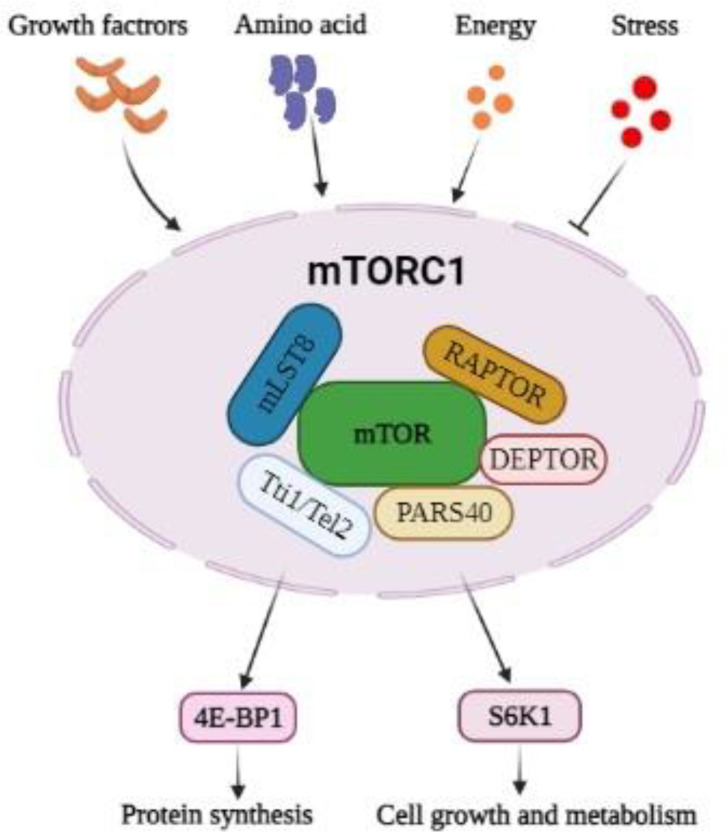
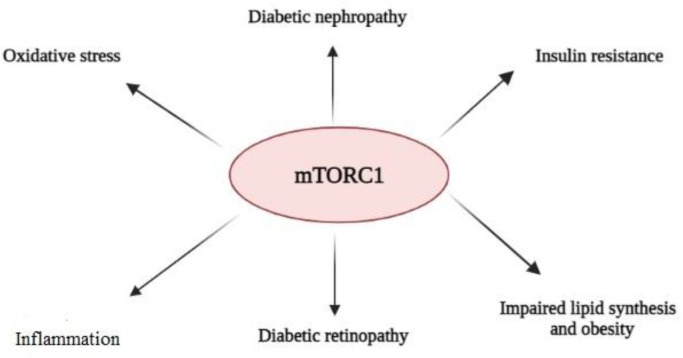
The mammalian target of rapamycin (mTOR) is an evolutionarily conserved serine/threonine-protein kinase that senses and combines various environmental signals to regulate the growth and homeostasis of human cells. This signaling pathway synchronizes many critical cellular processes and is involved in an increasing number of pathological conditions such as diabetes, cancer, obesity, and metabolic syndrome. Here, we review different complications of diabetes that are associated with mTOR complex 1 imbalance. We further discuss pharmacological approaches to treat diabetes complications linked to mTOR deregulation.
雷帕霉素的哺乳动物靶点(mTOR)是一种在进化上保守的丝氨酸/苏氨酸蛋白激酶,它感知并整合各种环境信号,以调节人类细胞的生长和内稳态。该信号通路同步许多关键的细胞过程,并涉及越来越多的病理状况,如糖尿病、癌症、肥胖症和代谢综合征。在此,我们综述与mTOR复合物1失衡相关的糖尿病的不同并发症。我们还将进一步讨论治疗与mTOR失调相关的糖尿病并发症的药理学方法。