Larry Hillblom Islet Research Center, University of California, Los Angeles, USA.
Diabetes. 2011 Jan;60(1):227-38. doi: 10.2337/db10-0522. Epub 2010 Oct 27.
The islet in type 2 diabetes is characterized by β-cell apoptosis, β-cell endoplasmic reticulum stress, and islet amyloid deposits derived from islet amyloid polypeptide (IAPP). Toxic oligomers of IAPP form intracellularly in β-cells in humans with type 2 diabetes, suggesting impaired clearance of misfolded proteins. In this study, we investigated whether human-IAPP (h-IAPP) disrupts the endoplasmic reticulum-associated degradation/ubiquitin/proteasome system.
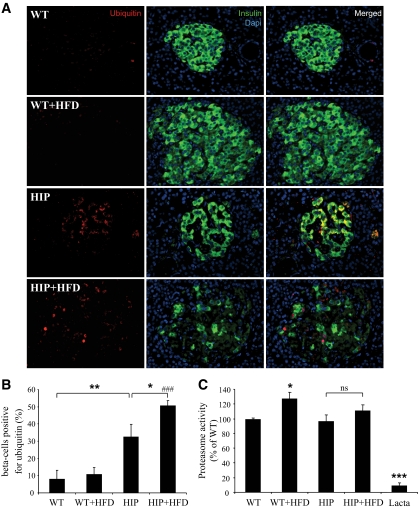
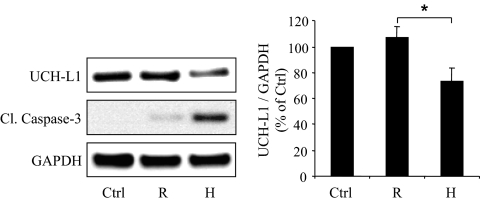
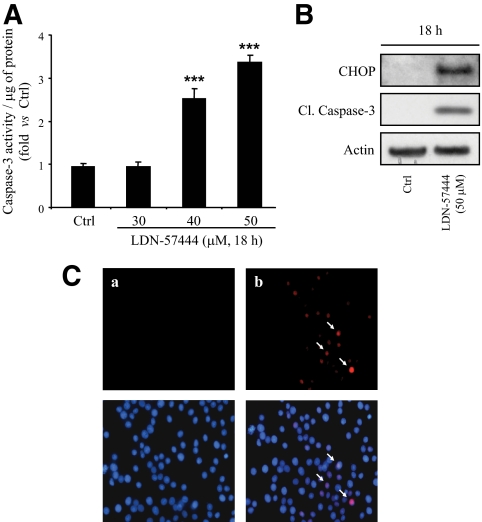
We used pancreatic tissue from humans with and without type 2 diabetes, isolated islets from h-IAPP transgenic rats, isolated human islets, and INS 832/13 cells transduced with adenoviruses expressing either h-IAPP or a comparable expression of rodent-IAPP. Immunofluorescence and Western blotting were used to detect polyubiquitinated proteins and ubiquitin carboxyl-terminal hydrolase L1 (UCH-L1) protein levels. Proteasome activity was measured in isolated rat and human islets. UCH-L1 was knocked down by small-interfering RNA in INS 832/13 cells and apoptosis was evaluated.
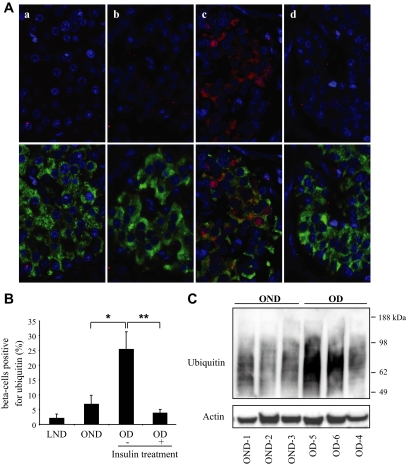
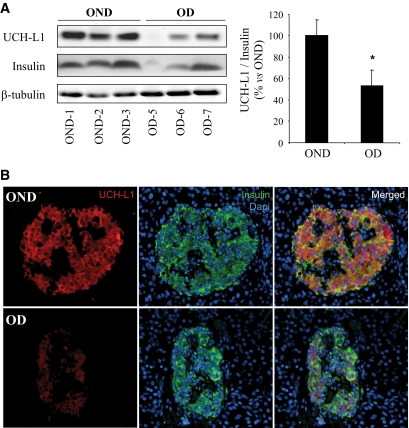
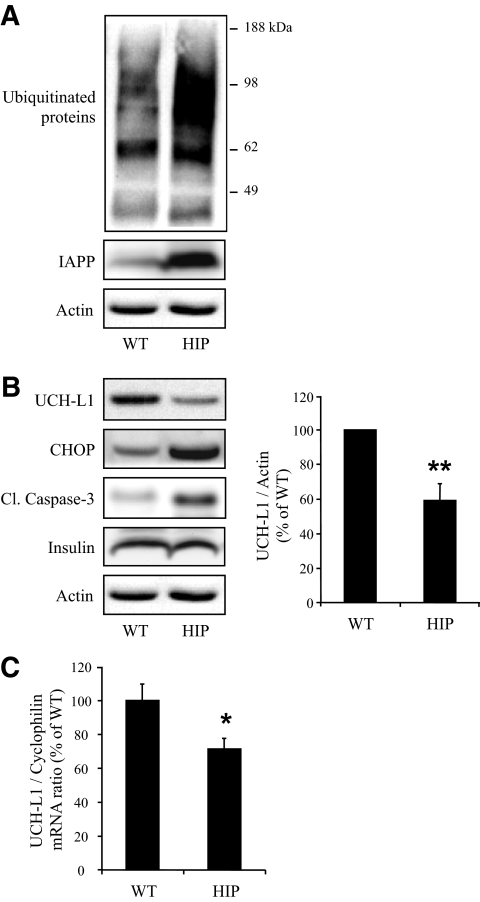
We report accumulation of polyubiquinated proteins and UCH-L1 deficiency in β-cells of humans with type 2 diabetes. These findings were reproduced by expression of oligomeric h-IAPP but not soluble rat-IAPP. Downregulation of UCH-L1 expression and activity to reproduce that caused by h-IAPP in β-cells induced endoplasmic reticulum stress leading to apoptosis.
Our results indicate that defective protein degradation in β-cells in type 2 diabetes can, at least in part, be attributed to misfolded h-IAPP leading to UCH-L1 deficiency, which in turn further compromises β-cell viability.
2 型糖尿病中的胰岛以β细胞凋亡、β细胞内质网应激和来自胰岛淀粉样多肽(IAPP)的胰岛淀粉样沉积为特征。在 2 型糖尿病患者的β细胞中,IAPP 的毒性寡聚体在细胞内形成,提示错误折叠蛋白的清除受损。在这项研究中,我们研究了人-IAPP(h-IAPP)是否会破坏内质网相关降解/泛素/蛋白酶体系统。
我们使用来自有和没有 2 型糖尿病的人类的胰腺组织、从 h-IAPP 转基因大鼠中分离的胰岛、分离的人类胰岛以及用表达 h-IAPP 或类似表达的杆状病毒的腺病毒转导的 INS 832/13 细胞。免疫荧光和 Western blot 用于检测多泛素化蛋白和泛素羧基末端水解酶 L1(UCH-L1)蛋白水平。在分离的大鼠和人类胰岛中测量蛋白酶体活性。在 INS 832/13 细胞中通过小干扰 RNA 敲低 UCH-L1,并评估细胞凋亡。
我们报告了 2 型糖尿病患者β细胞中多泛素化蛋白和 UCH-L1 缺乏的积累。这些发现通过寡聚 h-IAPP 的表达得到重现,但可溶性大鼠-IAPP 则没有。下调 UCH-L1 的表达和活性以重现 h-IAPP 在β细胞中引起的内质网应激导致细胞凋亡。
我们的结果表明,2 型糖尿病中β细胞内的蛋白降解缺陷至少部分归因于错误折叠的 h-IAPP 导致 UCH-L1 缺乏,这反过来又进一步损害了β细胞的活力。