Program of Developmental Immunology, Department of Pediatrics, Massachusetts General Hospital, Harvard Medical School, 55 Fruit Street, Boston, MA 02114, USA.
Biochem Pharmacol. 2011 Feb 1;81(3):388-95. doi: 10.1016/j.bcp.2010.10.012. Epub 2010 Oct 28.
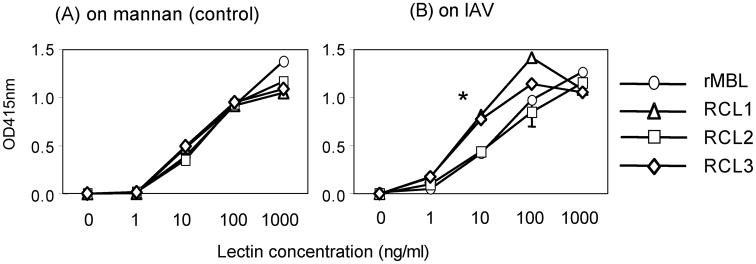
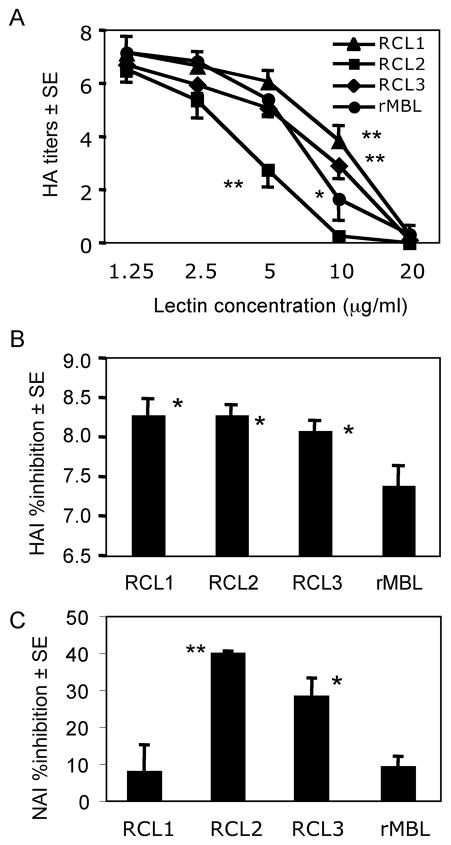
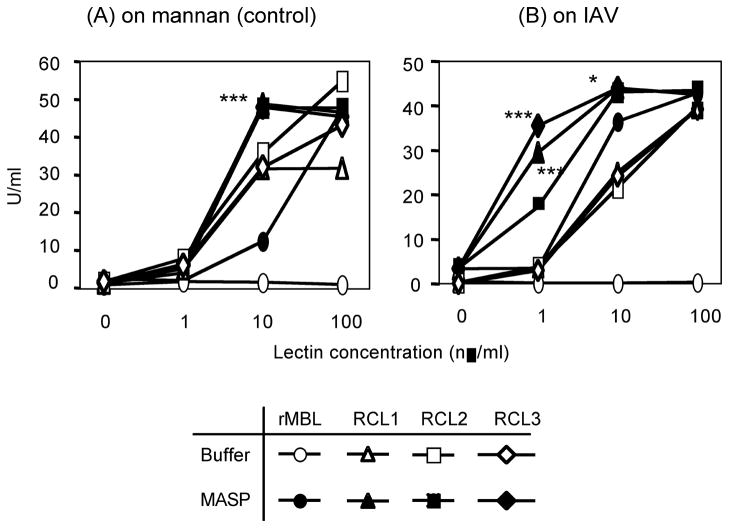
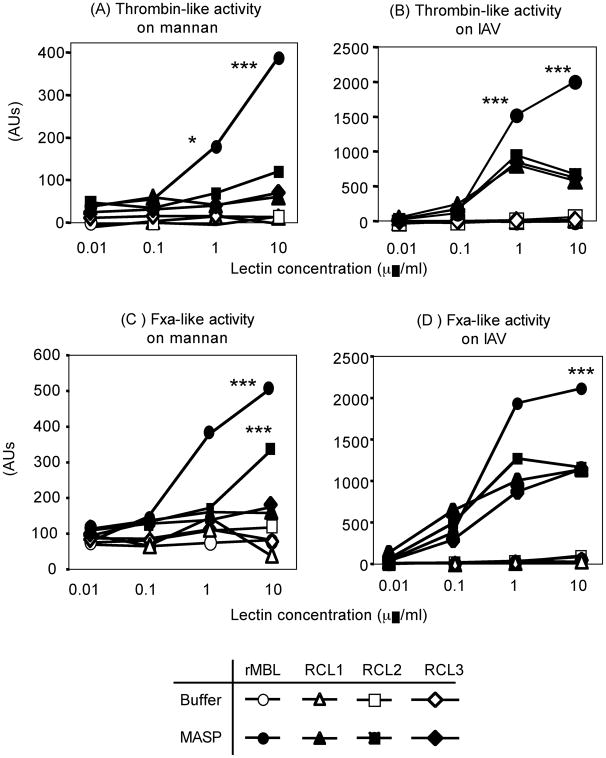
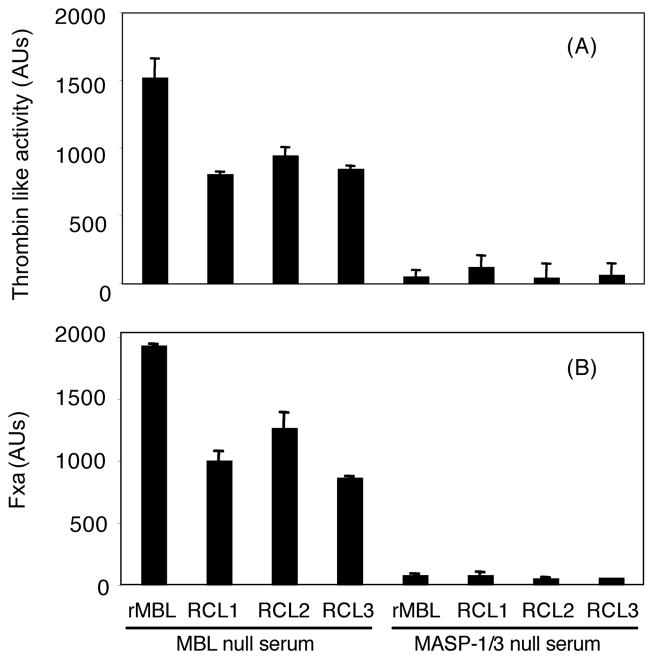
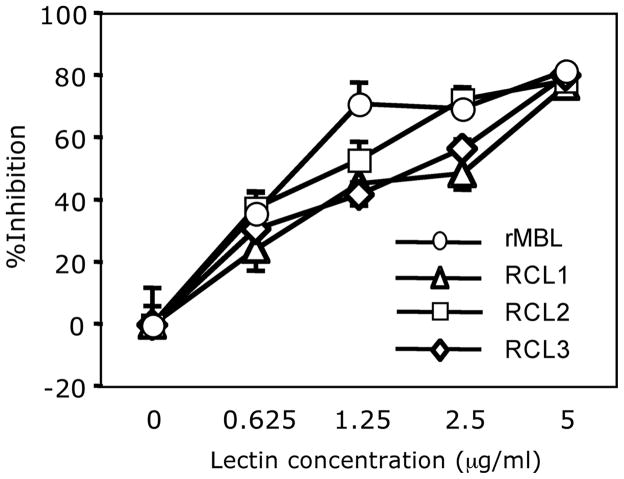
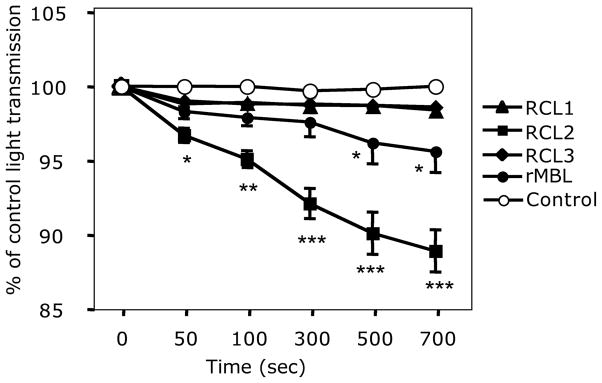
MBL structurally contains a type II-like collagenous domain and a carbohydrate recognition domain (CRD). We have recently generated three novel recombinant chimeric lectins (RCL), in which varying length of collagenous domain of mannose-binding lectin (MBL) is replaced with that of L-ficolin (L-FCN). CRD of MBL is used for target recognition because it has a broad spectrum in pathogen recognition compared with L-FCN. Results of our study demonstrate that these RCLs are potent inhibitors of influenza A virus (IAV). RCLs, against IAV, show dose-dependent activation of the lectin complement pathway, which is significantly higher than that of recombinant human MBL (rMBL). This activity is observed even without MBL-associated serine proteases (MASPs, provided by MBL deficient mouse sera), which have been thought to mediate complement activation. These observations suggest that RCLs are more efficient in associating with MASP-2, which predominantly mediates the activity. Yet, additional serum further increases the activity while RCL-mediated coagulation-like enzyme activities are diminished compared with rMBL, suggesting reduced association with MASP-1, which has been shown to mediate coagulation-like activity. These data suggest that RCLs may interfere less with host coagulation, which is advantageous to be a therapeutic drug. Importantly, these RCLs have surpassed rMBL for anti-viral activities, such as viral aggregation, reduction of viral hemagglutination (HA) and inhibition of virus-mediated HA and neuraminidase (NA) activities. These results are encouraging that novel RCLs could be used as anti-IAV agents with less side effect and that RCLs would be suitable candidates in developing a new anti-IAV therapy.
MBL 在结构上包含一个 II 型样胶原结构域和一个碳水化合物识别结构域(CRD)。我们最近生成了三种新型重组嵌合凝集素(RCL),其中甘露糖结合凝集素(MBL)的胶原结构域的不同长度被 L- ficolin(L-FCN)取代。MBL 的 CRD 用于靶标识别,因为与 L-FCN 相比,它在病原体识别方面具有广谱性。我们的研究结果表明,这些 RCL 是有效的甲型流感病毒(IAV)抑制剂。RCL 对 IAV 表现出剂量依赖性的凝集素补体途径激活,其活性明显高于重组人 MBL(rMBL)。即使没有 MBL 相关丝氨酸蛋白酶(MASPs,由 MBL 缺陷型小鼠血清提供),也观察到这种活性,这些蛋白酶被认为介导补体激活。这些观察结果表明,RCL 与主要介导活性的 MASP-2 更有效地结合。然而,额外的血清进一步增加了活性,而 RCL 介导的凝血样酶活性与 rMBL 相比降低,表明与 MASP-1 的关联减少,MASP-1 已被证明介导凝血样活性。这些数据表明,RCL 可能较少干扰宿主凝血,这有利于成为治疗药物。重要的是,这些 RCL 在抗病毒活性方面超过了 rMBL,例如病毒聚集、降低病毒血凝(HA)和抑制病毒介导的 HA 和神经氨酸酶(NA)活性。这些结果令人鼓舞,新型 RCL 可作为副作用较小的抗 IAV 药物使用,并且 RCL 可能是开发新型抗 IAV 治疗方法的合适候选物。