Immunopathology Section, Laboratory of Immunology, National Eye Institute, National Institutes of Health, Bethesda, MD 20892-1857, USA.
Lab Invest. 2011 Apr;91(4):519-26. doi: 10.1038/labinvest.2010.184. Epub 2010 Nov 1.
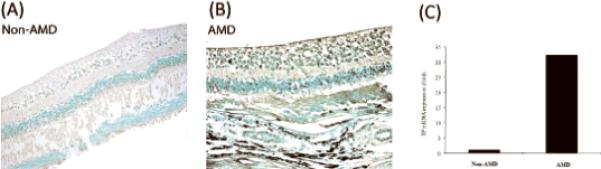
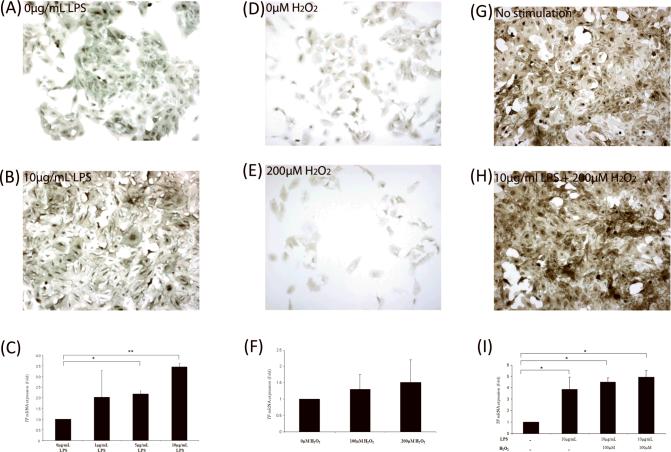
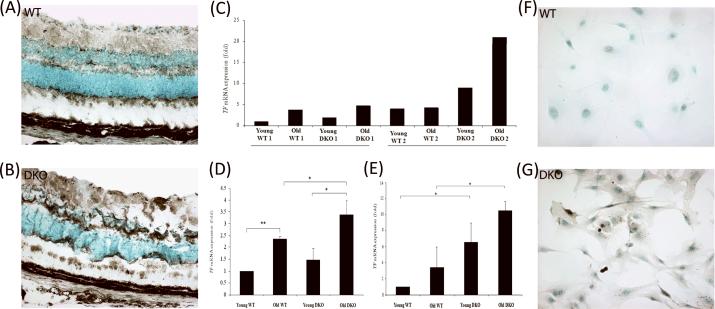
Tissue factor (TF) is the primary initiator of blood coagulation. In addition to hemostasis, TF can initiate intracellular signaling and promote inflammation and angiogenesis, the key processes underlying the pathogenesis of age-related macular degeneration (AMD). AMD, the leading cause of irreversible blindness among the elderly, involves many genetic and environmental risk factors, including oxidative stress and inflammation. In this study, TF expression was examined in human AMD tissue and in the eyes of a model of AMD, the Ccl2(-/-)/Cx3cr1(-/-) (DKO) mouse, as well as in the ARPE-19 cell line after lipopolysaccharide (LPS) and H(2)O(2) stimulation. Total RNA was extracted from tissue samples and further analyzed by real-time RT-PCR. Immunohistochemistry was performed to evaluate TF protein expression. In the human retina, a 32-fold increase of TF mRNA expression was detected in AMD macular lesions compared with normal maculae. TF protein expression was also enhanced in human AMD maculae. Similarly, TF transcript and protein expression were moderately increased in retinal lesions, neuroretinal tissue, and cultured RPE cells of DKO mice compared with age-matched wild-type mice. TF expression level correlated with age in both wild-type and DKO mice. In order to better understand how AMD might lead to enhanced TF expression, 1, 5, and 10 μg/ml LPS as well as 100 and 200 μM H(2)O(2) were used to stimulate ARPE-19 cells for 24 and 2 h, respectively. LPS treatment consistently increased TF transcript and protein expression. H(2)O(2) alone or in combination with LPS also moderately enhanced TF expression. These results indicate that upregulated TF expression may be associated with AMD, and inflammatory and oxidative stress may contribute to TF expression in AMD eyes.
组织因子(TF)是血液凝固的主要启动子。除了止血作用外,TF 还可以启动细胞内信号转导,促进炎症和血管生成,这是年龄相关性黄斑变性(AMD)发病机制的关键过程。AMD 是导致老年人不可逆性失明的主要原因,涉及许多遗传和环境风险因素,包括氧化应激和炎症。在这项研究中,研究人员检测了人 AMD 组织和 AMD 模型(Ccl2(-/-)/Cx3cr1(-/-)(DKO)小鼠)眼中的 TF 表达,以及脂多糖(LPS)和 H₂O₂刺激后的 ARPE-19 细胞系中的 TF 表达。从组织样本中提取总 RNA,并通过实时 RT-PCR 进一步分析。进行免疫组织化学染色以评估 TF 蛋白表达。在人类视网膜中,与正常黄斑相比,AMD 黄斑病变中 TF mRNA 表达增加了 32 倍。AMD 黄斑中 TF 蛋白表达也增强。同样,与年龄匹配的野生型小鼠相比,DKO 小鼠的视网膜病变、神经视网膜组织和培养的 RPE 细胞中 TF 转录物和蛋白表达适度增加。TF 表达水平与野生型和 DKO 小鼠的年龄相关。为了更好地了解 AMD 如何导致 TF 表达增强,用 1、5 和 10μg/ml LPS 以及 100 和 200μM H₂O₂分别刺激 ARPE-19 细胞 24 和 2 小时。LPS 处理一致增加了 TF 转录物和蛋白表达。单独的 H₂O₂或与 LPS 联合也适度增强了 TF 表达。这些结果表明,上调的 TF 表达可能与 AMD 有关,炎症和氧化应激可能导致 AMD 眼中的 TF 表达。