Institut für Zellbiologie (Tumorforschung), Universitätsklinikum Essen, Universität Duisburg-Essen, Essen, Germany.
PLoS One. 2010 Oct 22;5(10):e13532. doi: 10.1371/journal.pone.0013532.
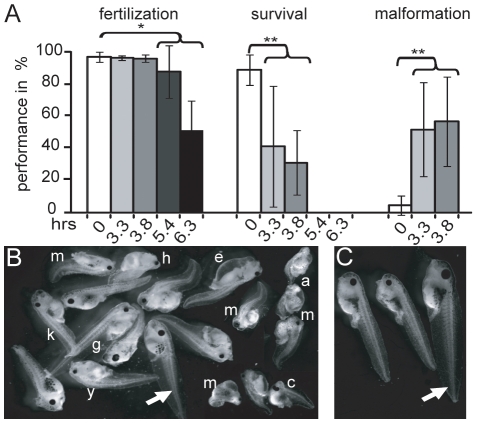
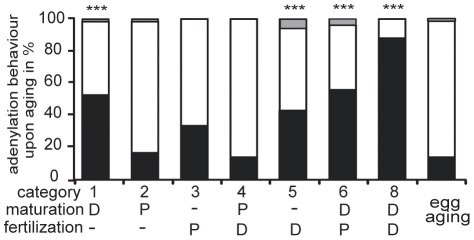
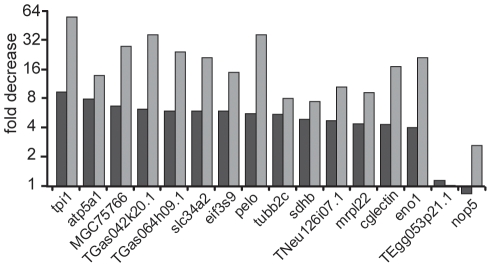
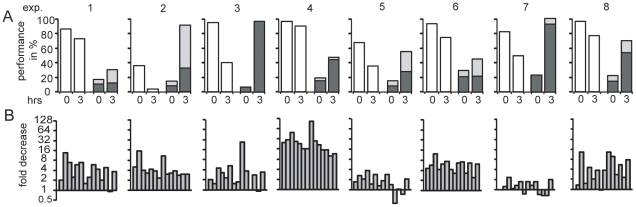
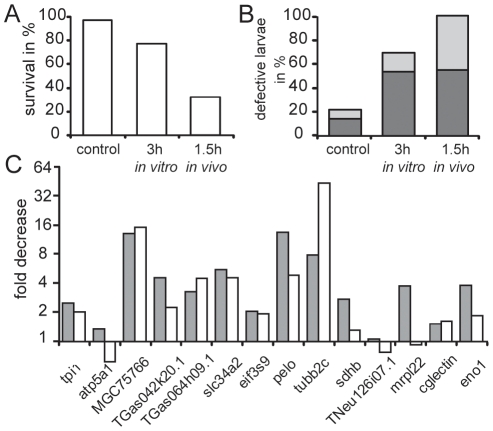
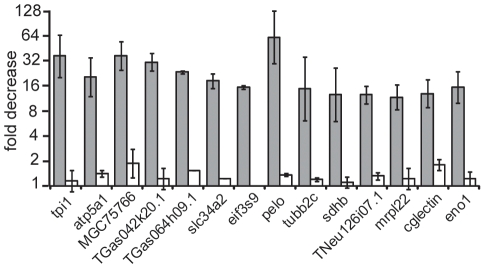
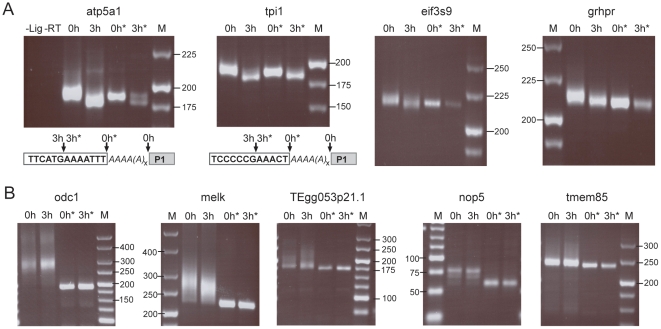
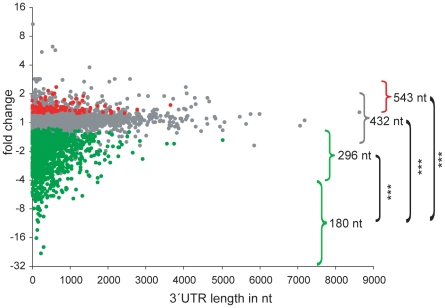
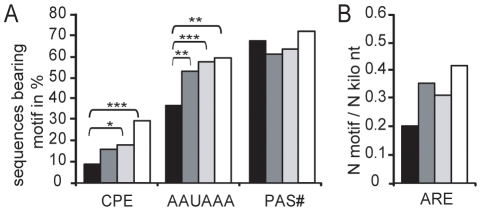
As first shown more than 100 years ago, fertilization of an aged (overripe) egg increases the rate of malformations and embryonic loss in several vertebrates, including possibly humans as well. Since the molecular events in aging eggs may be similar in these species, we established in the frog Xenopus tropicalis a defined protocol for delayed fertilization of eggs. A three-hour delayed fertilization led to a dramatic increase in malformation and mortality. Gene expression profiling revealed that 14% of the polyadenylated maternal transcripts were downregulated upon aging. These transcripts were not degraded, but rather deadenylated as shown for specific maternal mRNAs. The affected transcripts are characterized by a relatively short 3'UTR and a paucity of cytoplasmic polyadenylation elements (CPE) and polyadenylation signals (PAS). Furthermore, maternal mRNAs known to be deadenylated during egg maturation as well as after fertilization were preferentially deadenylated in aged eggs. Taken together our analysis of aging eggs reveals that unfertilized eggs are in a dynamic state that was previously not realized. On the one hand deadenylation of transcripts that are typically deadenylated during egg maturation continues and this implies overripeness of the aged egg in the truest sense of the word. On the other hand transcripts that normally are deadenylated after fertilization loose their poly(A) in the aged egg and this implies that the egg awaiting fertilization starts processes that are normally only observed after fertilization. Based on our novel finding we postulate that the imbalance of the polyadenylated maternal transcripts upon egg aging contributes to the loss of developmental potential. Based on this hypothesis the developmental consequences of downregulation of specific transcripts can be analyzed in future.
正如 100 多年前首次发现的那样,在包括人类在内的一些脊椎动物中,老化(过熟)卵子的受精会增加畸形和胚胎丢失的几率。由于这些物种中老化卵子的分子事件可能相似,我们在青蛙 Xenopus tropicalis 中建立了一个明确的延迟受精卵方案。三小时的延迟受精会导致畸形和死亡率的急剧增加。基因表达谱分析显示,14%的多聚腺苷酸化母本转录本在老化时下调。这些转录本没有降解,而是像特定的母本 mRNA 一样被腺苷酸化。受影响的转录本的特征是相对较短的 3'UTR 和缺乏细胞质多聚腺苷酸化元件(CPE)和多聚腺苷酸化信号(PAS)。此外,在卵母细胞成熟和受精后被腺苷酸化的母本 mRNA 也优先在老化卵中被腺苷酸化。综上所述,我们对老化卵的分析表明,未受精的卵处于一种以前未被意识到的动态状态。一方面,在卵母细胞成熟过程中通常被腺苷酸化的转录本的腺苷酸化继续进行,这意味着老化卵的过熟是最真实的意义。另一方面,正常情况下在受精后被腺苷酸化的转录本在老化卵中失去其 poly(A),这意味着等待受精的卵开始了通常只有在受精后才能观察到的过程。基于我们的新发现,我们假设在卵老化过程中多聚腺苷酸化的母本转录本的失衡导致了发育潜力的丧失。基于这一假设,可以在未来分析特定转录本下调的发育后果。