Institut de Génétique Biologie Moléculaire et Cellulaire, Université de Strasbourg, Illkirch, France.
Behav Brain Res. 2011 Mar 1;217(2):271-81. doi: 10.1016/j.bbr.2010.10.023. Epub 2010 Oct 31.
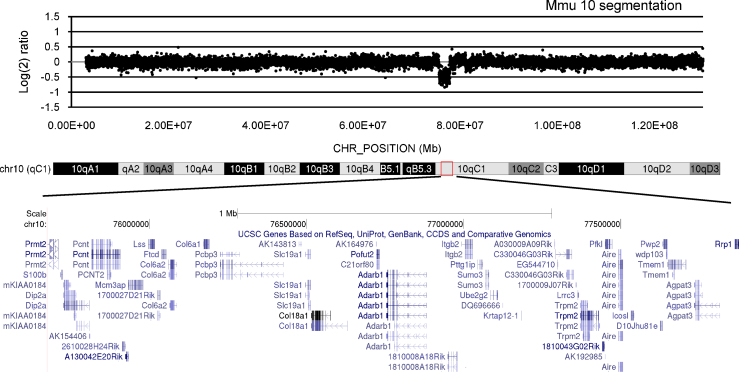
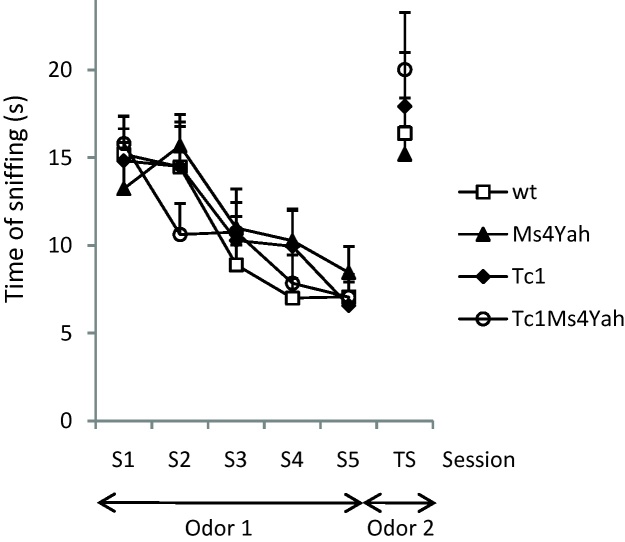
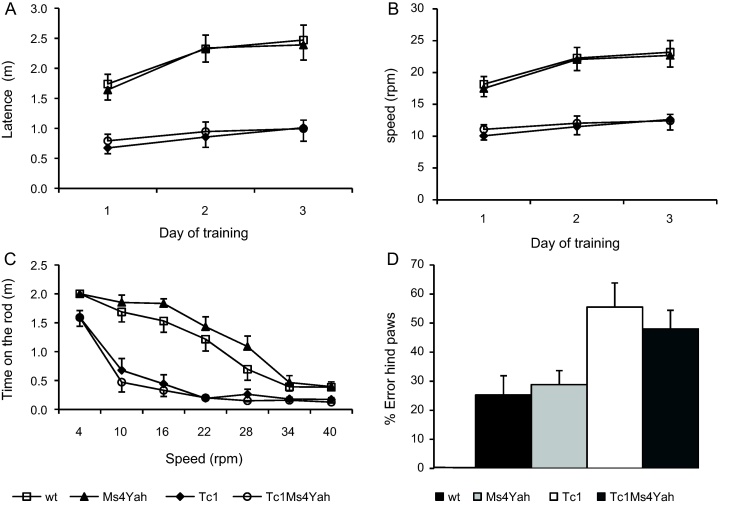
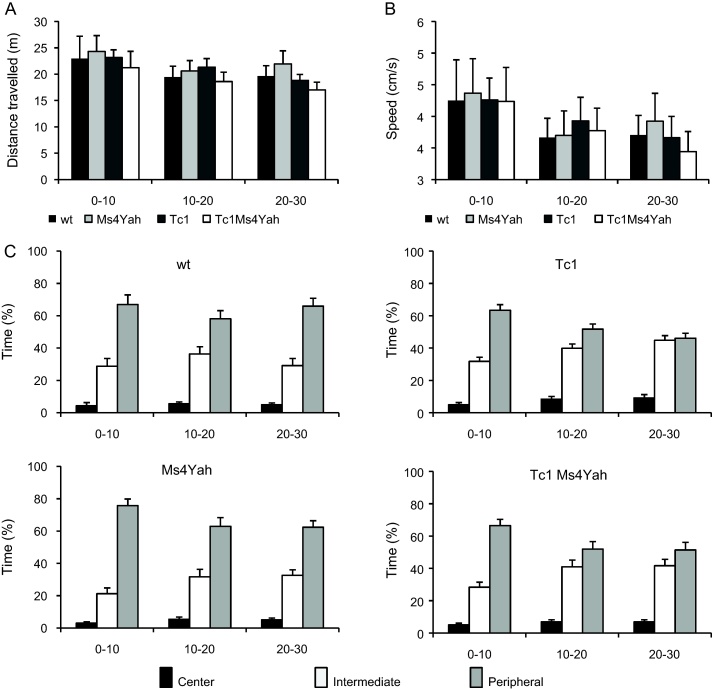
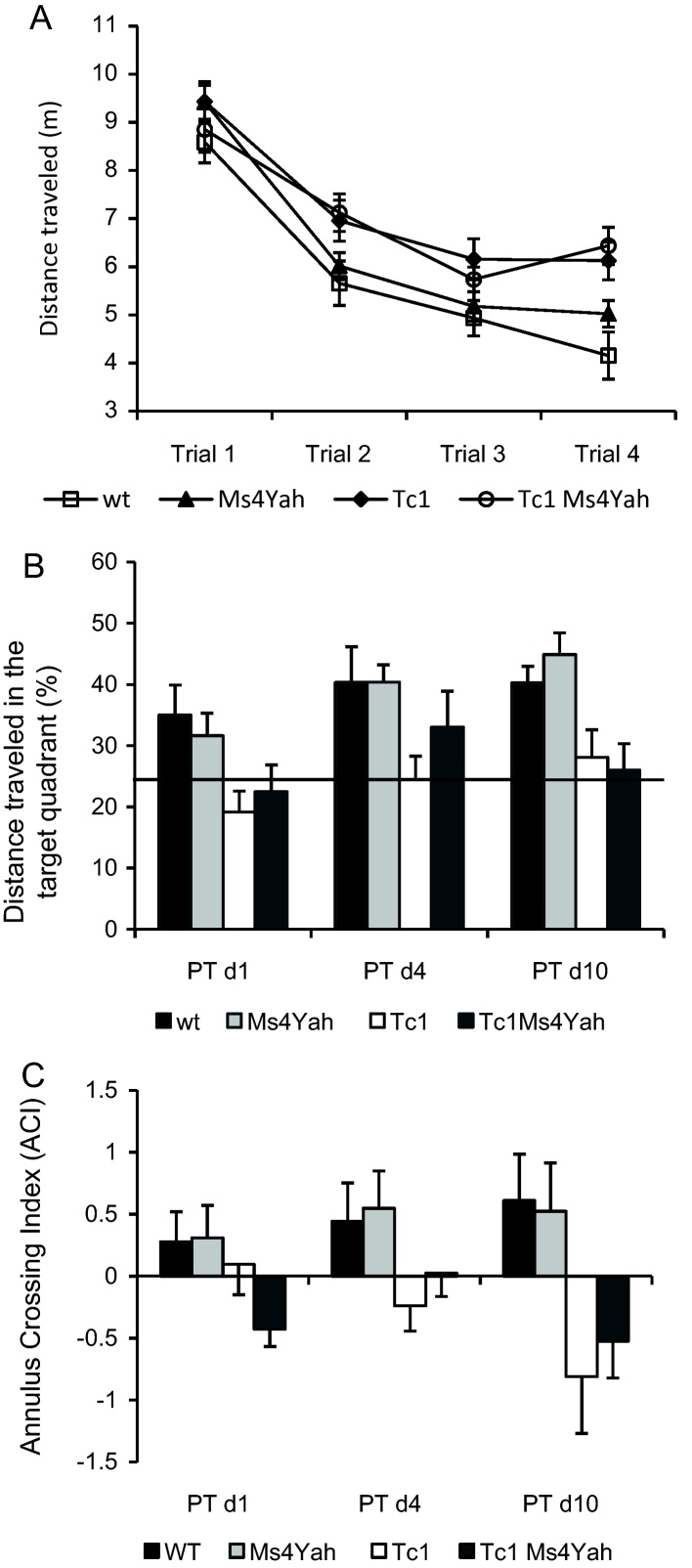
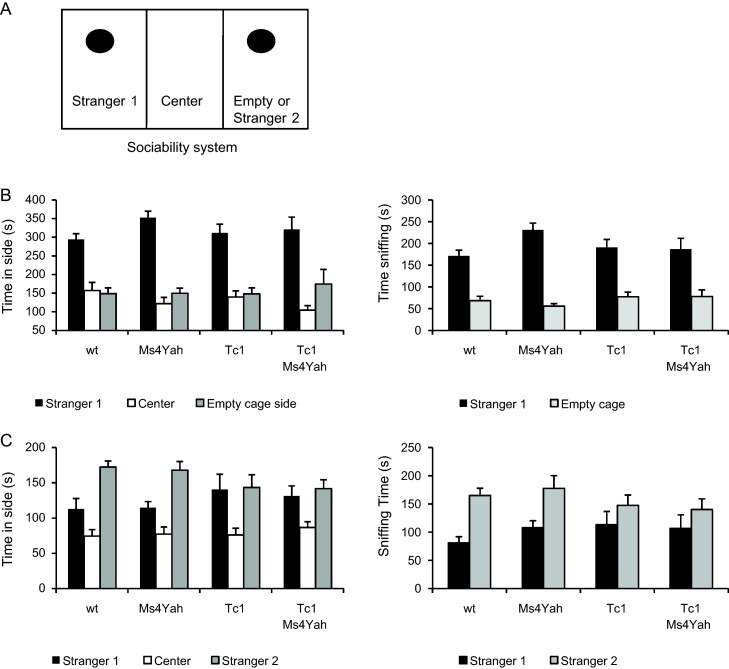
Trisomy 21 or Down syndrome (DS) is the most common form of human aneuploid disorder. Increase in the copy number of human chromosome 21 genes leads to several alterations including mental retardation, heart and skeletal dysmorphologies with additional physiological defects. To better understand the genotype and phenotype relationships, several mouse models have been developed, including the transchromosomic Tc1 mouse, which carries an almost complete human chromosome 21, that displays several locomotor and cognitive alterations related to DS. In this report we explore the contribution of the genetic dosage of 47 mouse genes located in the most telomeric part of Hsa21, using a novel model, named Ms4Yah, carrying a deletion of the 2.2Mb Ctsb-Prmt2 genetic interval. We combine this deletion with the Tc1 Hsa21 in a rescue experiment. We could recapitulate most of the Tc1 phenotypes but we found no phenotypes induced by the Ms4Yah and no contribution to the Tc1-induced phenotypes even if we described new alteration in social preference but not in olfaction. Thus we conclude that the genes conserved between mouse and human, found in the most telomeric part of Hsa21, and trisomic in Tc1, are not contributing to the major Tc1 phenotypes, suggesting that the Cstb-Prmt2 region is not playing a major role in locomotor and cognitive deficits found in DS.
三体 21 或唐氏综合征(DS)是最常见的人类非整倍体疾病形式。人类 21 号染色体基因数量的增加导致了多种改变,包括智力障碍、心脏和骨骼发育不良以及其他生理缺陷。为了更好地理解基因型和表型的关系,已经开发了几种小鼠模型,包括携带几乎完整人类 21 号染色体的易位染色体 Tc1 小鼠,该模型显示出与 DS 相关的几种运动和认知改变。在本报告中,我们使用一种名为 Ms4Yah 的新型模型,该模型携带 Ctsb-Prmt2 基因间隔 2.2Mb 的缺失,探索了位于 Hsa21 最端粒部分的 47 个小鼠基因的遗传剂量的贡献。我们将这种缺失与 Tc1 Hsa21 进行了挽救实验。我们能够再现 Tc1 的大多数表型,但我们没有发现 Ms4Yah 诱导的表型,也没有对 Tc1 诱导的表型做出贡献,即使我们描述了新的社交偏好改变,但嗅觉没有改变。因此,我们得出结论,在 Tc1 中三体的、在小鼠和人类之间保守的位于 Hsa21 最端粒部分的基因,不会导致 Tc1 的主要表型,这表明 Cstb-Prmt2 区域在 DS 中发现的运动和认知缺陷中不起主要作用。