Leukocyte Biology Section, National Heart and Lung Institute, Faculty of Medicine, Imperial College, London SW7 2AZ, UK.
Nat Rev Immunol. 2010 Dec;10(12):838-48. doi: 10.1038/nri2870. Epub 2010 Nov 9.
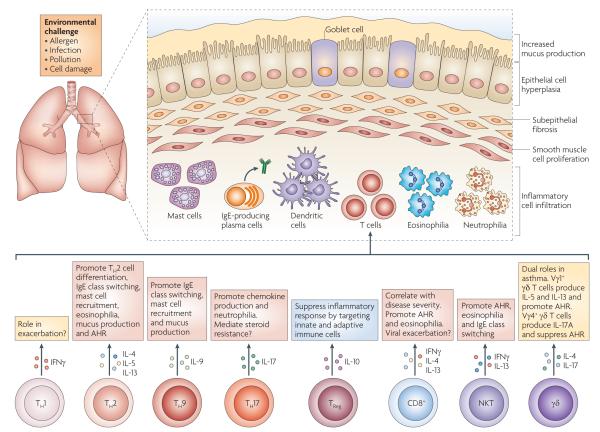
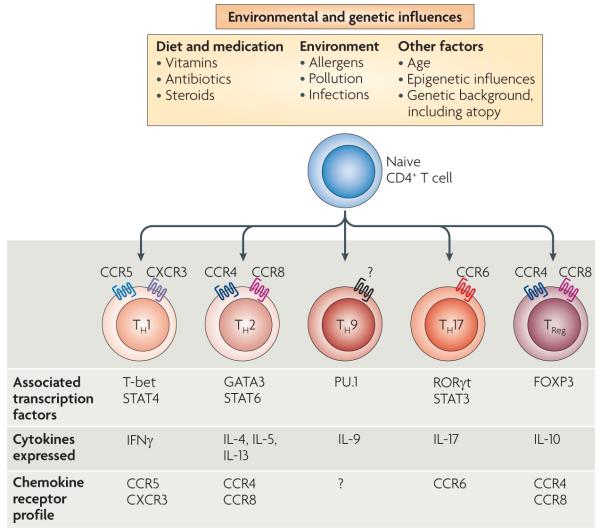
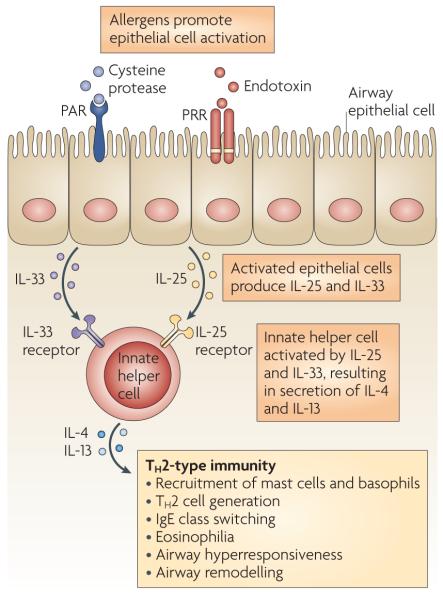
Asthma has been considered a T helper 2 (T(H)2) cell-associated inflammatory disease, and T(H)2-type cytokines, such as interleukin-4 (IL-4), IL-5 and IL-13, are thought to drive the disease pathology in patients. Although atopic asthma has a substantial T(H)2 cell component, the disease is notoriously heterogeneous, and recent evidence has suggested that other T cells also contribute to the development of asthma. Here, we discuss the roles of different T cell subsets in the allergic lung, consider how each subset can contribute to the development of allergic pathology and evaluate how we might manipulate these cells for new asthma therapies.
哮喘被认为是一种辅助性 T 细胞 2(T(H)2)细胞相关的炎症性疾病,T(H)2 型细胞因子,如白细胞介素-4(IL-4)、IL-5 和 IL-13,被认为可驱动患者的疾病病理。尽管特应性哮喘有大量的 T(H)2 细胞成分,但该疾病具有显著的异质性,最近的证据表明其他 T 细胞也有助于哮喘的发展。在这里,我们讨论不同 T 细胞亚群在过敏性肺中的作用,考虑每个亚群如何促进过敏性病理的发展,并评估我们如何操纵这些细胞用于新的哮喘治疗。