Division of Human Biology, Fred Hutchinson Cancer Research Center, Seattle, Washington, United States of America.
PLoS Genet. 2010 Oct 28;6(10):e1001181. doi: 10.1371/journal.pgen.1001181.
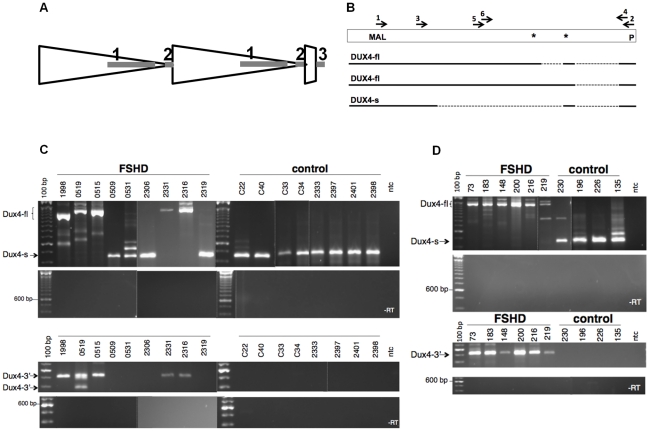
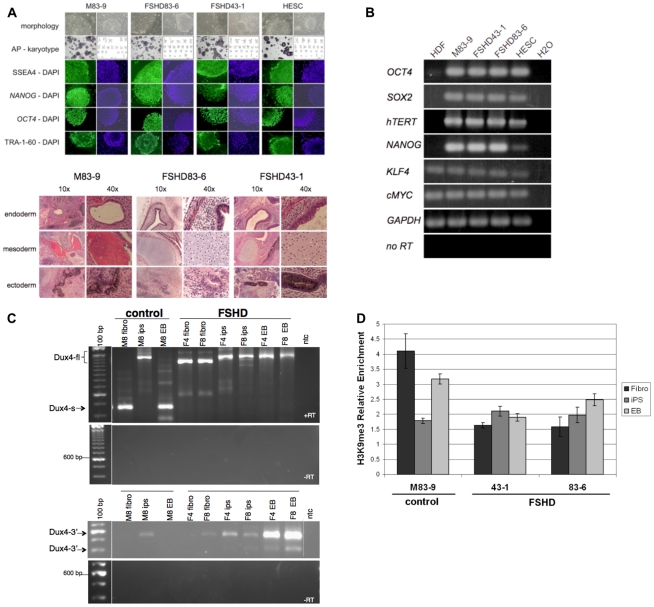
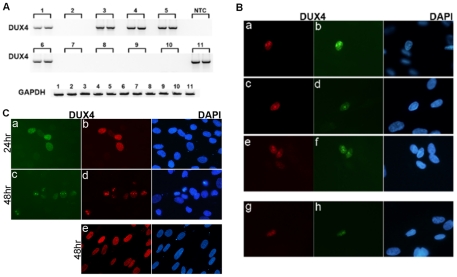
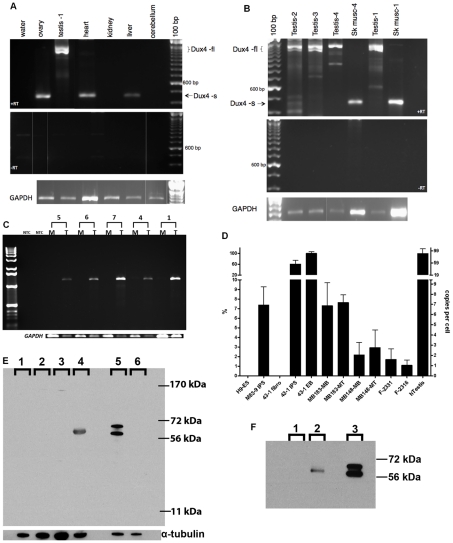
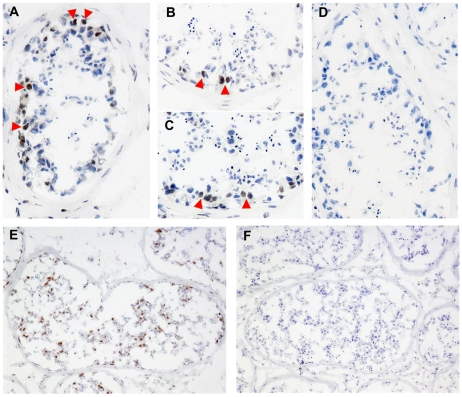
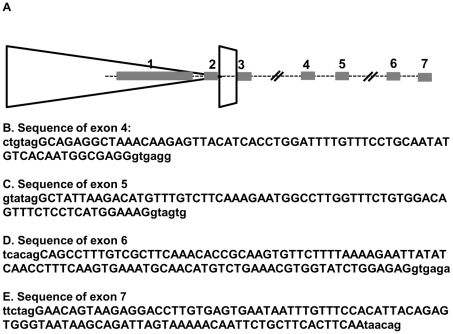
Each unit of the D4Z4 macrosatellite repeat contains a retrotransposed gene encoding the DUX4 double-homeobox transcription factor. Facioscapulohumeral dystrophy (FSHD) is caused by deletion of a subset of the D4Z4 units in the subtelomeric region of chromosome 4. Although it has been reported that the deletion of D4Z4 units induces the pathological expression of DUX4 mRNA, the association of DUX4 mRNA expression with FSHD has not been rigorously investigated, nor has any human tissue been identified that normally expresses DUX4 mRNA or protein. We show that FSHD muscle expresses a different splice form of DUX4 mRNA compared to control muscle. Control muscle produces low amounts of a splice form of DUX4 encoding only the amino-terminal portion of DUX4. FSHD muscle produces low amounts of a DUX4 mRNA that encodes the full-length DUX4 protein. The low abundance of full-length DUX4 mRNA in FSHD muscle cells represents a small subset of nuclei producing a relatively high abundance of DUX4 mRNA and protein. In contrast to control skeletal muscle and most other somatic tissues, full-length DUX4 transcript and protein is expressed at relatively abundant levels in human testis, most likely in the germ-line cells. Induced pluripotent (iPS) cells also express full-length DUX4 and differentiation of control iPS cells to embryoid bodies suppresses expression of full-length DUX4, whereas expression of full-length DUX4 persists in differentiated FSHD iPS cells. Together, these findings indicate that full-length DUX4 is normally expressed at specific developmental stages and is suppressed in most somatic tissues. The contraction of the D4Z4 repeat in FSHD results in a less efficient suppression of the full-length DUX4 mRNA in skeletal muscle cells. Therefore, FSHD represents the first human disease to be associated with the incomplete developmental silencing of a retrogene array normally expressed early in development.
每个 D4Z4 宏卫星重复单元都包含一个反转录基因,该基因编码 DUX4 双同源盒转录因子。面肩肱型肌营养不良症(FSHD)是由于染色体 4 端粒区域的一部分 D4Z4 单元缺失引起的。尽管已经报道 D4Z4 单元的缺失会诱导 DUX4mRNA 的病理性表达,但 DUX4mRNA 表达与 FSHD 的关联尚未得到严格研究,也没有鉴定出任何正常表达 DUX4mRNA 或蛋白的人类组织。我们表明,与对照肌肉相比,FSHD 肌肉表达了不同的 DUX4mRNA 剪接形式。对照肌肉产生低量的仅编码 DUX4 氨基端部分的 DUX4 剪接形式。FSHD 肌肉产生低量的编码全长 DUX4 蛋白的 DUX4mRNA。FSHD 肌肉细胞中全长 DUX4mRNA 的低丰度代表了产生相对高丰度 DUX4mRNA 和蛋白的一小部分核。与对照骨骼肌和大多数其他体细胞组织不同,全长 DUX4 转录本和蛋白在人类睾丸中以相对丰富的水平表达,很可能在生殖细胞中表达。诱导多能(iPS)细胞也表达全长 DUX4,并且对照 iPS 细胞向胚状体的分化抑制全长 DUX4 的表达,而分化的 FSHD iPS 细胞中全长 DUX4 的表达持续存在。总之,这些发现表明全长 DUX4 在特定的发育阶段正常表达,并在大多数体细胞组织中受到抑制。FSHD 中 D4Z4 重复的收缩导致骨骼肌细胞中全长 DUX4mRNA 的抑制效率降低。因此,FSHD 代表了第一个与正常在早期发育中表达的反转录基因簇的不完全发育性沉默相关的人类疾病。