Department of Materials Science and Engineering, Whitaker Biomedical Engineering Institute, and Institute of NanoBioTechnology, Johns Hopkins University, Baltimore, Maryland 21218, United States.
Biomacromolecules. 2010 Dec 13;11(12):3432-9. doi: 10.1021/bm1009574. Epub 2010 Nov 10.
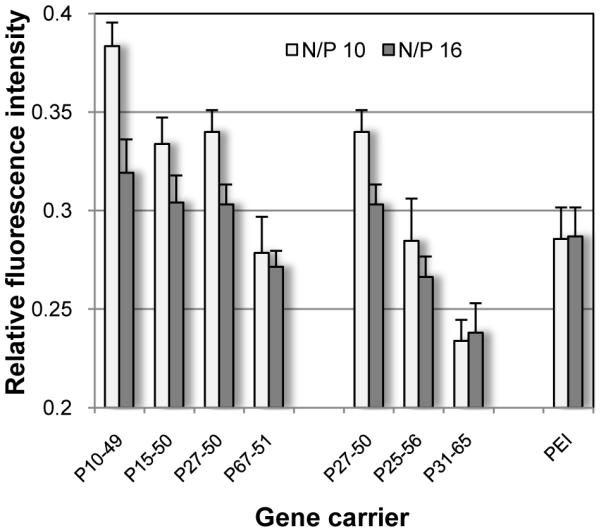
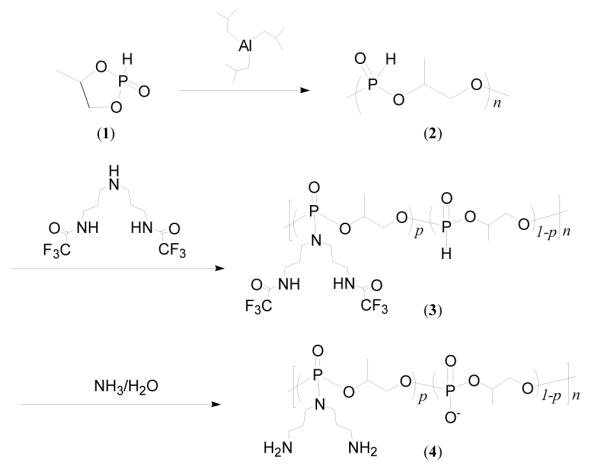
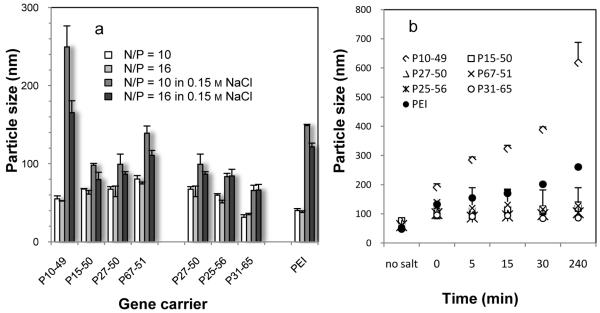
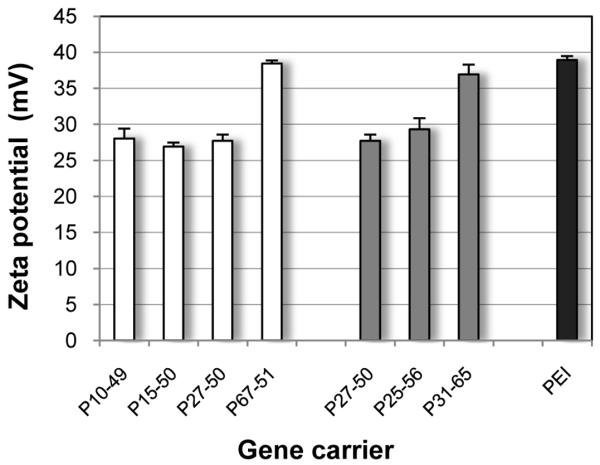
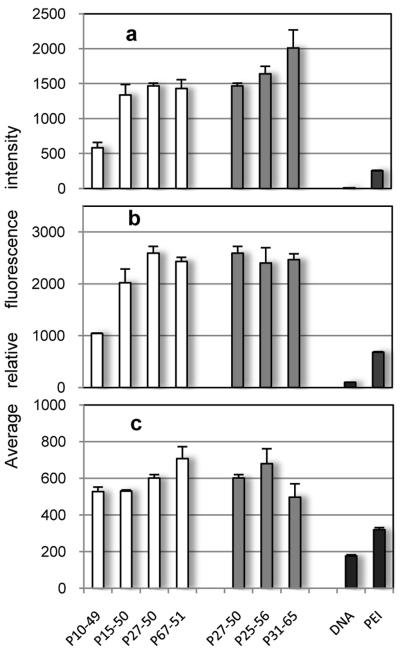
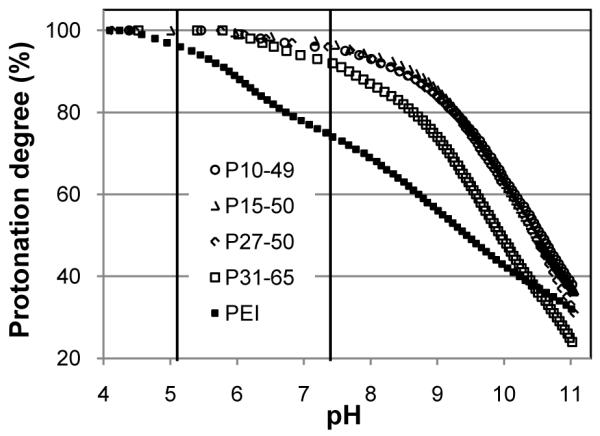
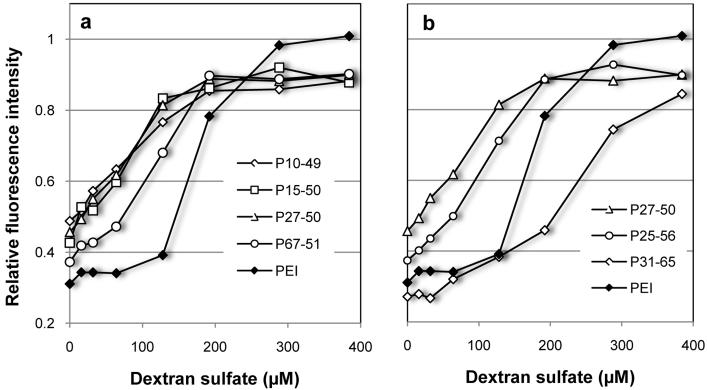
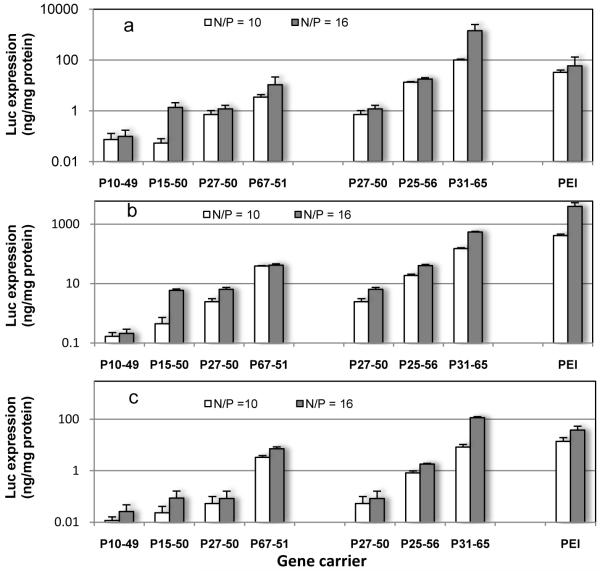
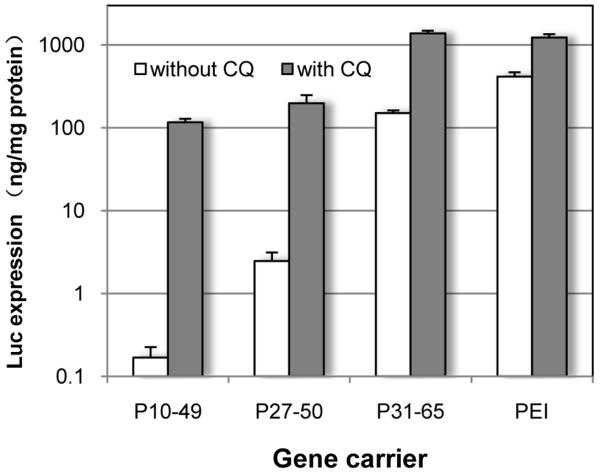
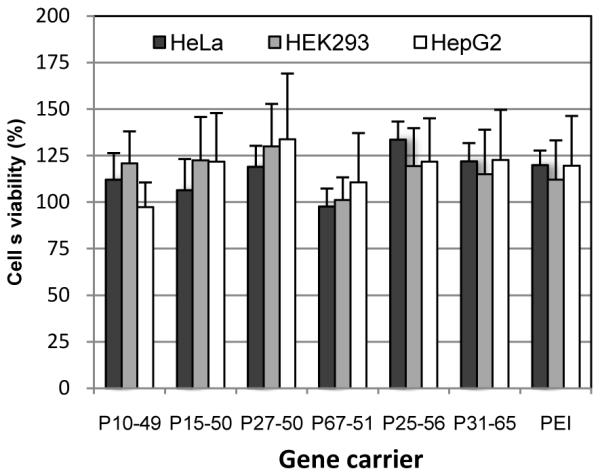
A series of polyphosphoramidates (PPAs) with different molecular weights (MWs) and charge densities were synthesized and examined for their DNA compaction ability and transfection efficiency. A strong correlation was observed between the transfection efficiency of PPA/DNA nanoparticles and the MW and net positive charge density of the PPA gene carriers in three different cell lines (HeLa, HEK293, and HepG2 cells). An increase in MW and net positive charge density of PPA carrier yielded higher DNA compaction capacity, smaller nanoparticles with higher surface charges, and higher complex stability against challenges by salt and polyanions. These favorable physicochemical properties of nanoparticles led to enhanced transfection efficiency. PPA/DNA nanoparticles with the highest complex stability showed comparable transfection efficiency as PEI/DNA nanoparticles likely by compensating the low buffering capacity with higher cellular uptake and affording higher level of protection to DNA in endolysosomal compartment. The differences in transfection efficiency were not attributed by any difference in cytotoxicity among the carriers, as all nanoparticles showed a minimal level of cytotoxicity under the transfection conditions. Using PPA as a model system, we demonstrated the structural dependence of transfection efficiency of polymer gene carrier. These results offer more insights into nanoparticle engineering for nonviral gene delivery.
一系列具有不同分子量(MW)和电荷密度的聚磷酰胺(PPA)被合成并研究了其 DNA 压缩能力和转染效率。在三种不同的细胞系(HeLa、HEK293 和 HepG2 细胞)中,PPA/DNA 纳米颗粒的转染效率与 PPA 基因载体的 MW 和净正电荷密度之间存在很强的相关性。PPA 载体 MW 和净正电荷密度的增加导致更高的 DNA 压缩能力、具有更高表面电荷的更小纳米颗粒,以及更高的对盐和聚阴离子挑战的复合物稳定性。这些有利的纳米颗粒理化性质导致了更高的转染效率。具有最高复合物稳定性的 PPA/DNA 纳米颗粒与 PEI/DNA 纳米颗粒具有相当的转染效率,可能通过增加细胞摄取来补偿低缓冲能力,并在内涵体/溶酶体腔内为 DNA 提供更高水平的保护。转染效率的差异不是由于载体之间的细胞毒性差异引起的,因为所有纳米颗粒在转染条件下都表现出最低水平的细胞毒性。使用 PPA 作为模型系统,我们证明了聚合物基因载体转染效率的结构依赖性。这些结果为非病毒基因传递的纳米颗粒工程提供了更多的见解。