Laboratory of Experimental Carcinogenesis, Center for Cancer Research, National Cancer Institute, National Institutes of Health, Bethesda, MD 20892-4262, USA.
J Hepatol. 2011 Feb;54(2):311-9. doi: 10.1016/j.jhep.2010.06.036. Epub 2010 Sep 7.
BACKGROUND & AIMS: Aberrant activation of the RAS pathway is ubiquitous in human hepatocarcinogenesis, but the molecular mechanisms leading to RAS induction in the absence of RAS mutations remain under-investigated. We defined the role of Ras GTPase activating proteins (GAPs) in the constitutive activity of Ras signaling during human hepatocarcinogenesis.
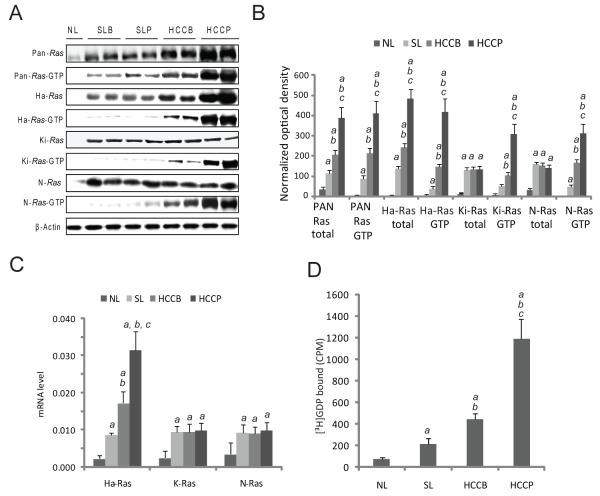
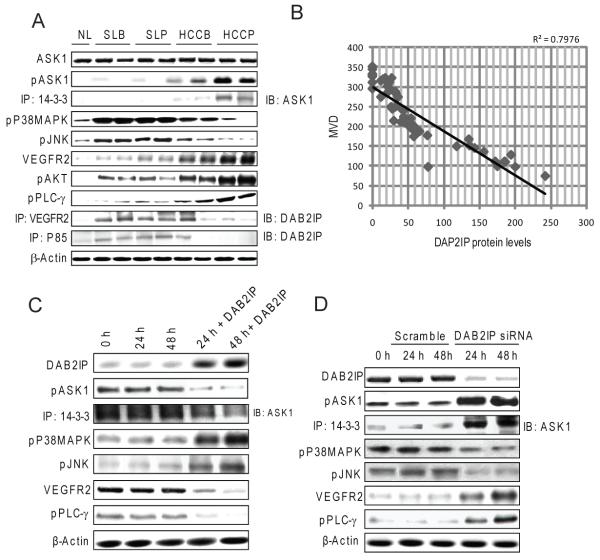
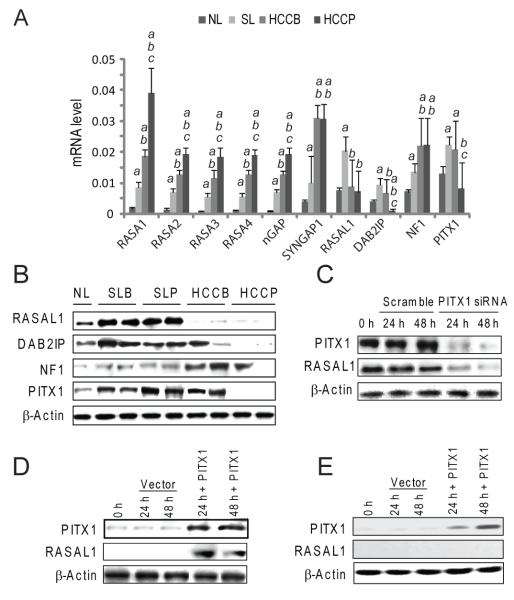
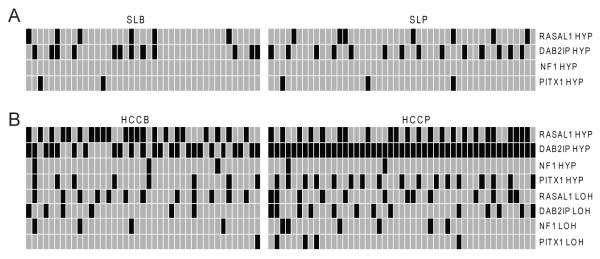
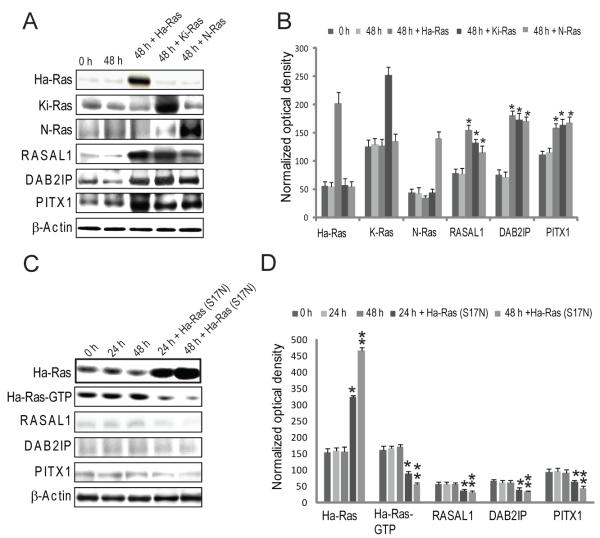
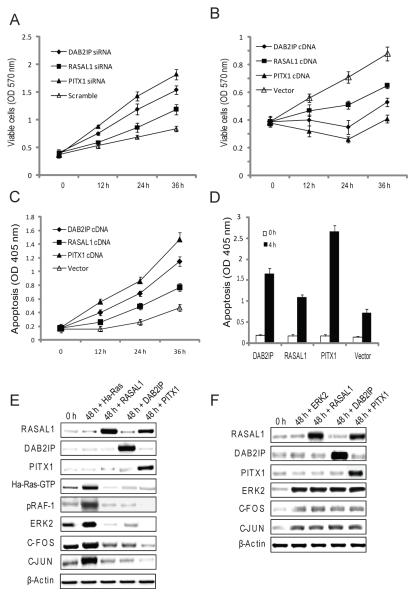
The mutation status of RAS genes and RAS effectors was assessed in a collection of human hepatocellular carcinomas (HCC). Levels of RAS GAPs (RASA1-4, RASAL1, nGAP, SYNGAP1, DAB2IP, and NF1) and the RASAL1 upstream inducer PITX1 were determined by real-time RT-PCR and immunoblotting. The promoter and genomic status of RASAL1, DAB2IP, NF1, and PITX1 were assessed by methylation assays and microsatellite analysis. Effects of RASAL1, DAB2IP, and PITX1 on HCC growth were evaluated by transfection and siRNA analyses of HCC cell lines.
In the absence of Ras mutations, downregulation of at least one RAS GAP (RASAL1, DAB2IP, or NF1) was found in all HCC samples. Low levels of DAB2IP and PITX1 were detected mostly in a HCC subclass from patients with poor survival, indicating that these proteins control tumor aggressiveness. In HCC cells, reactivation of RASAL1, DAB2IP, and PITX1 inhibited proliferation and induced apoptosis, whereas their silencing increased proliferation and resistance to apoptosis.
Selective suppression of RASAL1, DAB2IP, or NF1 RAS GAPs results in unrestrained activation of Ras signaling in the presence of wild-type RAS in HCC.
RAS 通路的异常激活在人类肝癌发生中普遍存在,但导致 RAS 诱导而无 RAS 突变的分子机制仍未得到充分研究。我们定义了 Ras GTP 酶激活蛋白(GAPs)在人肝癌发生过程中 Ras 信号持续激活中的作用。
在一系列人类肝细胞癌(HCC)中评估了 RAS 基因和 RAS 效应物的突变状态。通过实时 RT-PCR 和免疫印迹法测定 Ras GAPs(RASA1-4、RASAL1、nGAP、SYNGAP1、DAB2IP 和 NF1)和 RasAL1 上游诱导物 PITX1 的水平。通过甲基化分析和微卫星分析评估了 RASAL1、DAB2IP、NF1 和 PITX1 的启动子和基因组状态。通过 HCC 细胞系的转染和 siRNA 分析评估了 RASAL1、DAB2IP 和 PITX1 对 HCC 生长的影响。
在没有 Ras 突变的情况下,在所有 HCC 样本中均发现至少一种 Ras GAP(RASAL1、DAB2IP 或 NF1)下调。在生存较差的 HCC 亚类患者中,检测到低水平的 DAB2IP 和 PITX1,表明这些蛋白控制肿瘤侵袭性。在 HCC 细胞中,RASAL1、DAB2IP 和 PITX1 的再激活抑制增殖并诱导细胞凋亡,而它们的沉默增加了增殖并增加了对凋亡的抵抗。
在 HCC 中野生型 RAS 存在的情况下,选择性抑制 RasAL1、DAB2IP 或 NF1 Ras GAP 导致 Ras 信号的不受控制激活。