University of California, Berkeley, CA, USA.
BMC Infect Dis. 2010 Nov 11;10:327. doi: 10.1186/1471-2334-10-327.
Group A Streptococcus (GAS) strain diversity varies across different regions of the world, according to low versus high-income countries. These differences may be related to geographic, environmental, socioeconomic, or host-related factors. However, local factors may also affect strain diversity. We compared the emm types of GAS isolates from children with and without sore throat in one large urban setting in Brazil.
Children 3-15 years of age were consecutively recruited from slum and non-slum pediatric outpatient clinics between April-October, 2008. Throat cultures were performed and data intake forms were completed. GAS isolates were typed by emm sequencing.
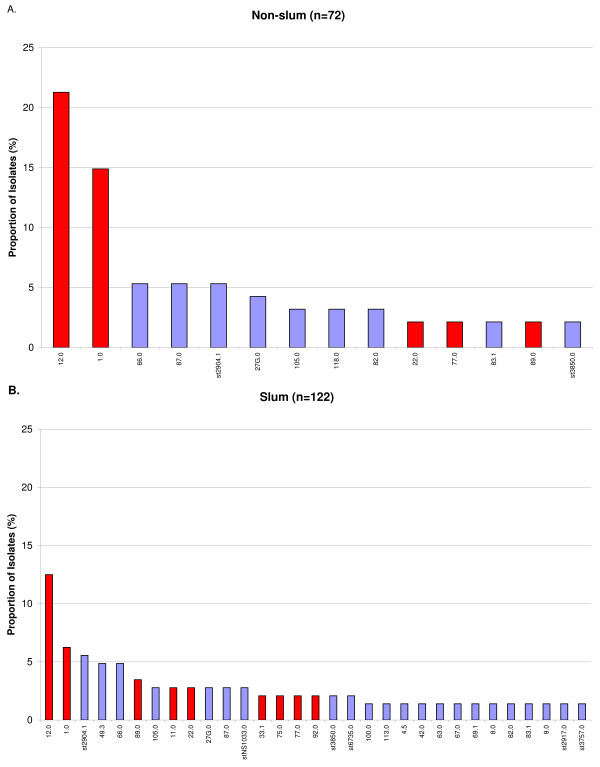
From 2194 children, 254 (12%) GAS isolates were obtained. Of 238 GAS isolates that were emm-typed, 61 unique emm types were identified. Simpson's diversity index of the emm types was higher among isolates from slum children [97% (96%-98%)] than those of non-slum children [92% (89%-96%)]. Two emm types (66.0, 12.0) were more frequently isolated from children with sore throat (p < 0.05), and one emm type (27G.0) demonstrated a protective effect.
The emm type diversity from children attending slum clinics resembled the emm diversity of low income countries rather than that of children attending a non-slum clinic in the same city. Local factors, such as crowding, may enhance the frequency of GAS transmission and horizontal gene transfers that contribute to increased strain diversity in the slums. GAS vaccine coverage and control of GAS infections will need to take these local factors and strain differences into consideration.
根据高收入和低收入国家的不同,A 组链球菌(GAS)菌株的多样性在世界不同地区有所不同。这些差异可能与地理、环境、社会经济或宿主相关因素有关。然而,当地因素也可能影响菌株的多样性。我们比较了巴西一个大城市中患有和不患有咽痛的儿童中 GAS 分离株的 emm 型。
2008 年 4 月至 10 月,连续招募了来自贫民窟和非贫民窟儿科门诊的 3-15 岁儿童。进行了咽喉培养,并填写了数据录入表。通过 emm 测序对 GAS 分离株进行分型。
从 2194 名儿童中获得了 254 株(12%)GAS 分离株。在 238 株可进行 emm 型分型的 GAS 分离株中,鉴定出 61 种独特的 emm 型。来自贫民窟儿童的 emm 型的 Simpson 多样性指数高于非贫民窟儿童[97%(96%-98%)]。两种 emm 型(66.0,12.0)在患有咽痛的儿童中更常分离(p<0.05),一种 emm 型(27G.0)表现出保护作用。
在贫民窟诊所就诊的儿童的 emm 型多样性与低收入国家的 emm 多样性相似,而与同一城市非贫民窟诊所就诊的儿童的 emm 多样性不同。拥挤等当地因素可能会增加 GAS 传播的频率和水平基因转移,从而增加贫民窟中菌株的多样性。GAS 疫苗接种覆盖率和 GAS 感染控制需要考虑这些当地因素和菌株差异。