Section on Functional Imaging Methods, Laboratory of Brain and Cognition, National Institute of Mental Health, National Institutes of Health, Bethesda, MD 20892, USA.
Neuroimage. 2011 Feb 14;54(4):2764-78. doi: 10.1016/j.neuroimage.2010.11.020. Epub 2010 Nov 10.
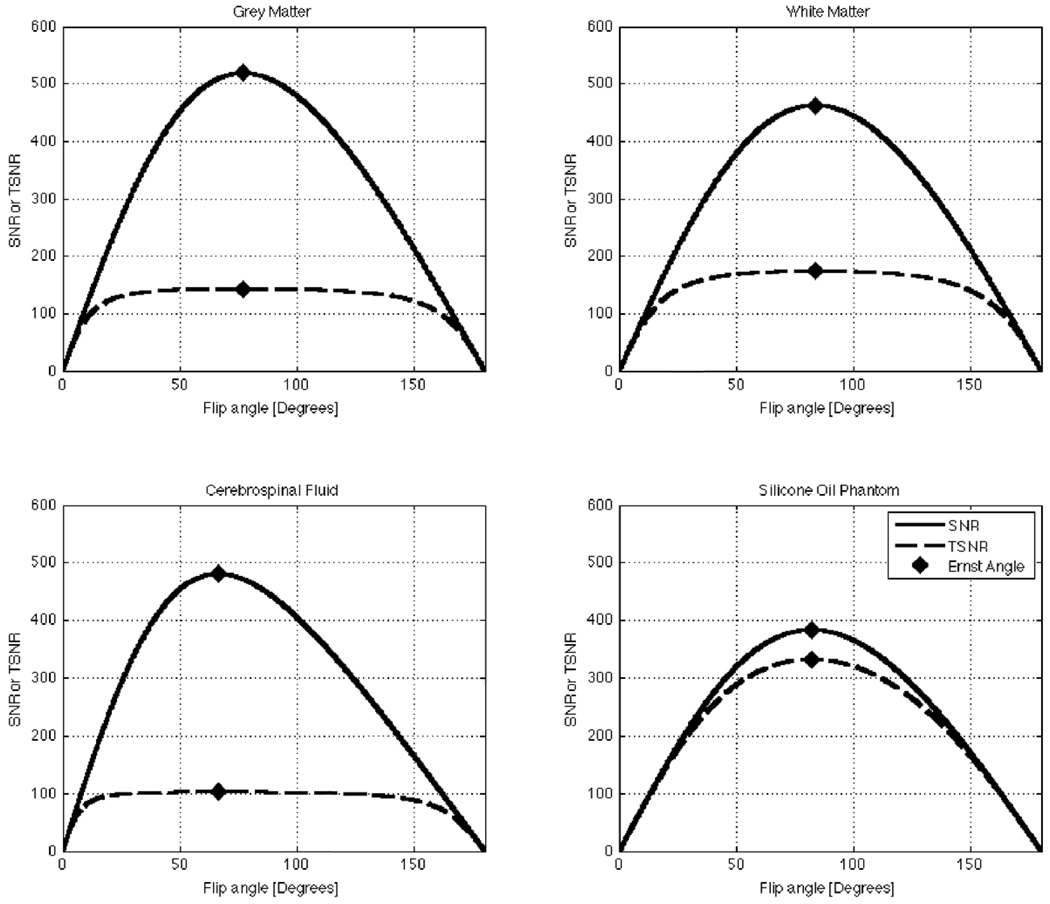
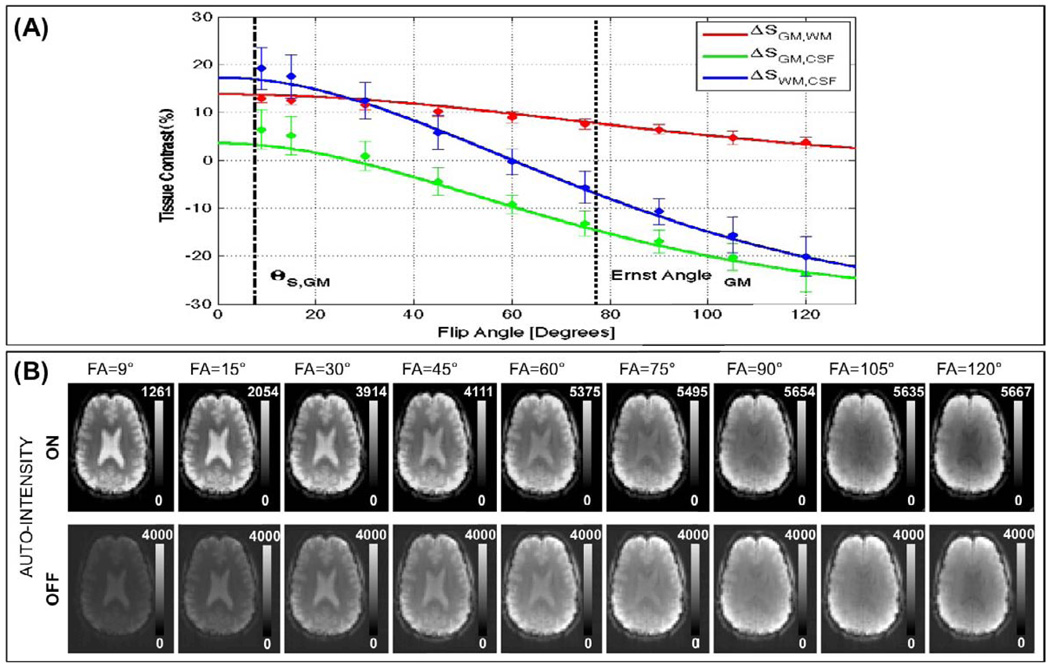
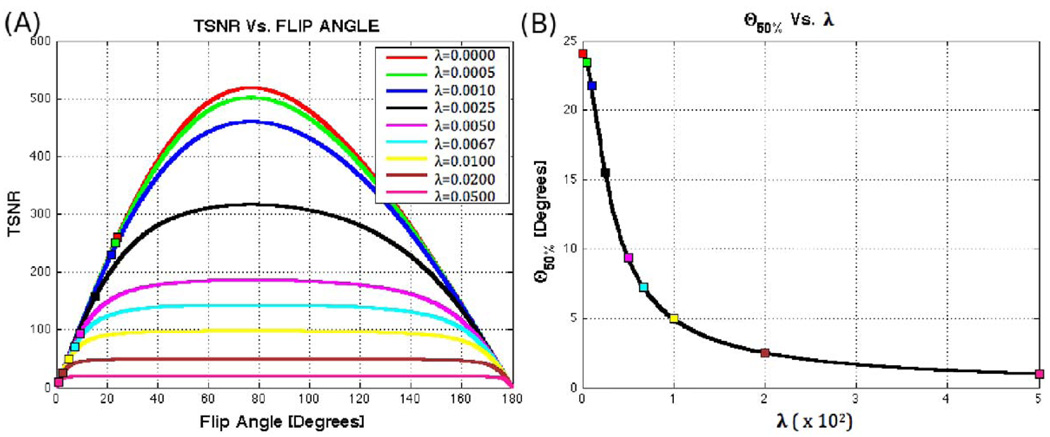
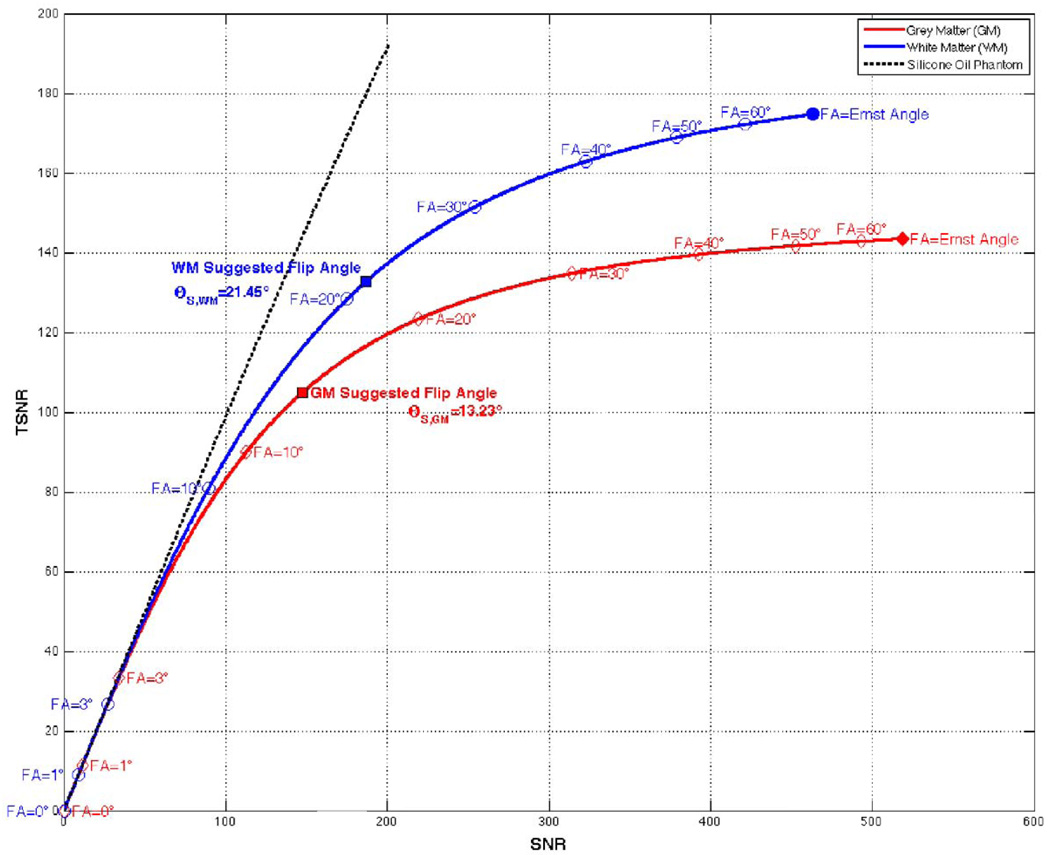
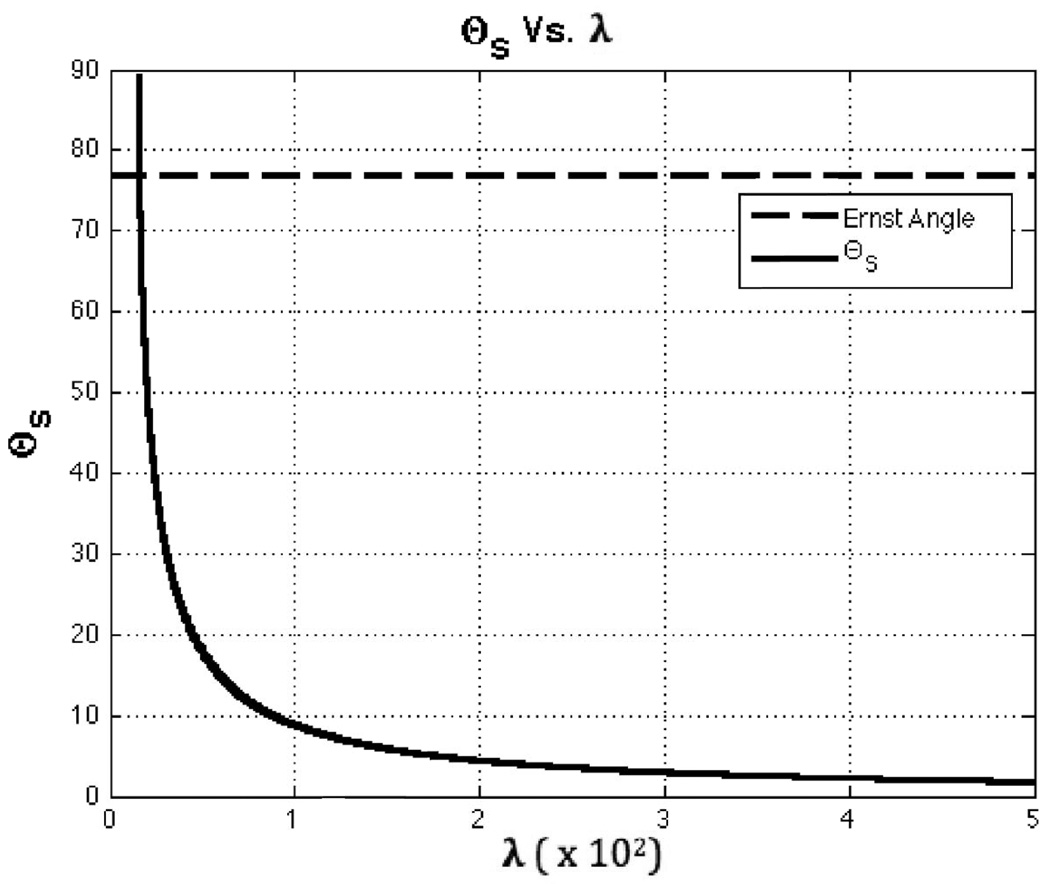
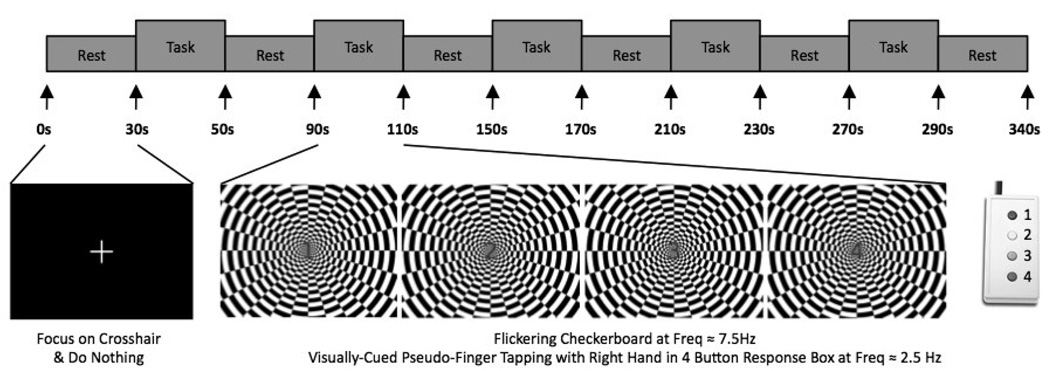
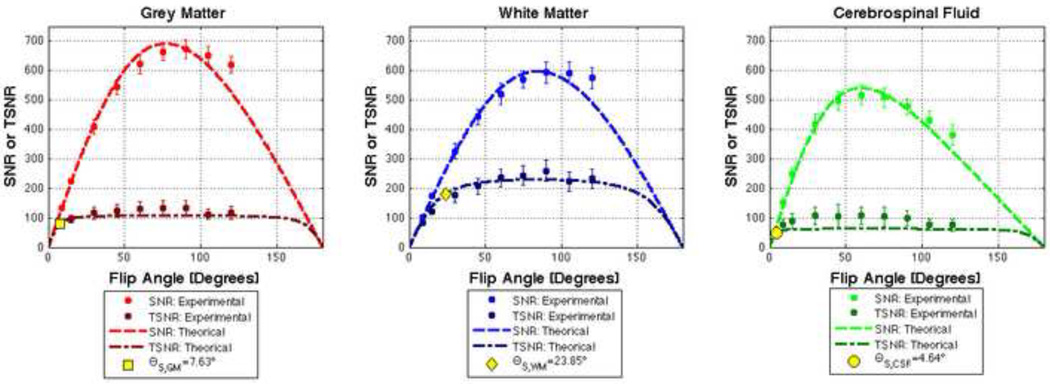
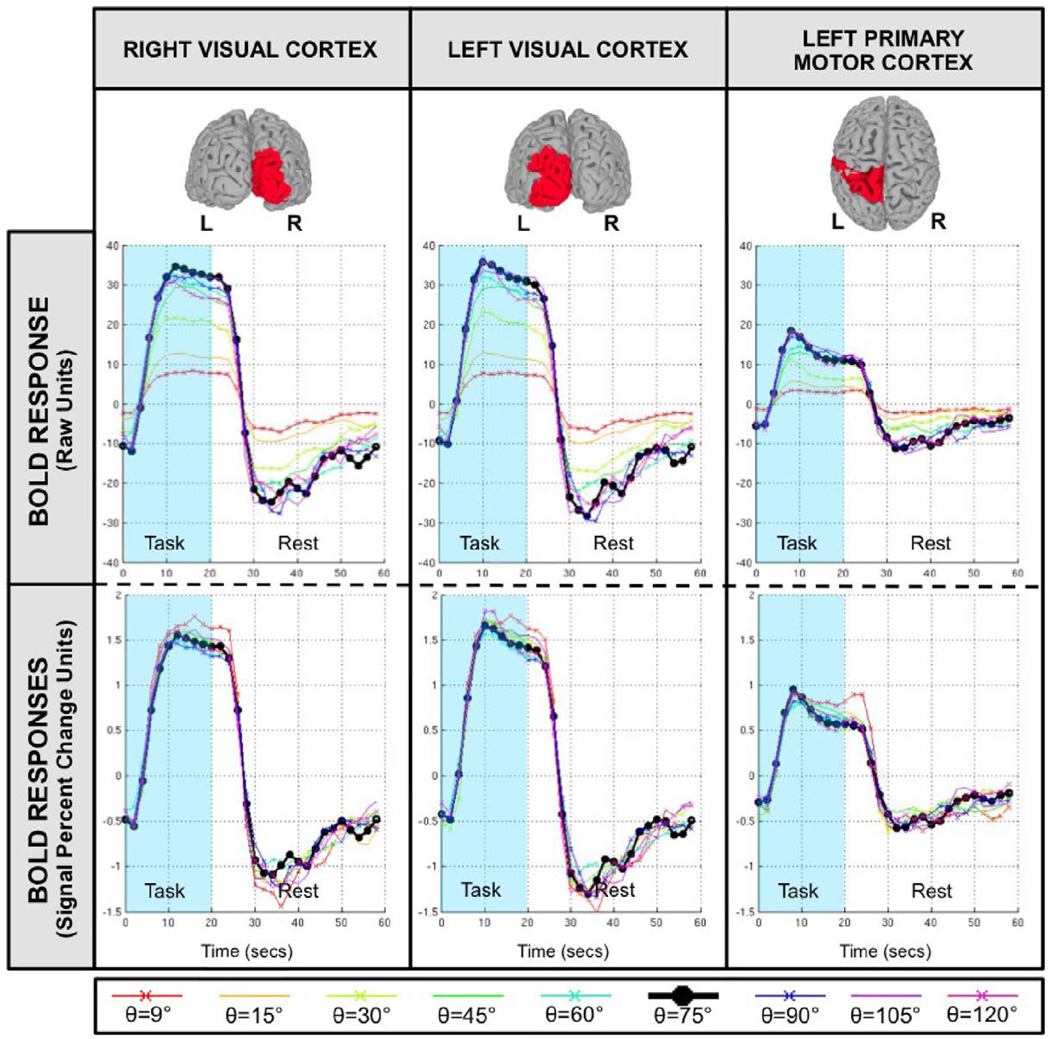
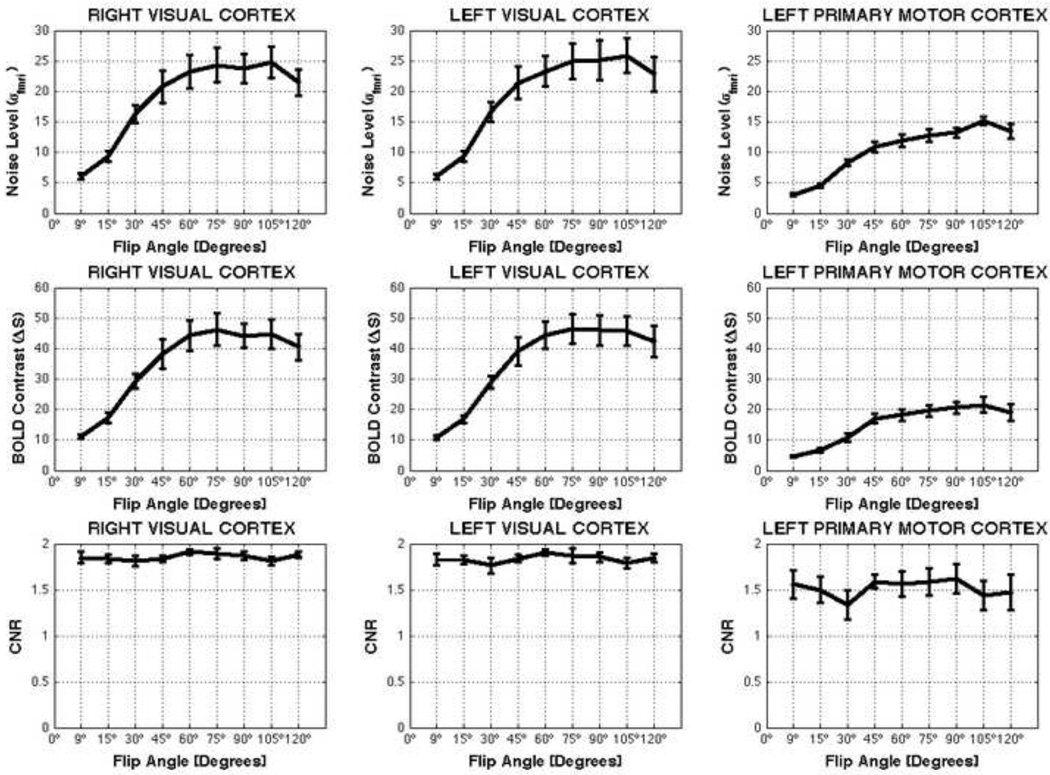
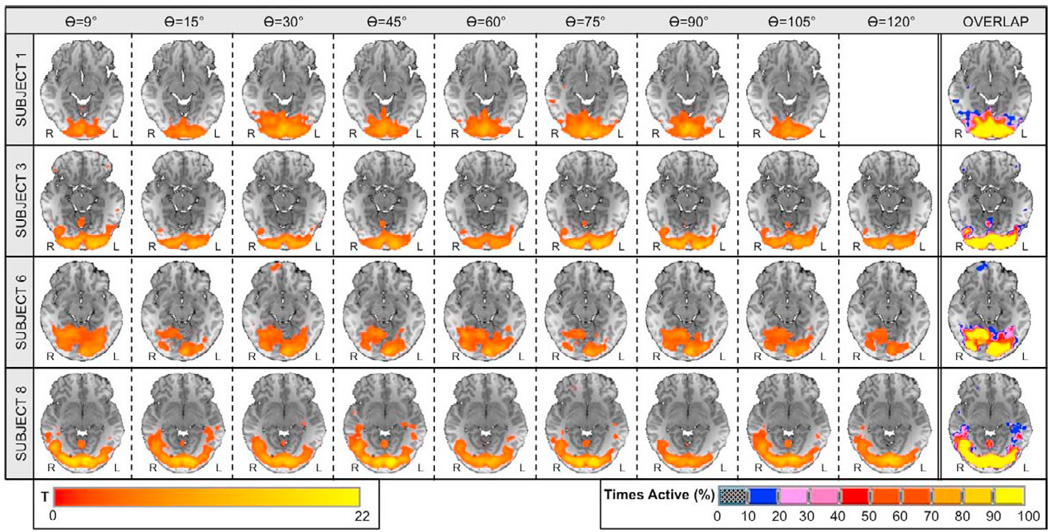
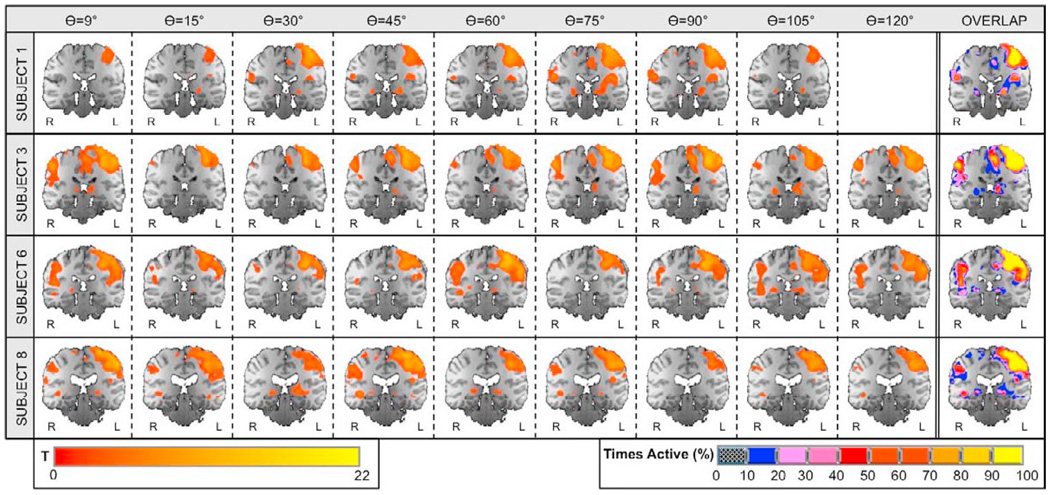
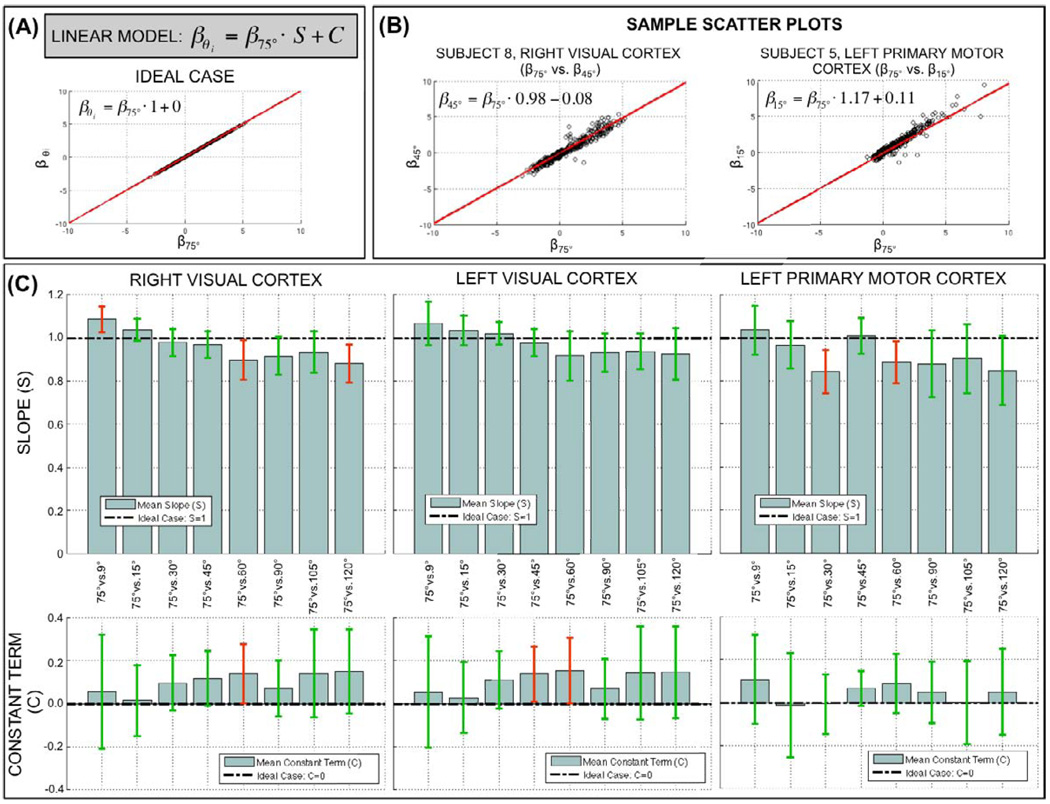
This work addresses the choice of imaging flip angle in blood oxygenation level dependent (BOLD) functional magnetic resonance imaging (fMRI). When noise of physiological origin becomes the dominant noise source in fMRI timeseries, it causes a nonlinear dependence of the temporal signal-to-noise ratio (TSNR) versus signal-to-noise ratio (SNR) that can be exploited to perform BOLD fMRI at angles well below the Ernst angle without any detrimental effect on our ability to detect sites of neuronal activation. We show, both experimentally and theoretically, that for situations where available SNR is high and physiological noise dominates over system/thermal noise, although TSNR still reaches it maximum for the Ernst angle, reduction of imaging flip angle well below this angle results in negligible loss in TSNR. Moreover, we provide a way to compute a suggested imaging flip angle, which constitutes a conservative estimate of the minimum flip angle that can be used under given experimental SNR and physiological noise levels. For our experimental conditions, this suggested angle equals 7.63° for the grey matter compartment, while the Ernst angle=77°. Finally, using data from eight subjects with a combined visual-motor task we show that imaging at angles as low as 9° introduces no significant differences in observed hemodynamic response time-course, contrast-to-noise ratio, voxel-wise effect size or statistical maps of activation as compared to imaging at 75° (an angle close to the Ernst angle). These results suggest that using low flip angles in BOLD fMRI experimentation to obtain benefits such as (1) reduction of RF power, (2) limitation of apparent T(1)-related inflow effects, (3) reduction of through-plane motion artifacts, (4) lower levels of physiological noise, and (5) improved tissue contrast is feasible when physiological noise dominates and SNR is high.
本工作针对血氧水平依赖功能磁共振成像(BOLD fMRI)中成像翻转角的选择。当源于生理的噪声成为 fMRI 时间序列中的主要噪声源时,它会导致时间信号噪声比(TSNR)与信噪比(SNR)之间的非线性关系,这种关系可被利用来在不损害我们检测神经元激活部位的能力的情况下,以低于 Ernst 角的角度进行 BOLD fMRI。我们从实验和理论两方面都表明,在可用 SNR 较高且生理噪声超过系统/热噪声的情况下,尽管 TSNR 仍在 Ernst 角处达到最大值,但将成像翻转角降低至该角度以下会导致 TSNR 的可忽略损失。此外,我们提供了一种计算建议成像翻转角的方法,该角度构成了在给定实验 SNR 和生理噪声水平下可以使用的最小翻转角的保守估计。对于我们的实验条件,对于灰质部分,该建议的角度为 7.63°,而 Ernst 角=77°。最后,我们使用来自八位进行视觉-运动任务的受试者的数据,表明与在 75°(接近 Ernst 角的角度)成像相比,在低至 9°的角度进行成像不会导致观察到的血流动力学响应时间过程、对比噪声比、体素大小效应或激活的统计图产生显著差异。这些结果表明,当生理噪声占主导地位且 SNR 较高时,在 BOLD fMRI 实验中使用低翻转角可获得以下益处:(1)降低射频功率;(2)限制表观 T1 相关流入效应;(3)减少平面内运动伪影;(4)降低生理噪声水平;(5)提高组织对比度。