Department of Energy and Technology, Swedish University of Agricultural Sciences, Uppsala, Sweden.
Bioresour Technol. 2011 Feb;102(3):2859-67. doi: 10.1016/j.biortech.2010.10.075. Epub 2010 Oct 21.
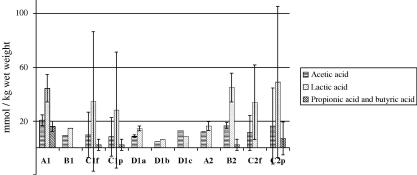
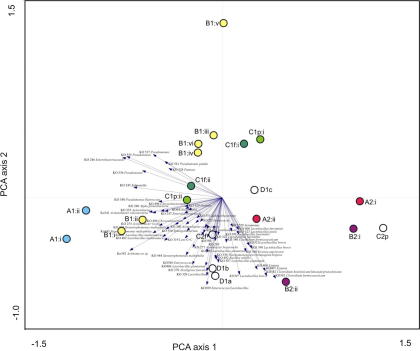
Large-scale composting of source-separated household waste has expanded in recent years in the Nordic countries. One problem can be low pH at the start of the process. Incoming biowaste at four composting plants was characterised chemically, physically and microbiologically. The pH of food waste ranged from 4.7 to 6.1 and organic acid concentration from 24 to 81 mmol kg(-1). The bacterial diversity in the waste samples was high, with all samples dominated by Gammaproteobacteria, particularly Pseudomonas and Enterobacteria (Escherichia coli, Klebsiella, Enterobacter). Lactic acid bacteria were also numerically important and are known to negatively affect the composting process because the lactic acid they produce lowers the pH, inhibiting other bacteria. The bacterial groups needed for efficient composting, i.e. Bacillales and Actinobacteria, were present in appreciable amounts. The results indicated that start-up problems in the composting process can be prevented by recycling bulk material and compost.
近年来,北欧国家的源头分类家庭垃圾大规模堆肥有所扩大。一个问题可能是过程开始时的 pH 值低。四个堆肥厂的生物废物在化学、物理和微生物学方面进行了特征描述。食物垃圾的 pH 值范围为 4.7 到 6.1,有机酸浓度为 24 到 81 mmol kg(-1)。废物样品中的细菌多样性很高,所有样品都以 Gamma 变形菌为主,特别是假单胞菌和肠杆菌(大肠杆菌、克雷伯菌、肠杆菌)。乳酸菌在数量上也很重要,因为它们产生的乳酸会降低 pH 值,从而抑制其他细菌,这是众所周知的会影响堆肥过程。有效堆肥所需的细菌群,即芽孢杆菌目和放线菌目,以相当可观的数量存在。结果表明,通过回收大块材料和堆肥,可以防止堆肥过程中的启动问题。