Department of Psychiatry and Behavioral Sciences, Feinberg School of Medicine, Northwestern University, Chicago, IL 60611, USA.
Mol Psychiatry. 2012 Jan;17(1):49-61. doi: 10.1038/mp.2010.119. Epub 2010 Nov 16.
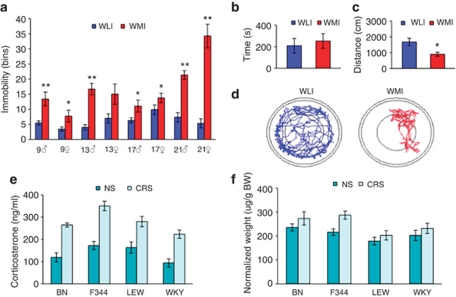
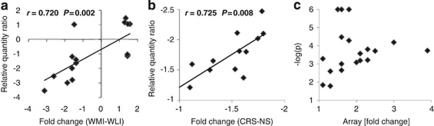
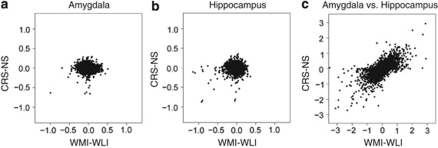
The etiology of depression is still poorly understood, but two major causative hypotheses have been put forth: the monoamine deficiency and the stress hypotheses of depression. We evaluate these hypotheses using animal models of endogenous depression and chronic stress. The endogenously depressed rat and its control strain were developed by bidirectional selective breeding from the Wistar-Kyoto (WKY) rat, an accepted model of major depressive disorder (MDD). The WKY More Immobile (WMI) substrain shows high immobility/despair-like behavior in the forced swim test (FST), while the control substrain, WKY Less Immobile (WLI), shows no depressive behavior in the FST. Chronic stress responses were investigated by using Brown Norway, Fischer 344, Lewis and WKY, genetically and behaviorally distinct strains of rats. Animals were either not stressed (NS) or exposed to chronic restraint stress (CRS). Genome-wide microarray analyses identified differentially expressed genes in hippocampi and amygdalae of the endogenous depression and the chronic stress models. No significant difference was observed in the expression of monoaminergic transmission-related genes in either model. Furthermore, very few genes showed overlapping changes in the WMI vs WLI and CRS vs NS comparisons, strongly suggesting divergence between endogenous depressive behavior- and chronic stress-related molecular mechanisms. Taken together, these results posit that although chronic stress may induce depressive behavior, its molecular underpinnings differ from those of endogenous depression in animals and possibly in humans, suggesting the need for different treatments. The identification of novel endogenous depression-related and chronic stress response genes suggests that unexplored molecular mechanisms could be targeted for the development of novel therapeutic agents.
抑郁症的病因仍不清楚,但提出了两个主要的致病假说:单胺缺乏假说和抑郁的应激假说。我们使用内源性抑郁和慢性应激的动物模型来评估这些假说。内源性抑郁大鼠及其对照品系是通过对 Wistar-Kyoto (WKY) 大鼠(一种公认的重性抑郁障碍模型)进行双向选择性繁殖而开发的。WKY 多动(WMI)亚系在强迫游泳试验(FST)中表现出高不动/绝望样行为,而对照亚系 WKY 少动(WLI)在 FST 中无抑郁行为。通过使用 Brown Norway、Fischer 344、Lewis 和 WKY 大鼠,这些大鼠具有遗传和行为上的不同品系,研究了慢性应激反应。动物要么不受应激(NS),要么暴露于慢性束缚应激(CRS)。全基因组微阵列分析鉴定了内源性抑郁和慢性应激模型中海马和杏仁核中差异表达的基因。在任一模型中,单胺能传递相关基因的表达均无显著差异。此外,WMI 与 WLI 和 CRS 与 NS 比较中仅有少数基因显示出重叠变化,这强烈表明内源性抑郁行为和慢性应激相关分子机制之间存在分歧。总之,这些结果表明,尽管慢性应激可能会引起抑郁行为,但它的分子基础与动物和可能人类的内源性抑郁症不同,这表明需要不同的治疗方法。新型内源性抑郁相关和慢性应激反应基因的鉴定表明,未被探索的分子机制可能成为新型治疗药物开发的靶点。