Department of Pharmacology and Toxicology, NUTRIM School for Nutrition, Toxicology and Metabolism, Maastricht University Medical Centre, Maastricht, The Netherlands.
PLoS One. 2010 Nov 8;5(11):e13880. doi: 10.1371/journal.pone.0013880.
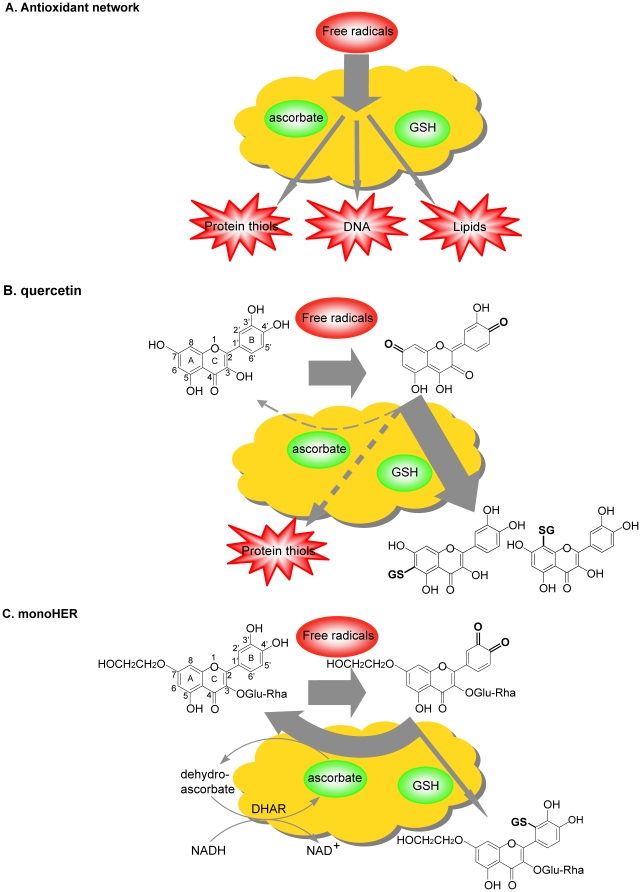
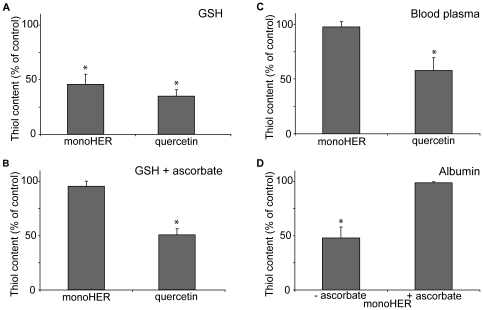
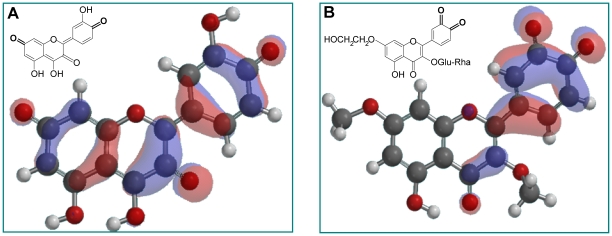
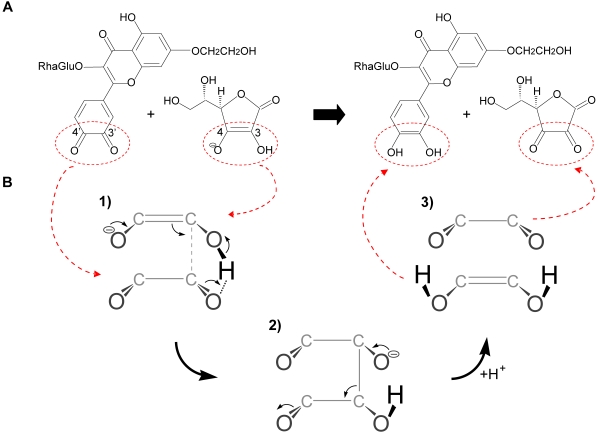
Antioxidants can scavenge highly reactive radicals. As a result the antioxidants are converted into oxidation products that might cause damage to vital cellular components. To prevent this damage, the human body possesses an intricate network of antioxidants that pass over the reactivity from one antioxidant to another in a controlled way. The aim of the present study was to investigate how the semi-synthetic flavonoid 7-mono-O-(β-hydroxyethyl)-rutoside (monoHER), a potential protective agent against doxorubicin-induced cardiotoxicity, fits into this antioxidant network. This position was compared with that of the well-known flavonoid quercetin. The present study shows that the oxidation products of both monoHER and quercetin are reactive towards thiol groups of both GSH and proteins. However, in human blood plasma, oxidized quercetin easily reacts with protein thiols, whereas oxidized monoHER does not react with plasma protein thiols. Our results indicate that this can be explained by the presence of ascorbate in plasma; ascorbate is able to reduce oxidized monoHER to the parent compound monoHER before oxidized monoHER can react with thiols. This is a major difference with oxidized quercetin that preferentially reacts with thiols rather than ascorbate. The difference in selectivity between monoHER and quercetin originates from an intrinsic difference in the chemical nature of their oxidation products, which was corroborated by molecular quantum chemical calculations. These findings point towards an essential difference between structurally closely related flavonoids in their interplay with the endogenous antioxidant network. The advantage of monoHER is that it can safely channel the reactivity of radicals into the antioxidant network where the reactivity is completely neutralized.
抗氧化剂可以清除高活性自由基。因此,抗氧化剂被转化为氧化产物,可能对重要的细胞成分造成损害。为了防止这种损害,人体拥有一个复杂的抗氧化剂网络,它以可控的方式将活性从一种抗氧化剂传递到另一种抗氧化剂。本研究的目的是研究半合成类黄酮 7-单-O-(β-羟乙基)-芦丁(单 HER)作为一种潜在的蒽环类药物诱导心脏毒性保护剂,如何适应这个抗氧化剂网络。这一位置与著名的类黄酮槲皮素进行了比较。本研究表明,单 HER 和槲皮素的氧化产物都对 GSH 和蛋白质的巯基具有反应性。然而,在人血浆中,氧化的槲皮素容易与蛋白质巯基反应,而氧化的单 HER 不与血浆蛋白巯基反应。我们的结果表明,这可以用血浆中抗坏血酸的存在来解释;抗坏血酸能够将氧化的单 HER 还原为母体化合物单 HER,然后氧化的单 HER 才能与巯基反应。这与氧化的槲皮素有很大的不同,氧化的槲皮酸优先与巯基反应,而不是与抗坏血酸反应。单 HER 和槲皮素之间选择性的差异源于它们氧化产物化学性质的内在差异,这一点通过分子量子化学计算得到了证实。这些发现指出了结构上密切相关的类黄酮在与内源性抗氧化剂网络相互作用方面存在本质差异。单 HER 的优势在于它可以安全地将自由基的活性导入抗氧化剂网络,在那里活性被完全中和。