Molecular and Cellular Pharmacology, Miller School of Medicine, University of Miami, Miami, Florida, United States of America.
PLoS One. 2010 Nov 4;5(11):e13813. doi: 10.1371/journal.pone.0013813.
Early detection of melanoma is of great importance to reduce mortality. Discovering new melanoma biomarkers would improve early detection and diagnosis. Here, we present a novel approach to detect volatile compounds from skin.
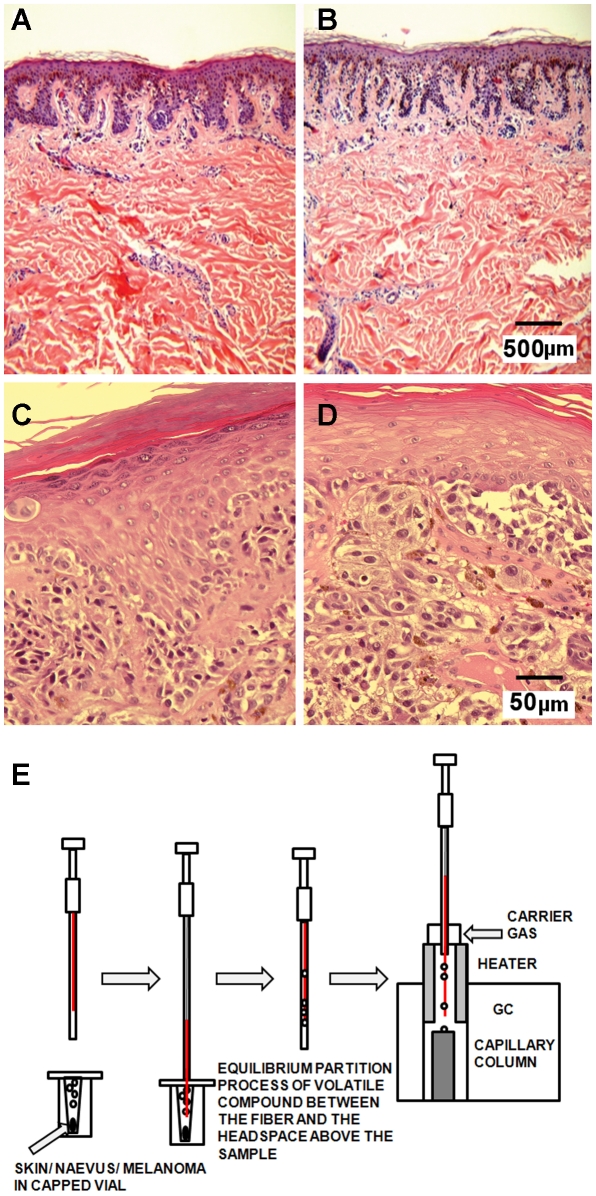
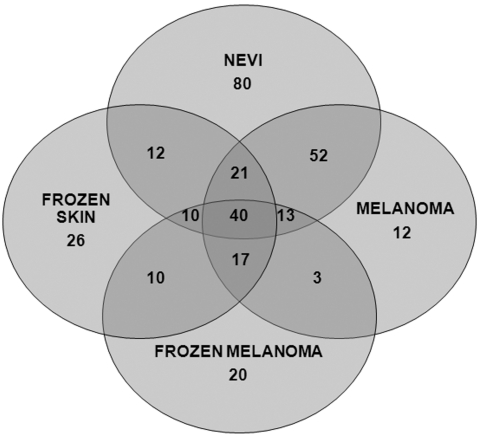
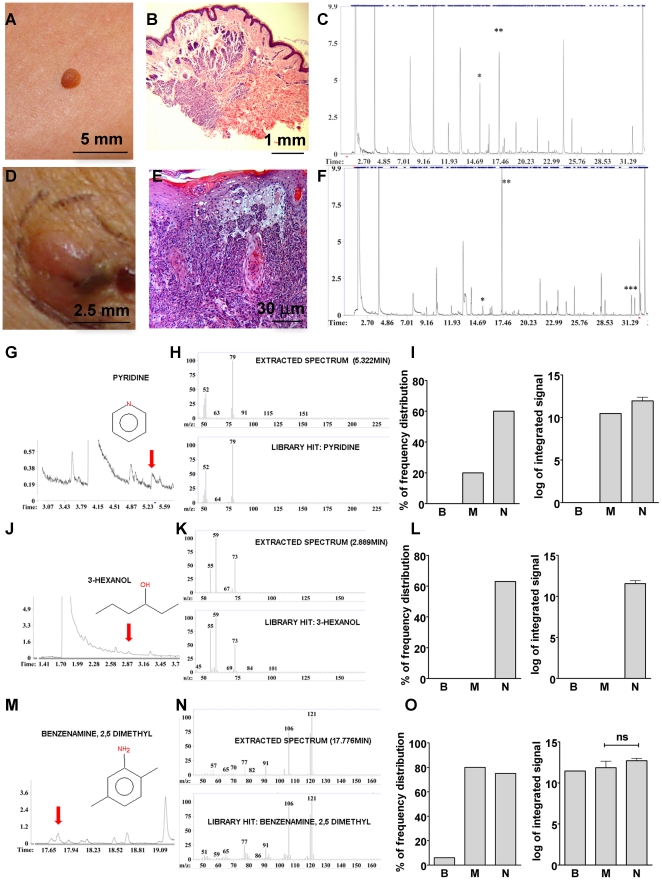
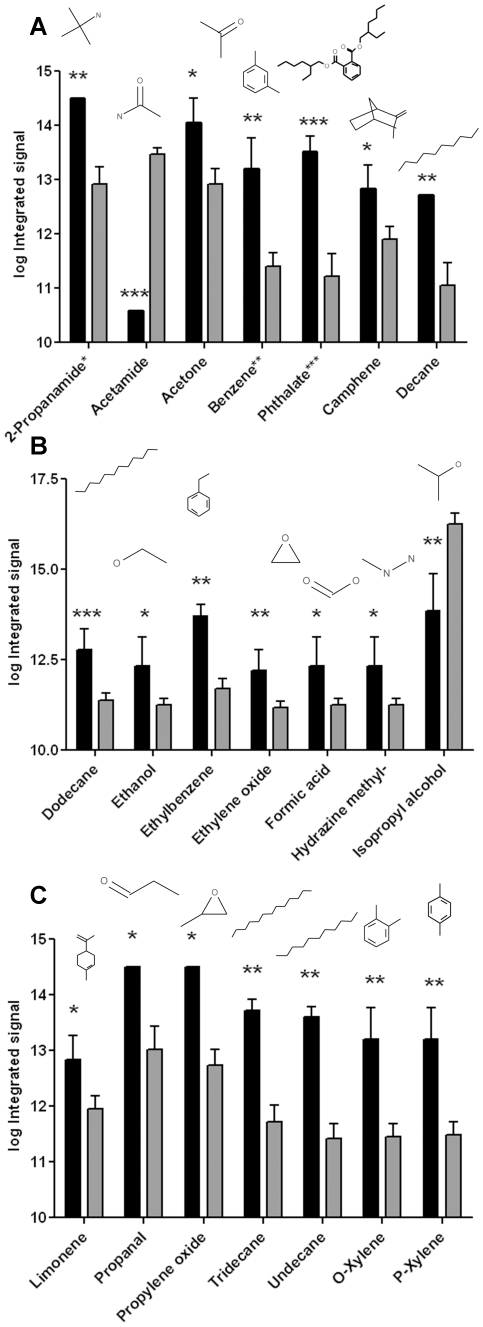
We used Head Space Solid Phase Micro-Extraction (HS-SPME) and gas chromatography/mass spectrometry (GC/MS) to identify volatile signatures from melanoma, naevi and skin samples. We hypothesized that the metabolic state of tissue alters the profile of volatile compounds. Volatiles released from fresh biopsy tissue of melanoma and benign naevus were compared based on their difference in frequency distribution and their expression level. We also analyzed volatile profiles from frozen tissue, including skin and melanoma.
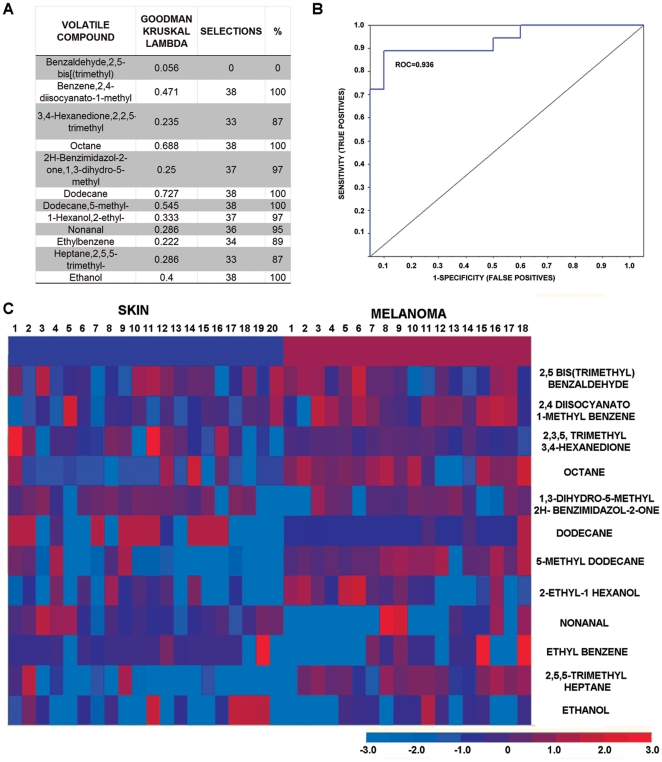
Three volatiles, 4-methyl decane, dodecane and undecane were preferentially expressed in both fresh and frozen melanoma, indicating that they are candidate biomarkers. Twelve candidate biomarkers evaluated by fuzzy logic analysis of frozen samples distinguished melanoma from skin with 89% sensitivity and 90% specificity. Our results demonstrate proof-of-principle that there is differential expression of volatiles in melanoma. Our volatile metabolomic approach will lead to a better understanding of melanoma and can enable development of new diagnostic and treatment strategies based on altered metabolism.
早期发现黑色素瘤对于降低死亡率至关重要。发现新的黑色素瘤生物标志物将有助于提高早期检测和诊断水平。在这里,我们提出了一种从皮肤中检测挥发性化合物的新方法。
我们使用顶空固相微萃取(HS-SPME)和气相色谱/质谱(GC/MS)来鉴定黑色素瘤、痣和皮肤样本中的挥发性特征。我们假设组织的代谢状态会改变挥发性化合物的特征。基于频率分布和表达水平的差异,比较了新鲜活检组织中黑色素瘤和良性痣释放的挥发性物质。我们还分析了包括皮肤和黑色素瘤在内的冷冻组织的挥发性谱。
三种挥发性物质,即 4-甲基癸烷、十二烷和十一烷,在新鲜和冷冻的黑色素瘤中均有优先表达,表明它们是候选生物标志物。通过冷冻样本的模糊逻辑分析评估的 12 种候选生物标志物可将黑色素瘤与皮肤区分开来,其敏感性为 89%,特异性为 90%。我们的研究结果证明了挥发性代谢组学方法在黑色素瘤中存在差异表达。我们的挥发性代谢组学方法将有助于更好地了解黑色素瘤,并能够基于代谢改变开发新的诊断和治疗策略。