The Samuel Roberts Noble Foundation, 2510 Sam Noble Parkway, Ardmore, OK 73401, USA.
Metabolomics Center, Department of Biochemistry, University of Missouri, Columbia, MO 65211, USA.
Molecules. 2021 Oct 27;26(21):6473. doi: 10.3390/molecules26216473.
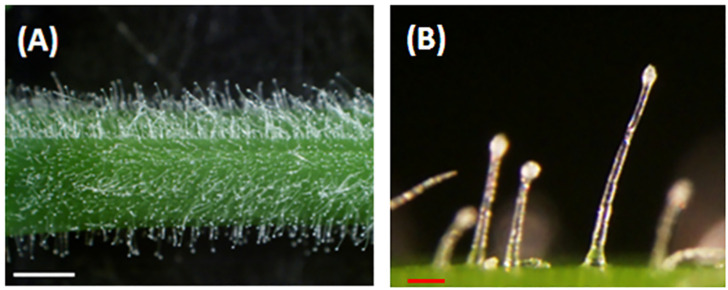
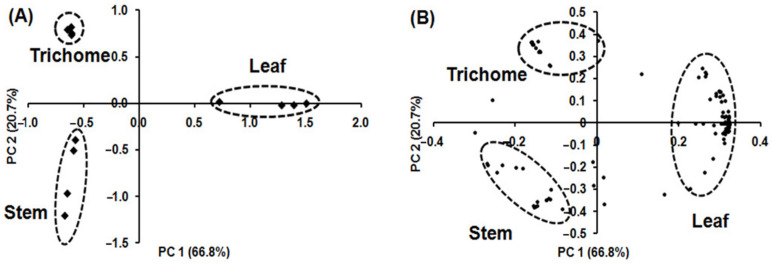
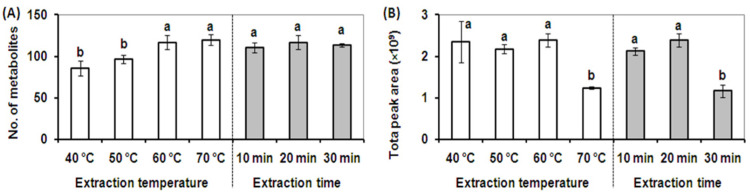
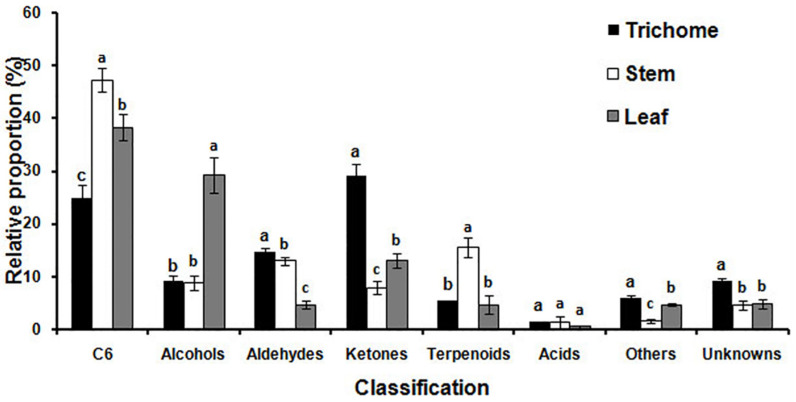
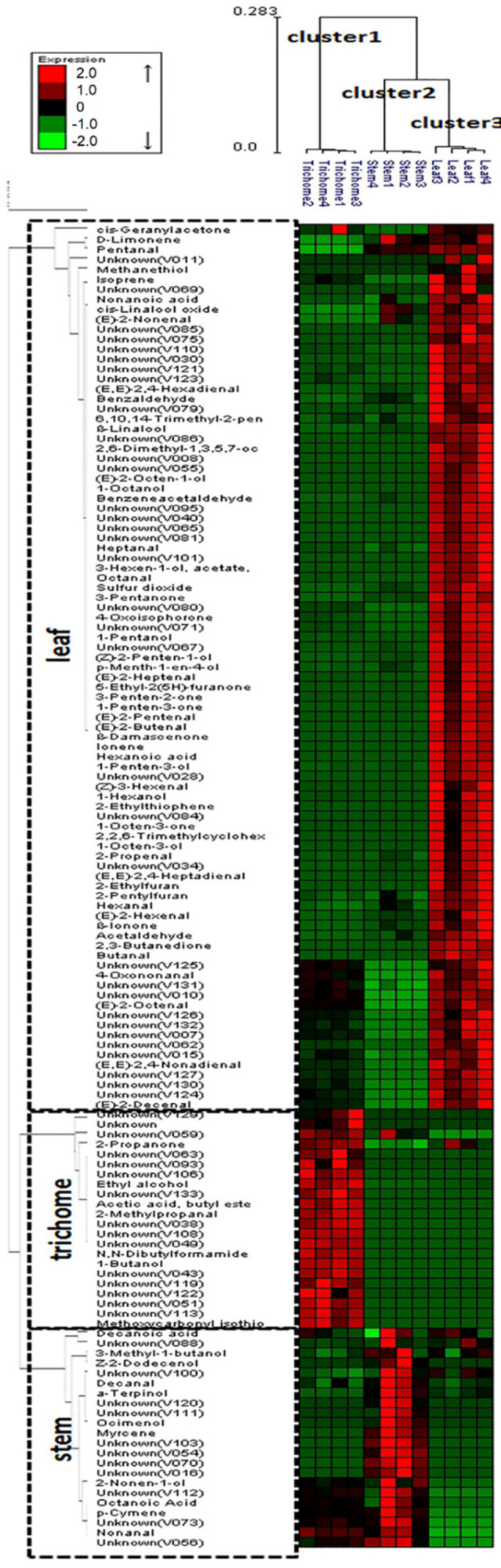
Solid-phase microextraction (SPME) was coupled to gas chromatography mass spectrometry (GC-MS) and a method optimized to quantitatively and qualitatively measure a large array of volatile metabolites in alfalfa glandular trichomes isolated from stems, trichome-free stems, and leaves as part of a non-targeted metabolomics approach. Major SPME extraction parameters optimized included SPME fiber composition, extraction temperature, and extraction time. The optimized SPME method provided the most chemically diverse coverage of alfalfa volatile and semi-volatile metabolites using a DVB/CAR/PDMS fiber, extraction temperature of 60 °C, and an extraction time of 20 min. Alfalfa SPME-GC-MS profiles were processed using automated peak deconvolution and identification (AMDIS) and quantitative data extraction software (MET-IDEA). A total of 87 trichome, 59 stem, and 99 leaf volatile metabolites were detected after background subtraction which removed contaminants present in ambient air and associated with the fibers and NaOH/EDTA buffer solution containing CaCl. Thirty-seven volatile metabolites were detected in all samples, while 15 volatile metabolites were uniquely detected only in glandular trichomes, 9 only in stems, and 33 specifically in leaves as tissue specific volatile metabolites. Hierarchical cluster analysis (HCA) and principal component analysis (PCA) of glandular trichomes, stems, and leaves showed that the volatile metabolic profiles obtained from the optimized SPME-GC-MS method clearly differentiated the three tissues (glandular trichomes, stems, and leaves), and the biochemical basis for this differentiation is discussed. Although optimized using plant tissues, the method can be applied to other types of samples including fruits and other foods.
固相微萃取(SPME)与气相色谱-质谱联用(GC-MS)相结合,优化了一种方法,可定量和定性地测量从茎、无腺毛茎和叶片中分离出的紫花苜蓿腺毛中的大量挥发性代谢物,这是一种非靶向代谢组学方法的一部分。优化的 SPME 提取参数包括 SPME 纤维组成、提取温度和提取时间。使用 DVB/CAR/PDMS 纤维、60°C 的提取温度和 20 分钟的提取时间,优化的 SPME 方法提供了最具化学多样性的紫花苜蓿挥发性和半挥发性代谢物的覆盖范围。使用自动峰解卷积和鉴定(AMDIS)和定量数据提取软件(MET-IDEA)处理紫花苜蓿 SPME-GC-MS 图谱。经过背景扣除后,共检测到 87 种腺毛、59 种茎和 99 种叶挥发性代谢物,这些代谢物去除了空气中存在的污染物以及与纤维和含有 CaCl 的 NaOH/EDTA 缓冲液相关的污染物。在所有样品中检测到 37 种挥发性代谢物,而 15 种挥发性代谢物仅在腺毛中特异性检测到,9 种仅在茎中特异性检测到,33 种仅在叶片中特异性检测到,作为组织特异性挥发性代谢物。腺毛、茎和叶的层次聚类分析(HCA)和主成分分析(PCA)表明,优化的 SPME-GC-MS 方法获得的挥发性代谢物谱清楚地区分了三种组织(腺毛、茎和叶),并讨论了这种分化的生化基础。尽管该方法是使用植物组织进行优化的,但也可以应用于其他类型的样本,包括水果和其他食品。