Department of Neurology, Innsbruck Medical University, Innsbruck, Austria.
J Neuroinflammation. 2010 Nov 17;7:79. doi: 10.1186/1742-2094-7-79.
Neuroinflammation and demyelination have been suggested as mechanisms causing HIV-1 associated neurocognitive disorder (HAND). This cross-sectional cohort study explores the potential role of antibodies to myelin oligodendrocyte glycoprotein (MOG), a putative autoantigen in multiple sclerosis, in the pathogenesis of HAND.
IgG antibodies against MOG were measured by ELISA in sera and cerebrospinal fluid (CSF) of 65 HIV-positive patients with HAND (n = 14), cerebral opportunistic infections (HIVOI, n = 25), primary HIV infection (HIVM, n = 5) and asymptomatic patients (HIVasy, n = 21). As control group HIV-negative patients with bacterial or viral CNS infections (OIND, n = 18) and other neurological diseases (OND, n = 22) were included. In a subset of HAND patients MOG antibodies were determined before and during antiviral therapy.
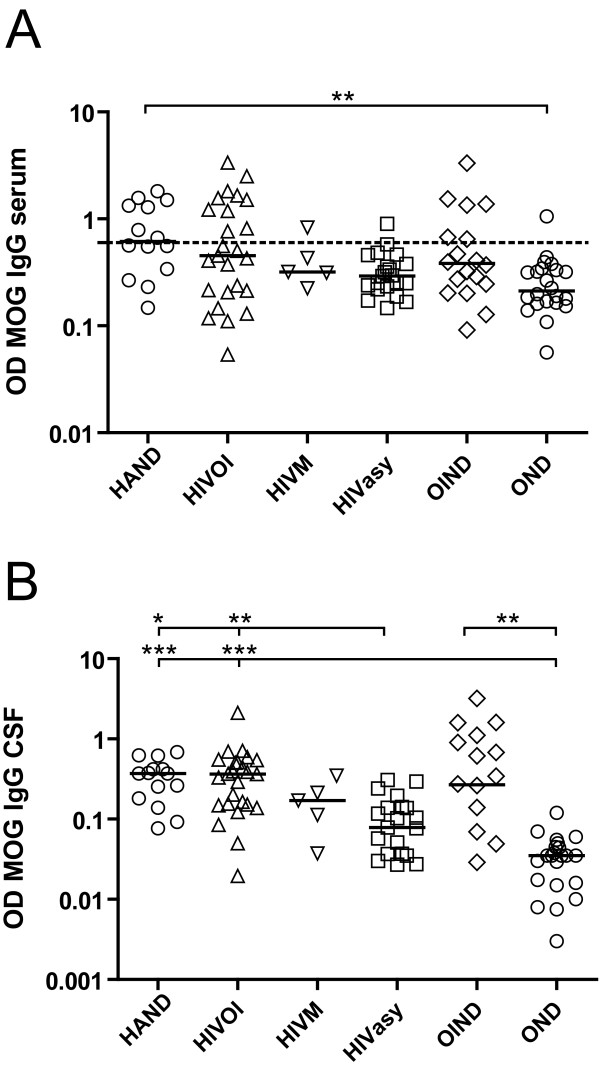
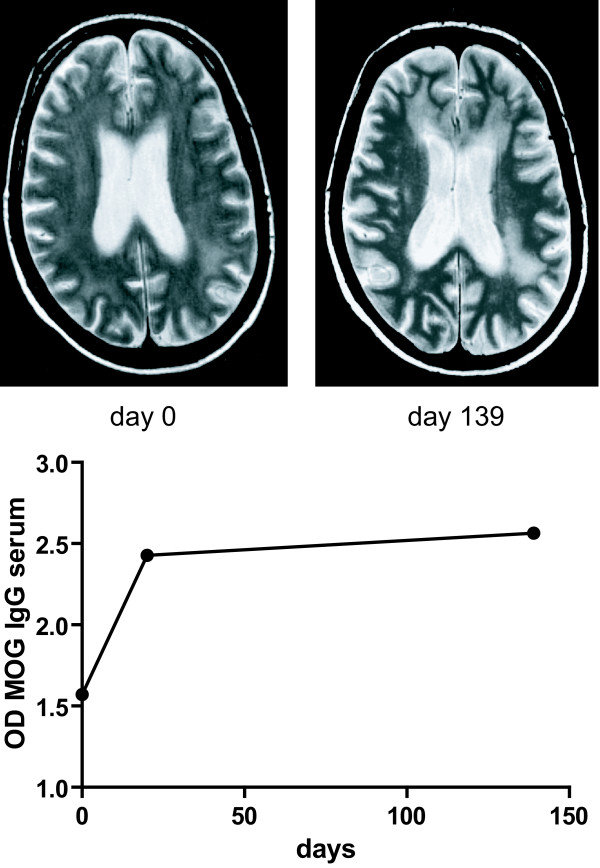
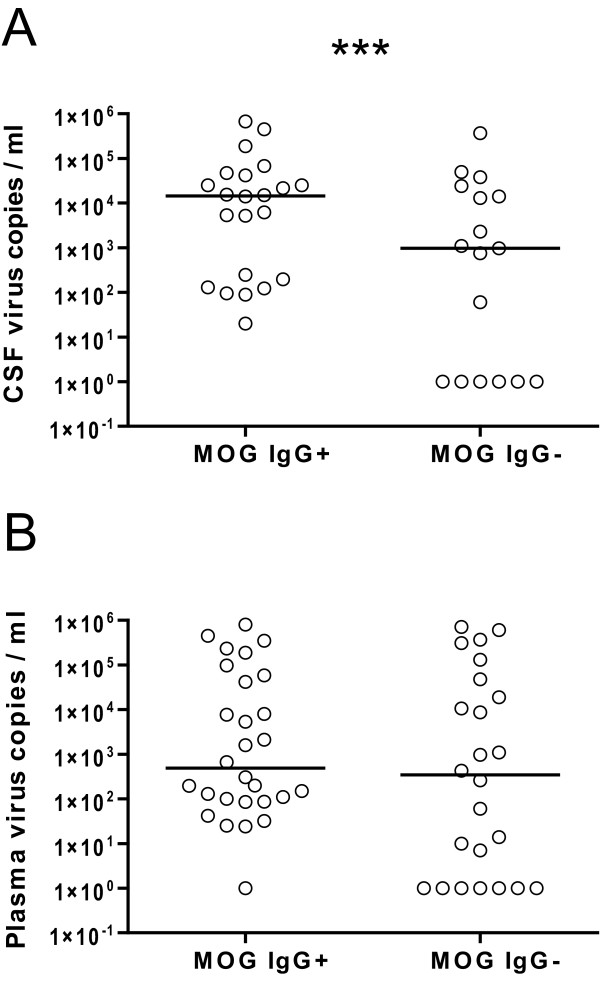
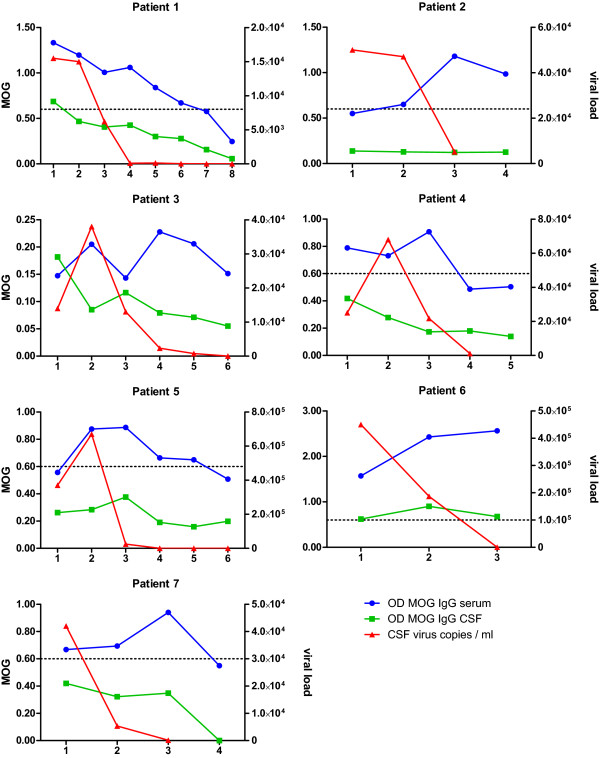
In serum, significantly higher MOG antibody titers were observed in HAND compared to OND patients. In CSF, significantly higher antibody titers were observed in HAND and HIVOI patients compared to HIVasy and OND patients and in OIND compared to OND patients. CSF anti-MOG antibodies showed a high sensitivity and specificity (85.7% and 76.2%) for discriminating patients with active HAND from asymptomatic HIV patients. MOG immunopositive HAND patients performed significantly worse on the HIV dementia scale and showed higher viral load in CSF. In longitudinally studied HAND patients, sustained antibody response was noted despite successful clearance of viral RNA.
Persistence of MOG antibodies despite viral clearance in a high percentage of HAND patients suggests ongoing neuroinflammation, possibly preventing recovery from HAND.
神经炎症和脱髓鞘被认为是导致 HIV-1 相关神经认知障碍(HAND)的机制。本横断面队列研究探讨了髓鞘少突胶质细胞糖蛋白(MOG)抗体在 HAND 发病机制中的潜在作用,MOG 是多发性硬化症中的一种潜在自身抗原。
采用 ELISA 法检测 65 例 HIV 阳性 HAND 患者(HAND 组,n=14)、脑机会性感染(HIVOI 组,n=25)、原发性 HIV 感染(HIVM 组,n=5)和无症状患者(HIVasy 组,n=21)的血清和脑脊液(CSF)中针对 MOG 的 IgG 抗体。将 HIV 阴性的细菌性或病毒性中枢神经系统感染患者(OIND 组,n=18)和其他神经系统疾病患者(OND 组,n=22)作为对照组。在 HAND 患者亚组中,在抗病毒治疗前后测定 MOG 抗体。
血清中,HAND 组患者的 MOG 抗体滴度明显高于 OND 组。CSF 中,HAND 和 HIVOI 组患者的抗体滴度明显高于 HIVasy 和 OND 组,OIND 组明显高于 OND 组。CSF 抗-MOG 抗体对区分活动性 HAND 患者和无症状 HIV 患者具有较高的敏感性和特异性(85.7%和 76.2%)。MOG 免疫阳性的 HAND 患者在 HIV 痴呆量表上的表现明显更差,且 CSF 中的病毒载量更高。在纵向研究的 HAND 患者中,尽管病毒 RNA 清除,但仍持续存在抗体反应。
HAND 患者中,病毒清除后仍有很高比例的 MOG 抗体持续存在,提示持续存在神经炎症,可能阻止 HAND 恢复。