Beckman Institute for Advanced Science and Technology, University of Illinois Urbana-Champaign, Urbana, Illinois, USA.
Nat Neurosci. 2011 Jan;14(1):115-20. doi: 10.1038/nn.2693. Epub 2010 Nov 21.
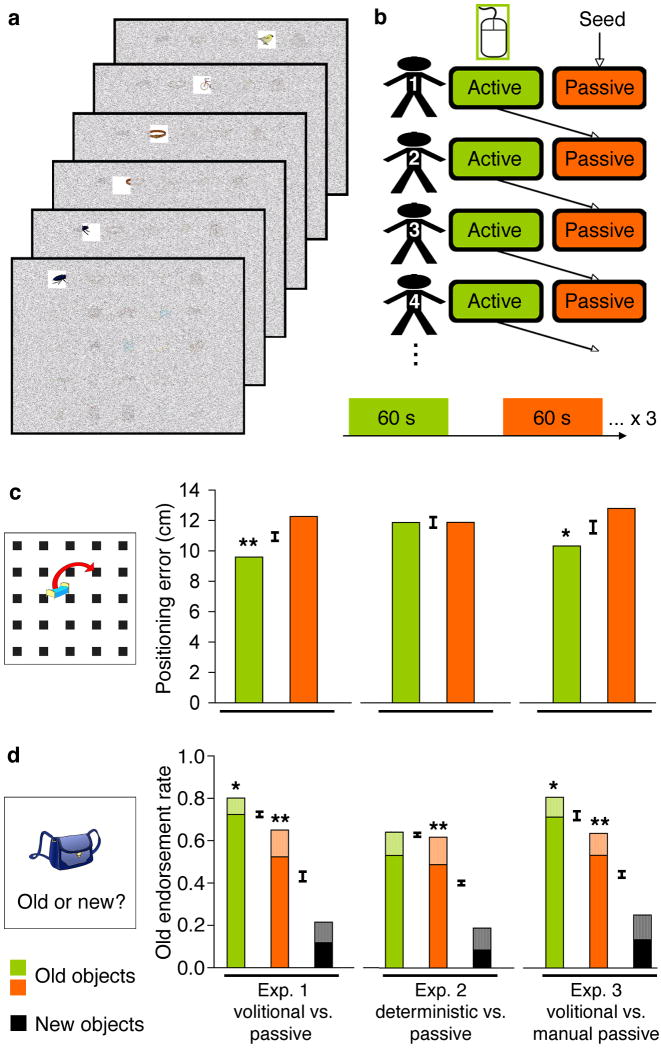
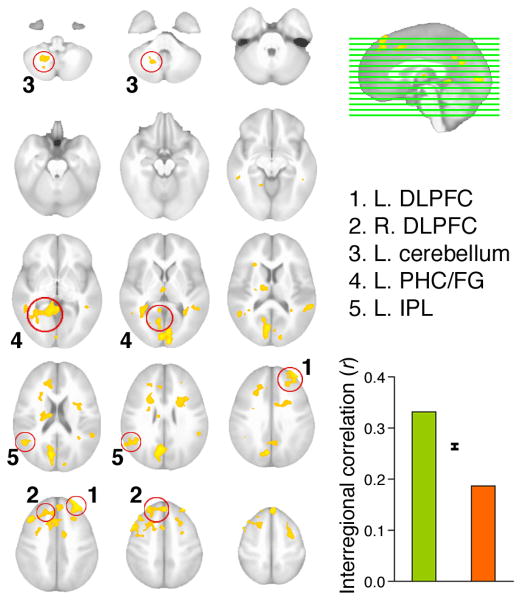
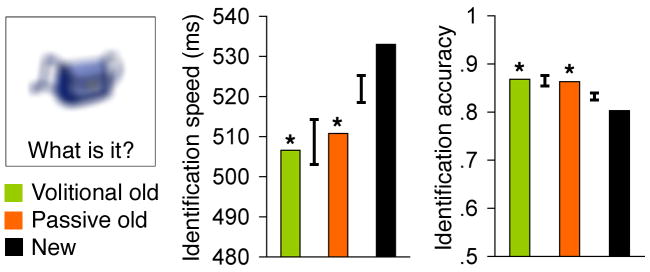
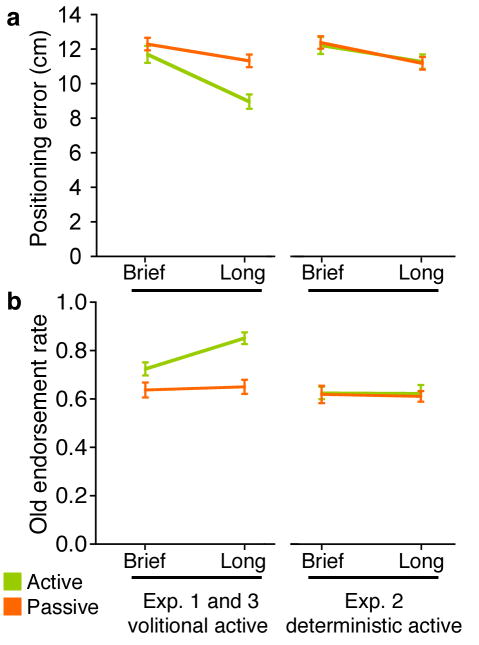
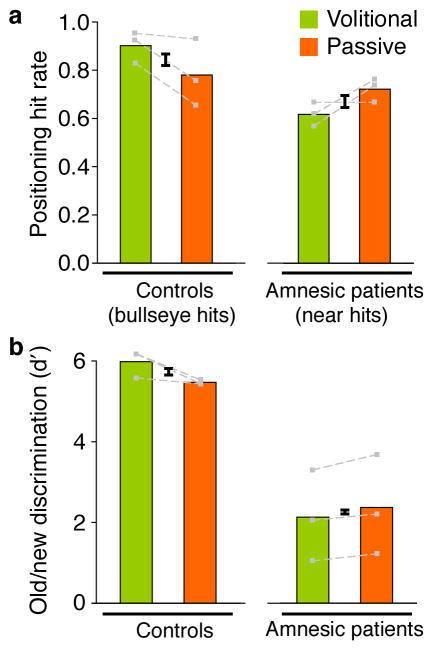
Exploratory behaviors during learning determine what is studied and when, helping to optimize subsequent memory performance. To elucidate the cognitive and neural determinants of exploratory behaviors, we manipulated the control that human subjects had over the position of a moving window through which they studied objects and their locations. Our behavioral, neuropsychological and neuroimaging data indicate that volitional control benefits memory performance and is linked to a brain network that is centered on the hippocampus. Increases in correlated activity between the hippocampus and other areas were associated with specific aspects of memory, which suggests that volitional control optimizes interactions among specialized neural systems through the hippocampus. Memory is therefore an active process that is intrinsically linked to behavior. Furthermore, brain structures that are typically seen as passive participants in memory encoding (for example, the hippocampus) are actually part of an active network that controls behavior dynamically as it unfolds.
在学习过程中,探索行为决定了学习的内容和时间,有助于优化后续的记忆表现。为了阐明探索行为的认知和神经决定因素,我们操纵了人类受试者对移动窗口位置的控制,通过该窗口他们可以研究物体及其位置。我们的行为、神经心理学和神经影像学数据表明,意志控制有益于记忆表现,并与以海马体为中心的大脑网络相关联。海马体与其他区域之间相关活动的增加与记忆的特定方面相关,这表明意志控制通过海马体优化了专门的神经系统之间的相互作用。因此,记忆是一个主动的过程,与行为本质上是相关的。此外,通常被视为记忆编码中被动参与者的大脑结构(例如海马体)实际上是一个主动网络的一部分,该网络在行为展开时动态地控制行为。