Section of Molecular Epidemiology, Leiden University Medical Center, Leiden, The Netherlands.
Philos Trans R Soc Lond B Biol Sci. 2011 Jan 12;366(1561):35-42. doi: 10.1098/rstb.2010.0284.
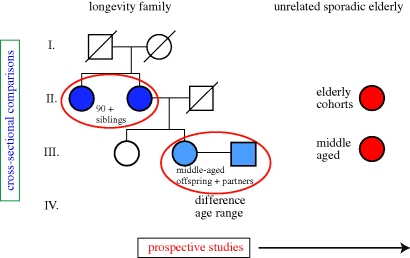
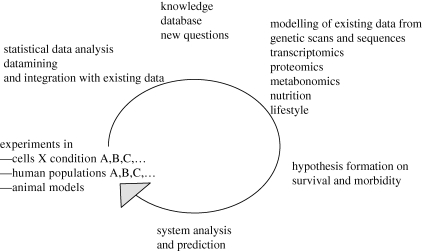
In animal models, single-gene mutations in genes involved in insulin/IGF and target of rapamycin signalling pathways extend lifespan to a considerable extent. The genetic, genomic and epigenetic influences on human longevity are expected to be much more complex. Strikingly however, beneficial metabolic and cellular features of long-lived families resemble those in animals for whom the lifespan is extended by applying genetic manipulation and, especially, dietary restriction. Candidate gene studies in humans support the notion that human orthologues from longevity genes identified in lower species do contribute to longevity but that the influence of the genetic variants involved is small. Here we discuss how an integration of novel study designs, labour-intensive biobanking, deep phenotyping and genomic research may provide insights into the mechanisms that drive human longevity and healthy ageing, beyond the associations usually provided by molecular and genetic epidemiology. Although prospective studies of humans from the cradle to the grave have never been performed, it is feasible to extract life histories from different cohorts jointly covering the molecular changes that occur with age from early development all the way up to the age at death. By the integration of research in different study cohorts, and with research in animal models, biological research into human longevity is thus making considerable progress.
在动物模型中,涉及胰岛素/IGF 和雷帕霉素靶蛋白信号通路的基因的单基因突变在相当大的程度上延长了寿命。对人类长寿的遗传、基因组和表观遗传影响预计要复杂得多。然而,引人注目的是,长寿家族的有益代谢和细胞特征与那些通过遗传操作,特别是饮食限制来延长寿命的动物相似。人类候选基因研究支持这样一种观点,即从较低等物种中鉴定出的与长寿相关的人类同源基因确实有助于长寿,但所涉及的遗传变异的影响很小。在这里,我们讨论了如何整合新的研究设计、劳动密集型生物库、深度表型分析和基因组研究,以提供超越分子和遗传流行病学通常提供的关联的见解,了解驱动人类长寿和健康衰老的机制。尽管对从摇篮到坟墓的人类进行前瞻性研究从未进行过,但从不同队列中提取生命史是可行的,这些队列共同涵盖了从早期发育到死亡时发生的与年龄相关的分子变化。通过整合不同研究队列的研究,并结合动物模型的研究,对人类长寿的生物学研究正在取得相当大的进展。