Pedersen Rolf B, Rapp Hans Tore, Thorseth Ingunn H, Lilley Marvin D, Barriga Fernando J A S, Baumberger Tamara, Flesland Kristin, Fonseca Rita, Früh-Green Gretchen L, Jorgensen Steffen L
1] Centre for Geobiology, University of Bergen, 5007 Bergen, Norway. [2] Department of Earth Science, University of Bergen, 5007 Bergen, Norway.
Nat Commun. 2010 Nov 23;1:126. doi: 10.1038/ncomms1124.
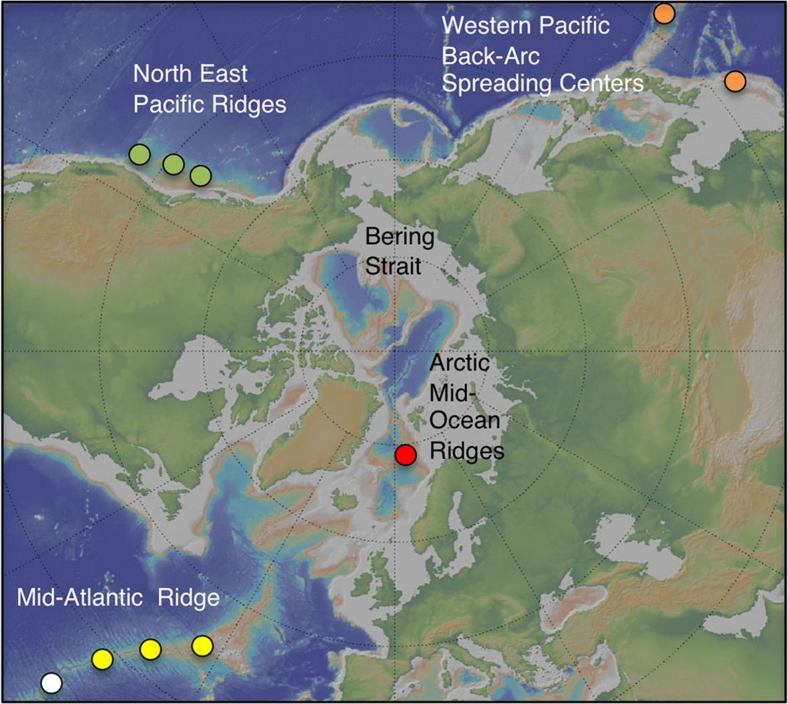
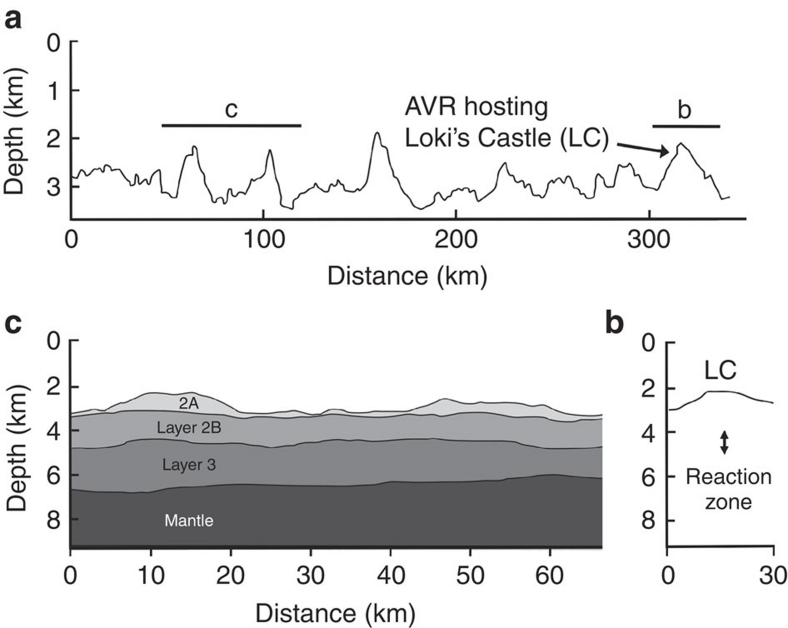
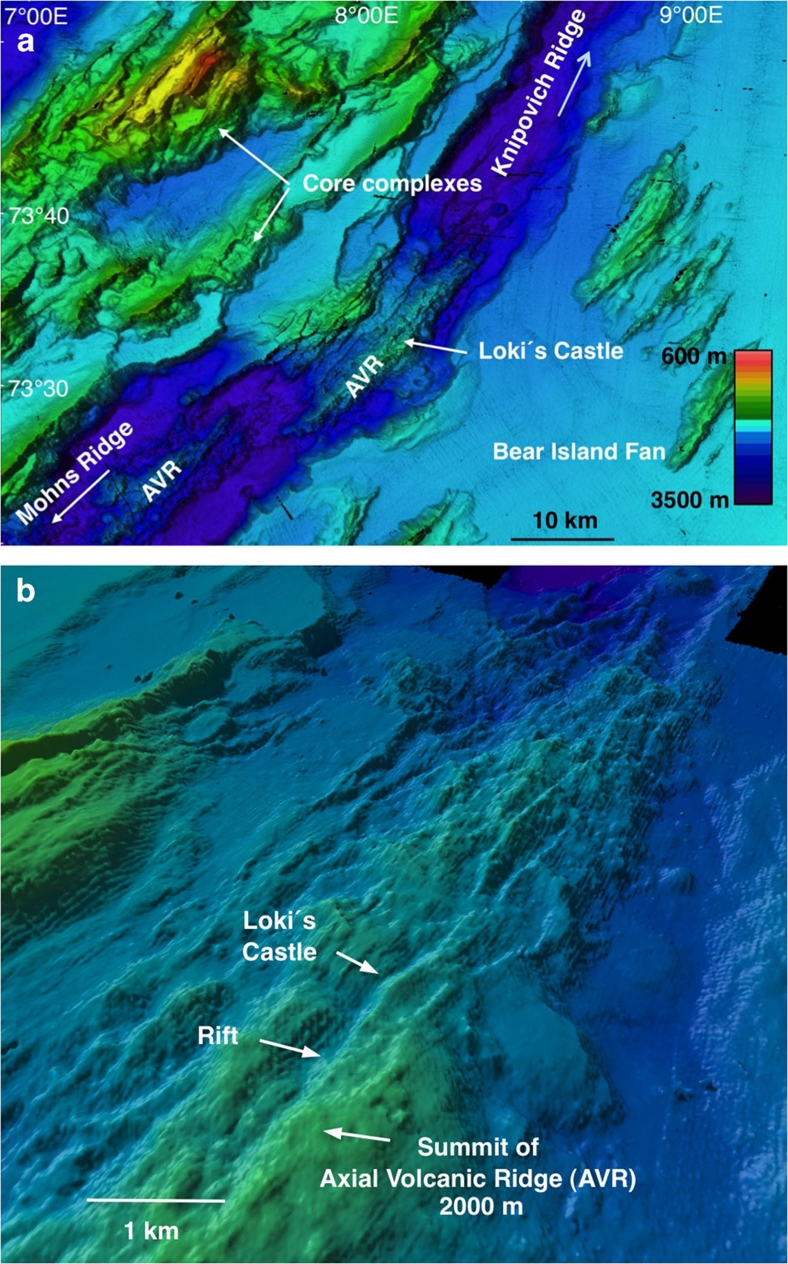
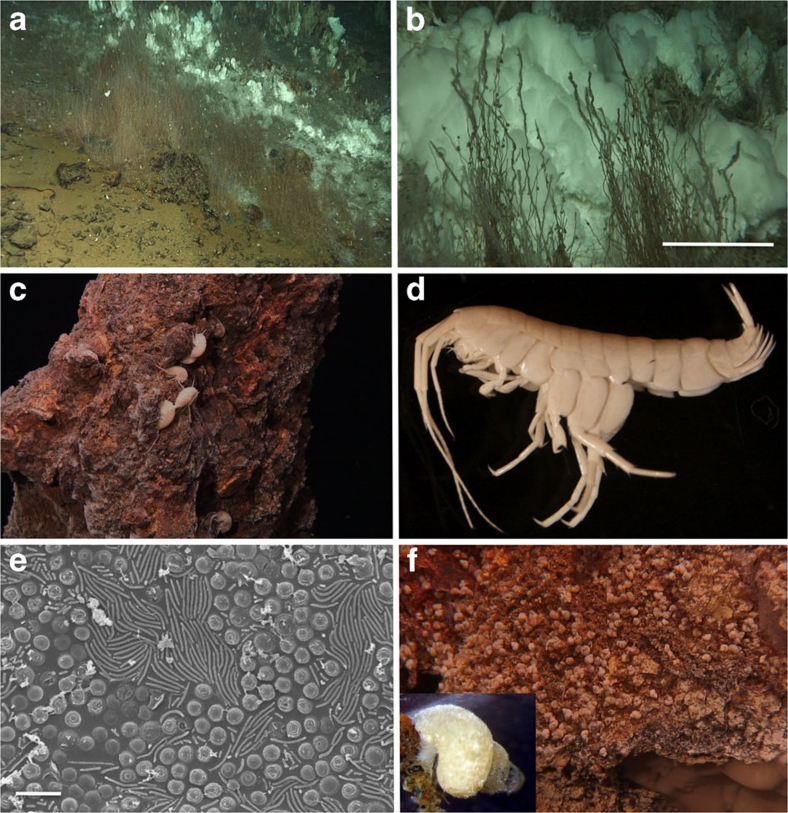
The Arctic Mid-Ocean Ridge (AMOR) represents one of the most slow-spreading ridge systems on Earth. Previous attempts to locate hydrothermal vent fields and unravel the nature of venting, as well as the provenance of vent fauna at this northern and insular termination of the global ridge system, have been unsuccessful. Here, we report the first discovery of a black smoker vent field at the AMOR. The field is located on the crest of an axial volcanic ridge (AVR) and is associated with an unusually large hydrothermal deposit, which documents that extensive venting and long-lived hydrothermal systems exist at ultraslow-spreading ridges, despite their strongly reduced volcanic activity. The vent field hosts a distinct vent fauna that differs from the fauna to the south along the Mid-Atlantic Ridge. The novel vent fauna seems to have developed by local specialization and by migration of fauna from cold seeps and the Pacific.
北极中洋脊(AMOR)是地球上扩张速度最慢的洋脊系统之一。此前,在这个全球洋脊系统的北部岛屿末端,人们试图寻找热液喷口区域、弄清热液喷发的性质以及喷口动物群的来源,但均未成功。在此,我们报告在北极中洋脊首次发现了一个黑烟囱喷口区域。该区域位于一条轴向火山脊(AVR)的顶部,与一个异常巨大的热液矿床相关联,这证明了尽管超慢速扩张洋脊的火山活动大幅减少,但仍存在广泛的热液喷发和长期存在的热液系统。该喷口区域拥有独特的喷口动物群,与沿大西洋中脊南部的动物群不同。这种新的喷口动物群似乎是通过局部特化以及动物群从冷泉和太平洋的迁移而形成的。