Department of Biological Sciences, PO Box 443051, University of Idaho, Moscow, ID 83843-3051, USA.
BMC Evol Biol. 2010 Dec 3;10:378. doi: 10.1186/1471-2148-10-378.
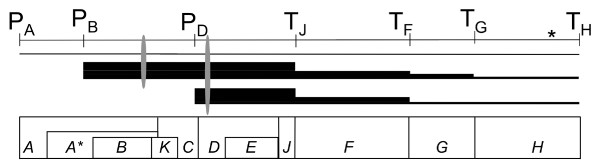
Gene regulation plays a central role in the adaptation of organisms to their environments. There are many molecular components to gene regulation, and it is often difficult to determine both the genetic basis of adaptation and the evolutionary forces that influence regulation. In multiple evolution experiments with the bacteriophage ϕX174, adaptive substitutions in cis-acting regulatory sequences sweep through the phage population as the result of strong positive selection at high temperatures that are non-permissive for laboratory-adapted phage. For one cis-regulatory region, we investigate the individual effects of four adaptive substitutions on transcript levels and fitness for phage growing on three hosts at two temperatures.
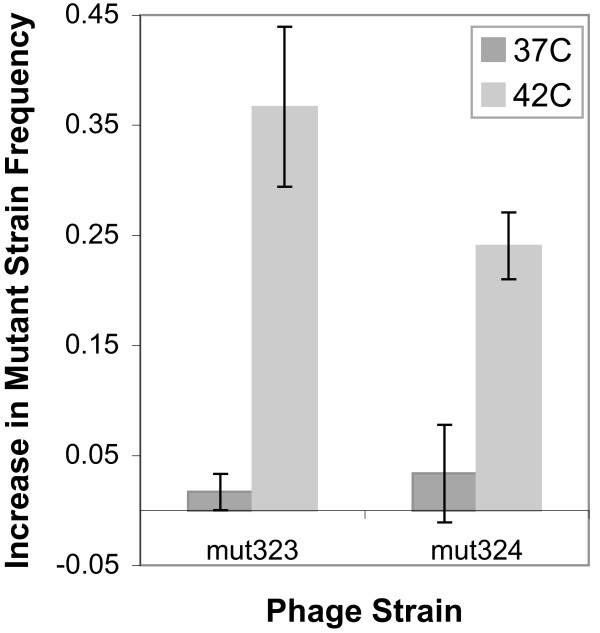
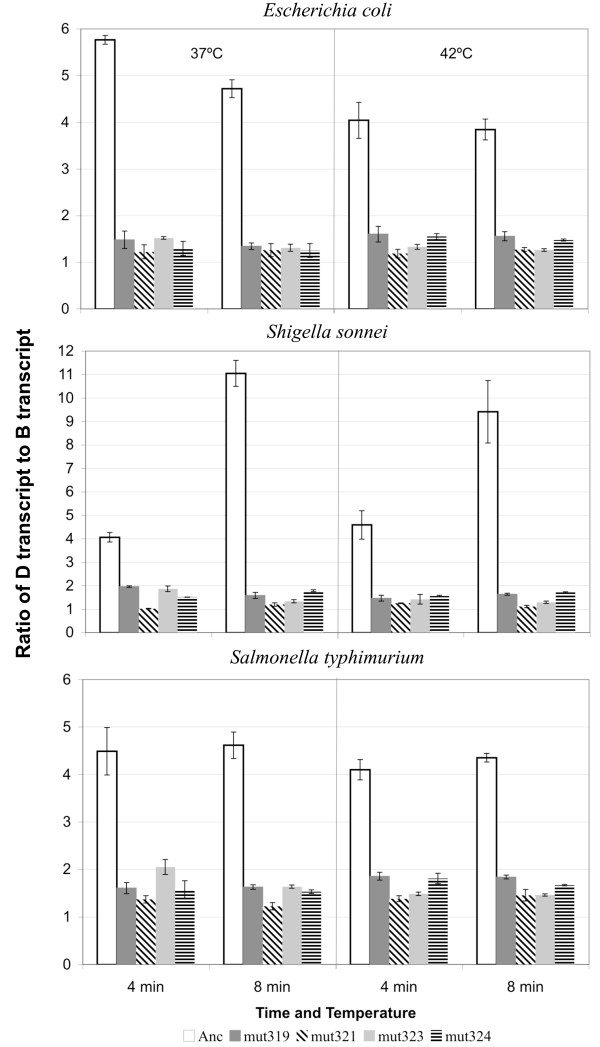
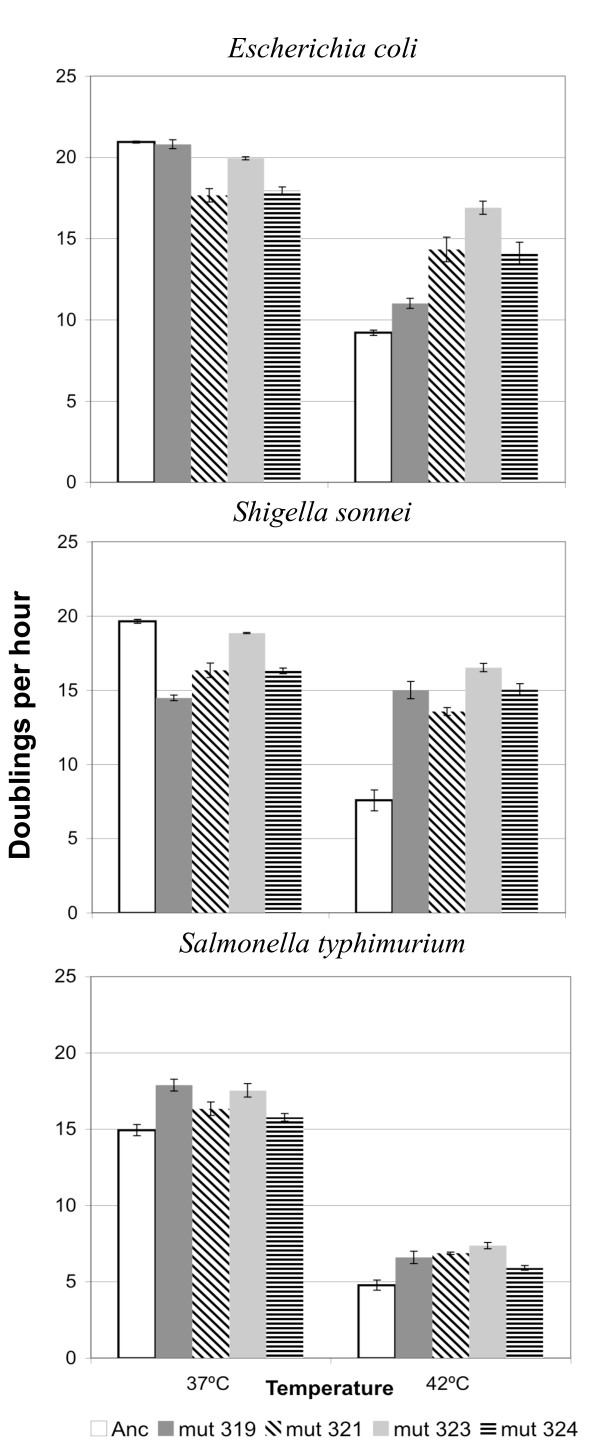
The effect of the four individual substitutions on transcript levels is to down-regulate gene expression, regardless of temperature or host. To ascertain the conditions under which these substitutions are adaptive, fitness was measured by a variety of methods for several bacterial hosts growing at two temperatures, the control temperature of 37°C and the selective temperature of 42°C. Time to lysis and doublings per hour indicate that the four substitutions individually improve fitness over the ancestral strain at high temperature independent of the bacterial host in which the fitness was measured. Competition assays between the ancestral strain and either of two mutant strains indicate that both mutants out-compete the ancestor at high temperature, but the relative frequencies of each phage remain the same at the control temperature.
Our results strongly suggest that gene transcription plays an important role in influencing fitness in the bacteriophage ϕX174, and different point mutations in a single cis-regulatory region provided the genetic basis for this role in adaptation to high temperature. We speculate that the adaptive nature of these substitutions is due to the physiology of the host at high temperature or the need to maintain particular ratios of phage proteins during capsid assembly. Our investigation of regulatory evolution contributes to interpreting genome-level assessments of regulatory variation, as well as to understanding the molecular basis of adaptation.
基因调控在生物适应其环境中起着核心作用。基因调控有许多分子组成部分,通常很难确定适应的遗传基础以及影响调控的进化力量。在噬菌体 ϕX174 的多次进化实验中,顺式作用调控序列中的适应性替代在高温下通过强正选择在噬菌体种群中迅速传播,而高温对实验室适应的噬菌体是不利的。对于一个顺式调控区域,我们研究了四个适应性替代对三种宿主在两种温度下生长的噬菌体的转录水平和适合度的个别影响。
四个个体替代对转录水平的影响是下调基因表达,无论温度或宿主如何。为了确定这些替代在何种条件下是适应性的,我们通过多种方法在两种温度下测量了几种细菌宿主的适合度,即控制温度 37°C 和选择温度 42°C。裂解时间和每小时倍增次数表明,在高温下,四个替代个体相对于原始菌株提高了适合度,而与测量适合度的细菌宿主无关。在原始菌株和两个突变株之间的竞争测定中,两个突变株都在高温下比原始菌株具有竞争优势,但在对照温度下每个噬菌体的相对频率保持不变。
我们的结果强烈表明,基因转录在噬菌体 ϕX174 的影响适合度方面起着重要作用,而且单个顺式调控区域中的不同点突变为适应高温提供了这种作用的遗传基础。我们推测这些替代的适应性是由于高温下宿主的生理学或在衣壳组装过程中维持特定噬菌体蛋白比例的需要。我们对调控进化的研究有助于解释调控变异的基因组水平评估,以及理解适应的分子基础。