Federal University of Ceará School of Medicine, Fortaleza, Brazil.
BMC Med. 2010 Dec 6;8:81. doi: 10.1186/1741-7015-8-81.
Recently, several publications have investigated a possible drug interaction between clopidogrel and proton pump inhibitors (PPIs), and regulatory agencies have issued warnings despite discordant study results. In an attempt to clarify the situation, we performed a systematic review with a critical analysis of study methodologies to determine whether varying study quality (that is, bias) could explain the discordant results.
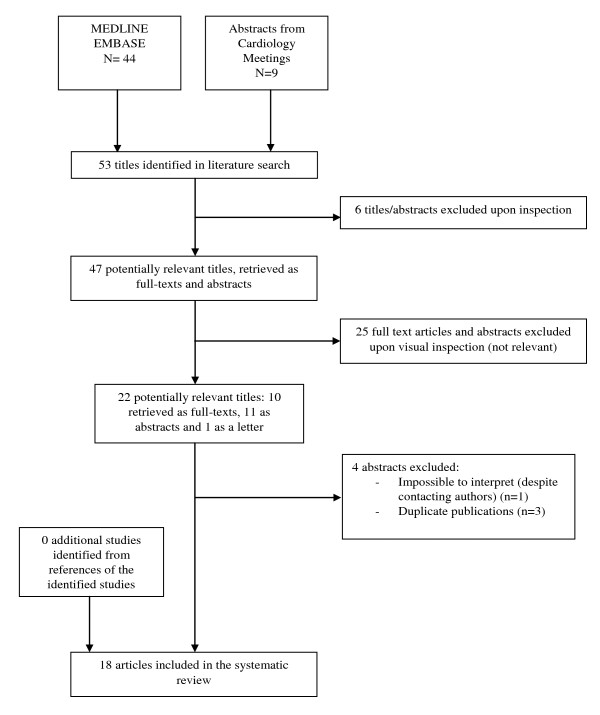
A systematic review of all studies reporting clinical outcomes was performed using an electronic literature search of the MEDLINE and EMBASE databases, abstracts from the major cardiology conferences and a hand-search of bibliographies from identified articles. Each study was evaluated for its risk of bias according to a prespecified quality measure scale.
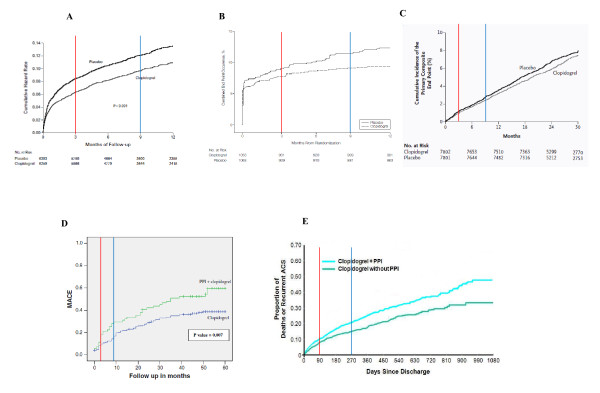
A total of 18 studies were identified. Ten of 13 studies judged to be of low scientific quality reported a statistically positive interaction between clopidogrel and the general class of PPIs, and each concluded this was likely a clinically meaningful effect. None of the five studies judged to be of moderate or high quality reported a statistically significant association. Multiple sources of heterogeneity (that is, different populations, outcomes assessed, drug exposure methods and study quality) prevented a formal quantitative analysis of all studies. An increased risk of bias was observed in the positive studies, resulting in an inverse correlation between study quality and a reported statistically positive interaction (10/13 versus 0/5; P = p = 0.007). There was also no clinical evidence for a positive interaction according to specific PPIs.
The observed association between clopidogrel and PPIs is found uniquely in studies judged to be of low quality and with an increased risk of bias. High-quality evidence supporting a clinically significant clopidogrel/PPI interaction is presently lacking.
最近,有几项出版物研究了氯吡格雷和质子泵抑制剂(PPIs)之间可能存在的药物相互作用,尽管研究结果不一致,但监管机构已发出警告。为了澄清这种情况,我们进行了一项系统评价,并对研究方法进行了批判性分析,以确定不同的研究质量(即偏倚)是否可以解释这些不一致的结果。
使用 MEDLINE 和 EMBASE 数据库的电子文献搜索、主要心脏病学会议的摘要以及从确定的文章中手动搜索参考文献,对报告临床结局的所有研究进行系统评价。根据预先指定的质量衡量标准量表,对每项研究的偏倚风险进行评估。
共确定了 18 项研究。在 13 项被认为具有低科学质量的研究中,有 10 项报告了氯吡格雷与一般类别的 PPIs 之间存在统计学上的阳性相互作用,并且每一项都得出结论,这可能是一种具有临床意义的影响。在被认为具有中等或高质量的 5 项研究中,均未报告有统计学意义的相关性。多种异质性来源(即不同的人群、评估的结局、药物暴露方法和研究质量)阻止了对所有研究进行正式的定量分析。在阳性研究中观察到偏倚风险增加,从而导致研究质量与报告的统计学阳性相互作用之间呈反比关系(10/13 对 0/5;P = p = 0.007)。根据特定的 PPIs,也没有临床证据表明存在阳性相互作用。
氯吡格雷与 PPIs 之间的观察到的关联仅在被认为质量较低且偏倚风险增加的研究中发现。目前缺乏支持氯吡格雷/PPIs 相互作用具有临床意义的高质量证据。